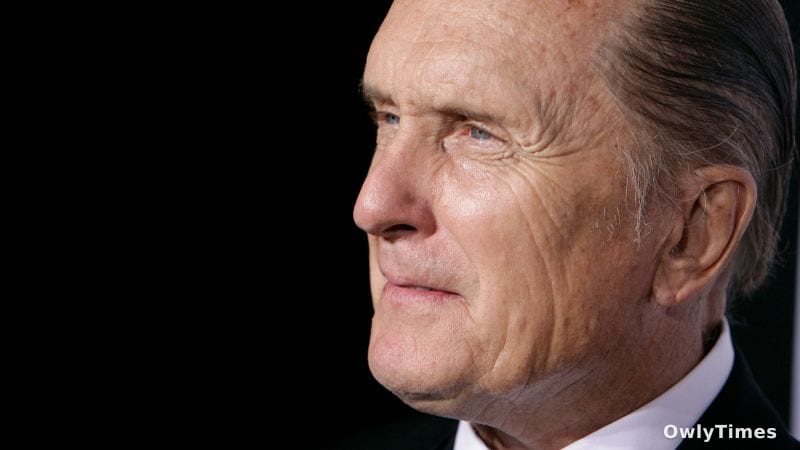

The chipped Formica tabletop at the diner felt cold under my elbows as I scrolled through the news. Another icon gone. Robert Duvall, a face etched into the American cinematic landscape, had died at 95. But it wasn’t the headline itself – the passing of a legendary actor – that snagged my attention. It was the quiet, almost understated way the news landed, a gentle ripple in a media cycle obsessed with spectacle. It felt…wrong. Duvall wasn’t just a star; he was a master craftsman who embodied a particular brand of American masculinity, one grappling with its own contradictions, and his passing feels like a closing chapter on a certain kind of storytelling.
Duvall’s career wasn’t built on bombast, but on nuance. From the quietly menacing Tom Hagen in Francis Ford Coppola’s “The Godfather” – a role that launched him into a new orbit after years of character work – to the unhinged, napalm-loving Lt. Col. Kilgore in “Apocalypse Now,” he inhabited characters that were both terrifying and deeply human. He wasn’t a leading man in the traditional sense, yet he consistently became the most memorable figure in any scene. This wasn’t accidental. He trained with Sanford Meisner, a legendary acting coach who emphasized “living truthfully under imaginary circumstances,” and shared early struggles with contemporaries like Dustin Hoffman and Gene Hackman, a generation forging a new, method-driven approach to performance. The fact that Hackman passed away last year adds another layer of melancholy to this moment – the slow extinguishing of a golden age of American acting.
Reporting from CNN informs this analysis.
The story of Duvall’s refusal to appear in “The Godfather Part III” over a pay dispute – he felt the proposed $500,000 was “totally unacceptable” compared to Al Pacino’s $5 million – speaks volumes about his principles. It wasn’t simply about the money; it was about respect, about valuing his contribution to a legacy. In an industry increasingly driven by franchise economics and inflated salaries, Duvall’s stance feels almost radical. He wasn’t chasing blockbuster paychecks; he was chasing compelling roles, and he was willing to walk away from a cultural behemoth to maintain his integrity. This is a stark contrast to the current landscape, where actors often prioritize brand recognition and social media engagement over artistic risk. The industry average for leading actors in 1990 was around $2-3 million, making Pacino’s fee an outlier even then, and Duvall’s refusal to accept a significantly lower offer a bold statement.
Beyond the iconic roles, Duvall’s willingness to tackle complex, often morally ambiguous characters is what truly sets him apart. He played historical figures like Robert E. Lee and Joseph Stalin, forcing audiences to confront uncomfortable truths about power and ideology. He wasn’t interested in heroes or villains, but in the messy, flawed individuals who shaped history. This commitment to complexity extended to his directorial work, particularly “The Apostle,” a deeply personal film he wrote, directed, and starred in, exploring themes of faith, redemption, and violence. The film earned him another Oscar nomination, proving his talent wasn’t limited to performance. This willingness to take creative control, to tell stories his way, is increasingly rare in an industry dominated by studio mandates and pre-packaged narratives.
Duvall’s political leanings – his support for Republican candidates and his award from the George W. Bush administration – are also worth noting. In an era of hyper-polarization, it’s tempting to reduce artists to their political affiliations. But to do so with Duvall would be a disservice. His work consistently transcended partisan divides, exploring universal themes of human struggle and resilience. He wasn’t an ideologue; he was an observer, a storyteller who sought to understand the complexities of the human condition. The fact that an actor so deeply associated with challenging roles and independent spirit also aligned with conservative politics highlights the inherent contradictions within American culture itself.
The quiet way we’re saying goodbye to Robert Duvall isn’t just about the changing media landscape. It’s about a shift in cultural values. We’re losing not just an actor, but a representative of a different era – one that valued craft over celebrity, principle over profit, and complexity over easy answers. As the industry continues its relentless pursuit of spectacle and franchise dominance, will there be room for actors who prioritize nuance and integrity? Will future generations even recognize the quiet power of a performance built on truth and vulnerability? That’s the question lingering long after the diner coffee has gone cold.