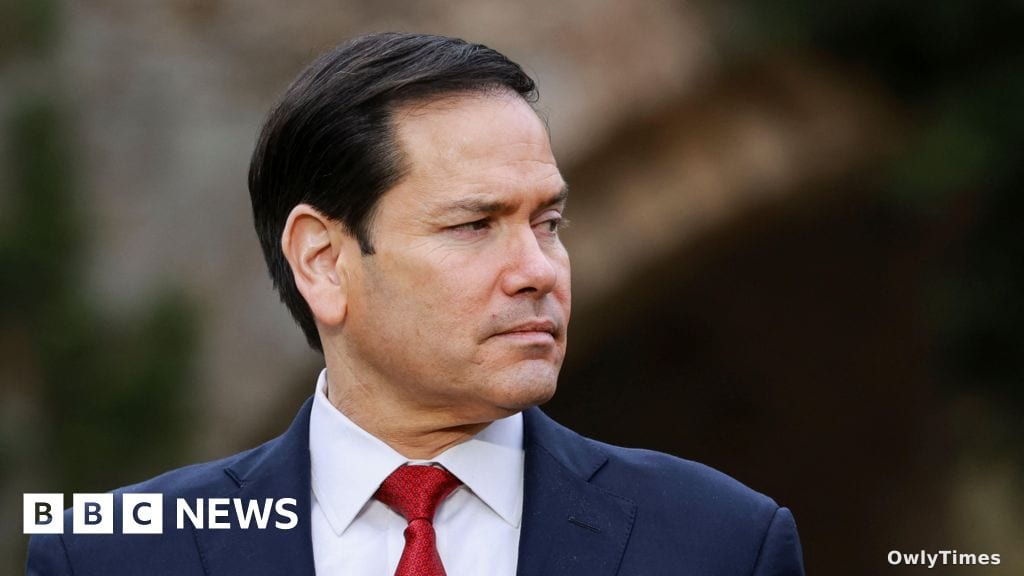

Is the world bracing for a swift resolution in Iran, or are we watching a carefully orchestrated illusion of progress? Secretary of State Marco Rubio’s claim that US operations will conclude “in the next couple of weeks” – echoing President Trump’s initial four-to-seven week prediction – feels less like a confident forecast and more like a performance designed to project control. The real story here isn't a looming ceasefire, it’s the increasingly desperate attempt to salvage a narrative of decisive action before the economic and geopolitical fallout of this conflict spirals beyond containment.
The G7 meeting in France, ostensibly focused on de-escalation, revealed a stark disconnect. While Rubio spoke of “messages” and a “willingness to talk” from the “Iranian system, whatever’s left of it,” the details remain frustratingly vague. A 15-point plan, reportedly delivered via Pakistan, sits on the table, yet Tehran hasn’t formally responded. Steve Witkoff, Trump’s special envoy, expresses “hope” for meetings “this week,” but hope doesn’t stabilize global oil markets or quell retaliatory threats. This isn’t a negotiation; it’s a public pressure campaign built on a foundation of escalating military action. Since February 28th, the targeted killings of Iranian leaders haven’t created a vacuum for moderate voices – they’ve empowered the hardliners within the Islamic Revolutionary Guard Corps (IRGC), who are now openly threatening attacks on US and Israeli industrial infrastructure.
The situation in the Strait of Hormuz is the pressure point everyone is trying to ignore. Iran’s partial closure, and reported demands for fees for passage, have already sent oil prices soaring. Roughly 20% of the world’s oil and liquefied natural gas transits this vital waterway, and a prolonged disruption could trigger a significant global recession. The G7’s call for “safe and toll-free freedom of navigation” rings hollow when the US is actively antagonizing the nation controlling the strait. The fact that most G7 members – with the exception of Japan – are resisting Trump’s call to deploy warships to escort vessels speaks volumes. They recognize that a military solution here isn’t just undesirable, it’s potentially catastrophic. They’re betting on ending the conflict, not policing a chokepoint.
What’s particularly troubling is the asymmetry of risk. Rubio acknowledged that US allies would be “more affected” by a prolonged blockage of the Strait of Hormuz than the US itself. This isn’t a selfless act of protecting global trade; it’s a calculated assessment of vulnerability. The US, while not immune to economic repercussions, has greater insulation and alternative energy sources. Europe and Asia, heavily reliant on Middle Eastern oil, are far more exposed. This explains the US’s willingness to escalate – the consequences are disproportionately borne by others. The G7 communique’s call for a “cessation of attacks on civilians and civilian infrastructure” feels like a belated attempt to address the glaring imbalance, particularly given Iran’s targeting of Gulf countries and US facilities.
Reporting from the BBC informs this analysis.
The narrative of a quick, decisive victory is crumbling. The “decimation” of Iran, as Trump claims, isn’t translating into a compliant negotiating partner. Instead, it’s fueling a cycle of escalation and retaliation. The unanswered question isn’t if Iran will retaliate, but how and when. Watch closely for a coordinated attack on industrial targets – not necessarily military bases – connected to the US or Israel. This won’t be a grand strategic move, but a demonstration of capability designed to raise the cost of continued pressure. The next two weeks will determine whether Rubio’s timeline holds, or whether we’re entering a protracted and far more dangerous phase of this conflict.





