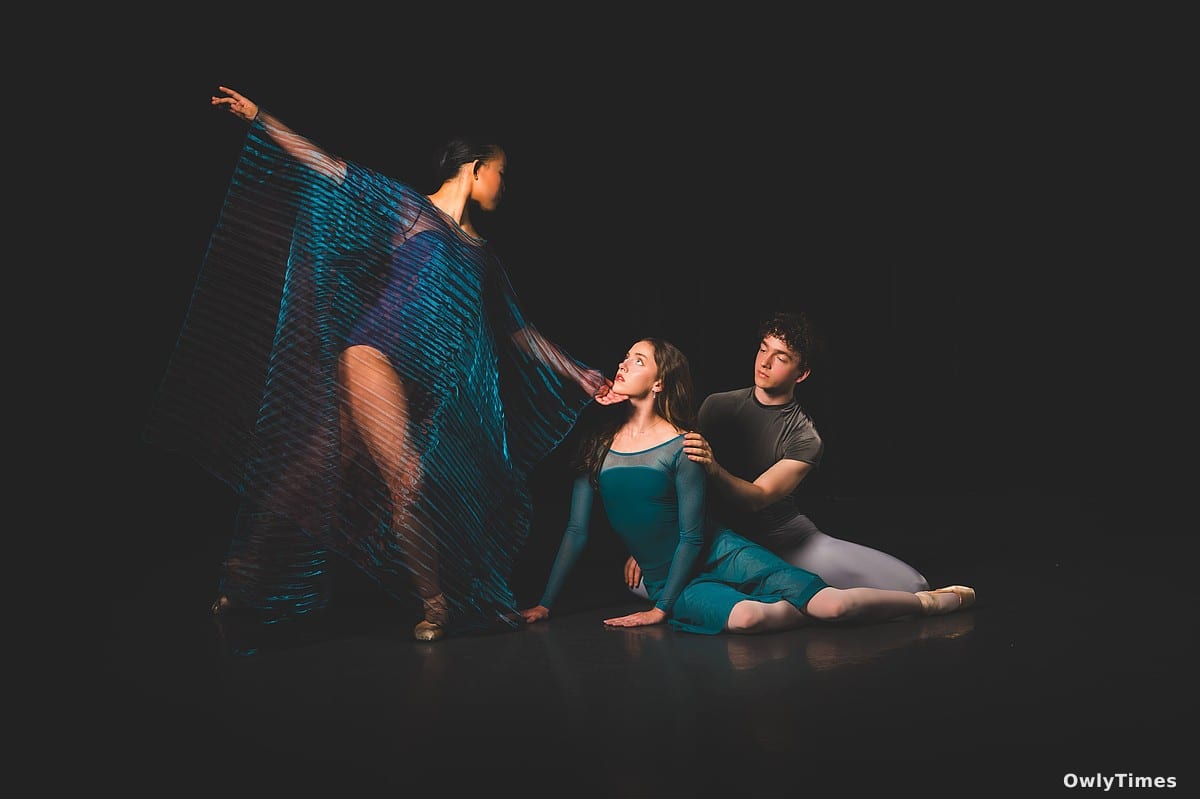

The scent of beeswax and old wood hung in the air at Inspiration Point Center for the Arts last Saturday, a quiet anticipation building as dancers stretched and the Windsong Chamber Chorale warmed their voices. It wasn’t just another performance; it was the second-ever presentation of “The Sacred Veil,” a ballet born from grief and transformed into something transcendent. Created by Sophia Smith and set to the hauntingly beautiful choral work by Eric Whitacre, the piece feels particularly resonant right now, as audiences grapple with a cultural moment defined by both profound loss and a desperate search for meaning. This isn’t simply about a ballet; it’s about how art is becoming a crucial space for processing collective trauma, a space where the unspoken weight of recent years can finally find expression.
“The Sacred Veil,” debuting in 2025, isn’t a story told through narrative, but through feeling. Whitacre’s music, itself commissioned by the Los Angeles Master Chorale in 2020, was born from a deeply personal place – the loss of his friend Charles Anthony Silvestri’s wife to cancer. Silvestri, a poet and medieval history professor at Washburn University, penned the text that forms the core of the piece, exploring the liminal space between life and what comes after. The ballet’s limited run – only two performances to date – underscores its delicate nature, a feeling that this isn’t a work meant for mass consumption, but for intimate, contemplative audiences. In a world saturated with spectacle, “The Sacred Veil” offers a deliberate counterpoint, a quiet invitation to sit with sorrow and find beauty within it.
This emphasis on emotional resonance isn’t isolated to Eureka Springs. Across Arkansas, arts organizations are increasingly leaning into programming that acknowledges and addresses the emotional toll of the past few years. The Arkansas Symphony Orchestra’s Dr. Ruth Marie Allen Concert Series, for example, continues its mission – established by the late Ruth Marie Allen before her death in 2023 – to provide “celebration and renewal” through music, offering a free performance of Mendelssohn and Grieg at the University of Arkansas for Medical Sciences. The choice of venue – a hospital lobby – is itself significant, a deliberate attempt to bring art directly to those navigating illness and healing. This isn’t about escapism; it’s about using art as a tool for support and solace.
But the impulse to connect art to something larger than itself extends beyond emotional healing. The Symphony of Northwest Arkansas’ “Declaration” concert, celebrating the 250th anniversary of the Declaration of Independence, isn’t simply a patriotic performance. Jesse Collett, conductor and curator, explicitly draws inspiration from the “America 250” exhibit at Crystal Bridges Museum of American Art, framing the music within a broader conversation about American identity and its ongoing evolution. The program, featuring works by William Grant Still, Florence Price, and Aaron Copland, deliberately centers American composers, particularly those whose voices have historically been marginalized. At a time when national narratives are fiercely contested, this concert feels like a deliberate act of re-evaluation, a questioning of what it means to be American in the 21st century.
This article draws on reporting from arkansasonline.com.
Even the more visually-driven art scene is participating in this trend. The exhibition “Fun & Color: The Art of John Goodwin” at the South Arkansas Arts Center isn’t just a showcase of vibrant paintings; it’s a homecoming for Goodwin, a native of El Dorado, and a celebration of the region’s artistic talent. Meanwhile, the Metro Theater Company of St. Louis’ adaptation of Maya Angelou’s “Life Doesn’t Frighten Me” – performed in both North Little Rock and Angelou’s hometown of Stamps – isn’t just a children’s play; it’s a tribute to a literary icon and a powerful message of resilience for young audiences. The Celebrate! Maya Project, which commissioned the performances, is actively using Angelou’s legacy to support scholarships and emerging poets, demonstrating a commitment to fostering the next generation of artists.
What’s happening across Arkansas isn’t a coincidence. It’s a reflection of a broader cultural shift, a growing recognition that art isn’t simply entertainment, but a vital component of civic life. The pandemic, coupled with ongoing social and political upheaval, has forced audiences to confront uncomfortable truths and grapple with complex emotions. In response, arts organizations are stepping up, offering programming that is not only aesthetically pleasing but also emotionally resonant, intellectually stimulating, and socially engaged. The question now is whether this shift will be sustained, or whether the industry will revert to its pre-pandemic norms once the immediate crisis has passed. Will arts organizations continue to prioritize programming that addresses the needs of their communities, or will they prioritize box office numbers and critical acclaim? The answer will determine not only the future of the arts in Arkansas, but also its role in shaping a more just and equitable society.