
The Illusion of Scientific Literacy: Why Viral Quizzes Miss the Mark
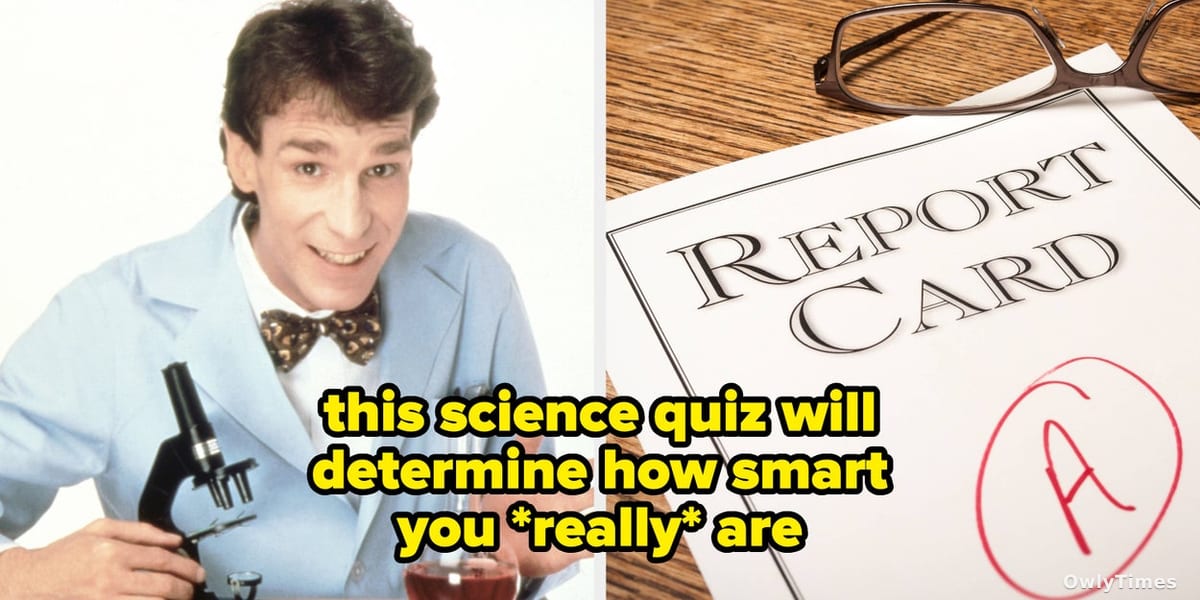
The persistent popularity of online science quizzes, like the one currently trending on BuzzFeed authored by Michele Bird, raises a critical question: what do we actually mean when we say someone is “science literate”? These quizzes, framed as tests of inherent intelligence – “You’re Incredibly Smart If You Can Answer Even ONE Question…” – tap into a cultural desire to quantify knowledge, but often mistake recall of isolated facts for genuine understanding of the scientific process. While seemingly harmless fun, the framing and format of these quizzes subtly reinforce a problematic notion that science is a collection of right answers, rather than a method of inquiry. The current BuzzFeed quiz, with its all-or-nothing structure – one wrong answer ends the attempt – exemplifies this, prioritizing memorization over the nuanced thinking that characterizes scientific expertise.
The quiz’s premise, inviting users to “channel your inner Bill Nye,” is particularly telling. Nye, a beloved science communicator, built his career not on demonstrating encyclopedic knowledge, but on explaining complex concepts with clarity and enthusiasm, fostering curiosity rather than demanding rote learning. The quiz, however, reduces science to a series of discrete challenges, divorced from context or application. It’s not that the questions themselves are necessarily trivial – though the specific content isn’t detailed in the source material, the implication is a broad range of scientific topics – but that success is defined by a single, unforgiving metric. This contrasts sharply with how scientists actually work, where iterative experimentation, acknowledging uncertainty, and learning from “incorrect” results are fundamental. A scientist doesn’t end their research after one failed hypothesis; they refine their approach and continue investigating.
What the quiz actually demonstrates isn’t intelligence, but rather familiarity with commonly presented scientific “facts.” This is a crucial distinction. A 2018 study by the National Science Foundation found that while public awareness of scientific topics like climate change and space exploration is relatively high, understanding of the scientific method – the principles of experimental design, data analysis, and peer review – remains surprisingly low. The BuzzFeed quiz does nothing to address this gap; it merely tests whether someone has encountered a particular piece of information before. In fact, the quiz’s format actively discourages the kind of thoughtful engagement that would promote deeper understanding. The pressure to perform, coupled with the immediate penalty for error, likely triggers anxiety and encourages guessing, rather than reasoned consideration.
Original reporting: buzzfeed.com.
The Appeal of Instant Validation and the Risk of Misinformation
The quiz’s popularity speaks to a broader trend: the human desire for instant validation. Social media platforms thrive on providing quick, easily digestible content that offers a sense of accomplishment. Completing a quiz, even a trivial one, can provide a small dopamine boost, reinforcing the behavior. This is particularly appealing in a world where complex issues demand sustained attention and critical thinking. However, this pursuit of instant gratification can also contribute to the spread of misinformation. If individuals equate success on a superficial quiz with genuine scientific understanding, they may be more likely to accept unsubstantiated claims or dismiss evidence-based findings that challenge their pre-existing beliefs. The source material itself, as a piece of user-generated content on BuzzFeed, highlights the platform’s open nature, where content quality isn’t necessarily vetted by scientific experts.
Limitations to consider are inherent in the very nature of these quizzes. They are designed for broad appeal, meaning questions must be accessible to a wide range of educational backgrounds. This necessarily limits the depth and complexity of the topics covered. Furthermore, the quiz format provides no opportunity for explanation or elaboration. Even if a user answers correctly, they don’t necessarily understand why the answer is correct. This is a significant drawback, as true scientific literacy requires not just knowing what is known, but also how we know it. The lack of feedback mechanisms also prevents users from identifying and correcting misconceptions. The quiz simply labels an answer as right or wrong, offering no guidance for improvement.
Looking ahead, the focus shouldn’t be on creating more challenging quizzes, but on developing more effective strategies for promoting genuine scientific literacy. This requires a shift away from rote memorization and towards fostering critical thinking skills. Educational initiatives should emphasize the scientific process, encouraging individuals to question assumptions, evaluate evidence, and engage in reasoned debate. We need to move beyond the “right answer” mentality and embrace the inherent uncertainty and complexity of scientific inquiry. A crucial next step is to investigate how platforms like BuzzFeed can integrate more robust fact-checking mechanisms and promote content created by qualified science communicators. Will we see a move towards interactive learning experiences that prioritize understanding over simple recall, or will the allure of the quick quiz continue to dominate the landscape of online science engagement?