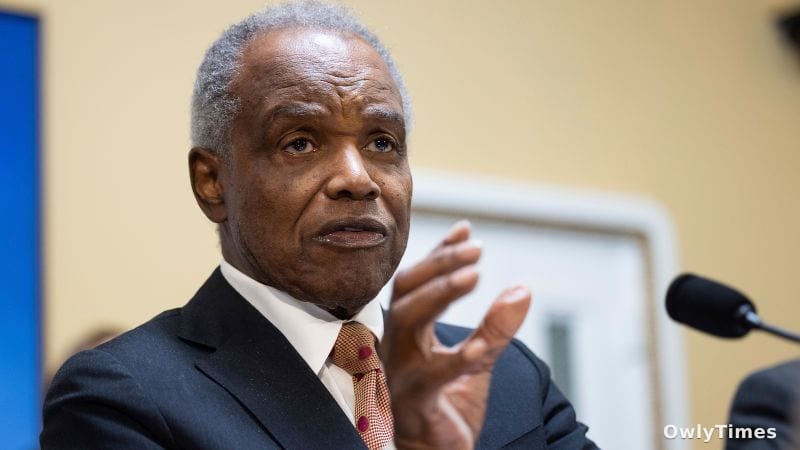

The sudden passing of David Scott, who represented Georgia’s 13th Congressional District, triggers a high-stakes scramble for political continuity in a seat held by the same occupant since 2002. At 80 years old, Scott was in the midst of a campaign for a 13th term, meaning his death does not merely create a vacancy in the present legislature but abruptly alters the strategic map for the upcoming cycle. The calculus for both parties now shifts toward managing the administrative and electoral fallout of an open seat in a district that served as a cornerstone for Democratic institutional knowledge within the House Agriculture Committee.
A Legacy Built on Rural Advocacy
Scott’s ascent to the chairmanship of the House Agriculture Committee in 2020 marked a milestone as the first African American to hold the post. His tenure was defined by a deliberate focus on the intersection of his own history and federal policy, specifically regarding rural development and education. He often pointed to his upbringing on a farm in rural Aynor, South Carolina, noting, “I was born on my grandparents’ farm in rural Aynor, South Carolina, during the days of segregation, and the hardships, of those, on whose shoulders I now stand.”
This perspective shaped his legislative priorities, most notably his successful effort to secure funding in the 2018 farm bill for agriculture scholarships tailored to students at historically Black colleges and universities. By anchoring his committee work in these specific community-based initiatives, Scott maintained a durable coalition of support that survived shifts in regional demographics and political volatility. The loss of such a figure leaves a void in the committee’s seniority structure, where his later role as ranking member provided a stabilizing force during intense debates over agricultural subsidies and food security.
The Calculus of Succession
In the immediate term, the benefits and losses of this vacancy are measured in institutional influence. For the Democratic caucus, the loss of a veteran committee leader complicates the push for long-term agricultural policy, especially as they navigate a polarized chamber. Speaker Mike Johnson acknowledged the weight of this departure on X, stating, “For more than two decades, David faithfully served the people of Georgia’s 13th Congressional District and spent the majority of his life in service to others.”
While bipartisan tributes have followed the announcement on the House floor, the political reality is that the 13th District’s path forward is now unmoored from the incumbency advantage Scott held for over 20 years. The beneficiaries of this shift will be the prospective candidates who can quickly mobilize support in a district that relies heavily on the legacy of Scott’s advocacy for farmers, veterans, and youth, as highlighted by Rep. Angie Craig. The contradiction, however, lies in the timing; with the election cycle already in motion, the party apparatus must now pivot from supporting an established incumbent to identifying a successor capable of holding a constituency that was long defined by Scott’s personal brand.
Monitoring the Institutional Vacuum
The immediate political chess move to watch is the procedural adjustment within the House Agriculture Committee. Because Scott served as a key link between the committee’s historical priorities and its current legislative agenda, the next reading of the committee’s internal committee assignments and legislative priority list will reveal how the Democratic caucus intends to fill the leadership gap. The transition of his duties will signal whether the party moves to consolidate influence behind existing senior members or attempts a broader restructuring to capture the demographic coalition Scott cultivated during his 12 terms in office.





