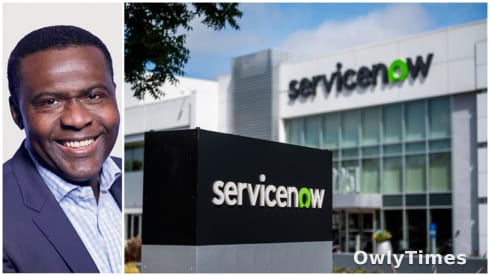

$7.75 billion is the price tag attached to the recent acquisition of Armis, a move that represents one of the largest deals in the history of Israeli high-tech and a fundamental pivot for ServiceNow. While the software giant is currently valued at approximately $94 billion, the market has reacted with significant skepticism to this rapid change in strategy. After previously reaching a peak valuation of around $150 billion, ServiceNow’s stock has endured periods of sharp volatility as investors weigh the risks of this aggressive, multibillion-dollar expansion against the company’s traditionally conservative corporate profile.
A Strategic Pivot Toward Autonomous Control
ServiceNow’s recent behavior marks a stark departure from its historical reluctance to pursue large-scale acquisitions. The company’s trajectory shifted notably with the roughly $1 billion purchase of Veza, a move that laid the groundwork for the more recent integration of Armis. According to John Aisien, Senior Vice President at ServiceNow, these deals are not merely about footprint expansion; they are intended to create a “control tower” for enterprise security in an era defined by agentic AI.
The rationale hinges on the belief that the current cybersecurity landscape is undergoing a transformation as significant as the shift from desktop computing to the mobile web. In an environment where static logins are being replaced by real-time identity verification, ServiceNow intends to leverage Armis’ ability to monitor roughly 7 billion devices in real time. By combining this capability with Veza’s identity management, the company aims to move beyond traditional, fragmented defense mechanisms and into a unified system of autonomous risk management.
Balancing Investor Sentiment and Long-Term Value
The disconnect between the company’s internal vision and the market’s reaction remains a point of tension. When asked about the recent turbulence in the company's valuation, Aisien dismissed the stock price as a “momentary reflection of sentiment, not of true value.” He emphasized that ServiceNow is focused on building a multibillion-dollar cyber business for the long term, positioning itself to compete directly with established incumbents like Microsoft, Palo Alto Networks, and CrowdStrike.
ServiceNow’s leadership maintains that the acquisition is a growth engine rather than a cost-cutting exercise. The integration of Armis, founded in 2016 by CEO Yevgeny Dibrov and CTO Nadir Izrael, brings with it a robust global customer base, including the United States Postal Service, United Airlines, Colgate-Palmolive, and Mondelez International. ServiceNow is betting that these clients will increasingly opt to replace legacy security providers like Tenable, Rapid7, and Snyk in favor of a more comprehensive, AI-driven security exposure management system.
The Future of the Cyber Center of Excellence
The acquisition also solidifies Israel as a critical hub for ServiceNow’s future operations. Following smaller acquisitions such as Traceloop and Pyramid Analytics, the company is formalizing its “cyber center of excellence” in the region. For Dibrov, the goal is to shift the market away from simple cybersecurity and toward the broader category of autonomous risk management.
Whether this strategy delivers the promised multibillion-dollar growth will depend on the successful integration of these diverse assets into a single, cohesive platform. The next reading of ServiceNow’s quarterly revenue figures will indicate whether the company’s move to challenge the industry’s top-tier players is gaining traction with its existing enterprise customer base or if the market’s current volatility is a sign of deeper structural concerns.