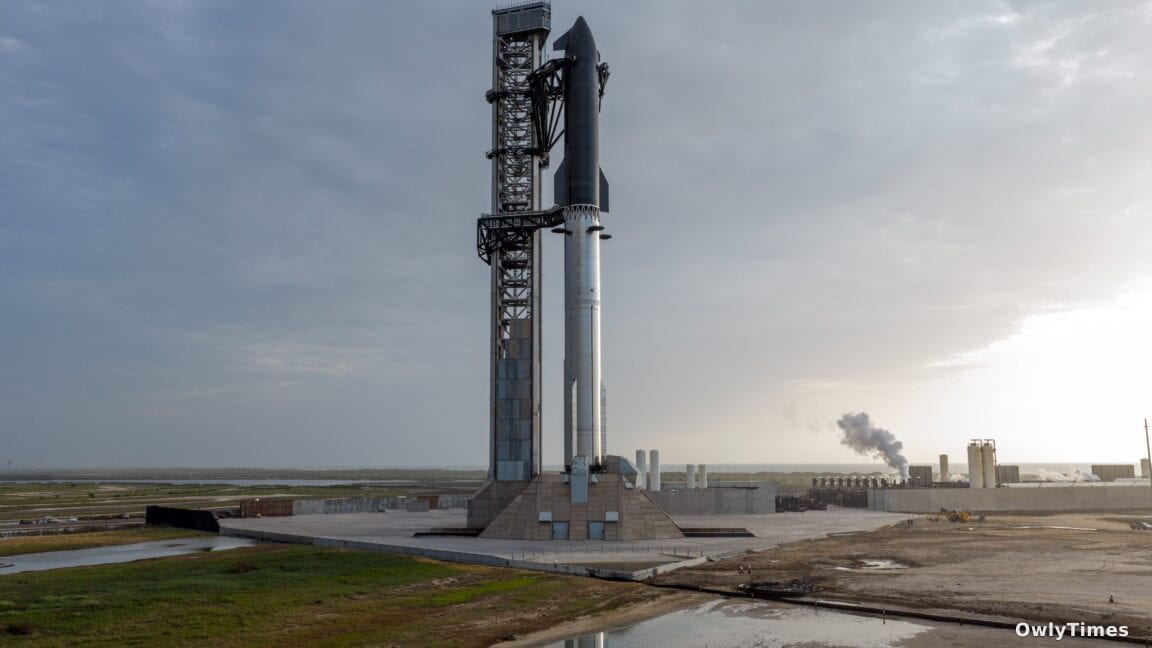

The question of how to democratize access to space has long been a central challenge in aerospace. This week, Skyroot Aerospace took a significant stride toward answering that by successfully launching its Vikram-1 rocket, marking India's first privately developed orbital launch. The historic liftoff occurred early Saturday morning, July 18, 2026, at 12:05 p.m. India Standard Time from the Satish Dhawan Space Centre on Sriharikota island. This achievement places India among a select group of nations, including the U.S. and China, capable of private orbital launches.
India's Private Space Race Takes Flight
Multiple sources confirm the core success: Skyroot Aerospace's Vikram-1 rocket achieved orbit on its inaugural mission. The BBC reported that the seven-story rocket lifted off and reached its Low Earth Orbit (LEO) destination approximately 280 miles (450 kilometers) away in a 16-minute flight. Space.com corroborated the launch time and the rocket's payload capacity, noting it can carry approximately 770 pounds (350 kilograms) of payload to LEO. This mission, named "Aagman" (Sanskrit for "Arrival"), carried six payloads, including scientific instruments and symbolic art pieces.
From Vision to Orbit: The "Cab Service to Space"
The ambition behind Vikram-1 is to transform satellite launches into a more accessible service, akin to calling for a taxi. Skyroot Aerospace co-founder and CEO Pawan Kumar Chandana articulated this vision to the BBC, describing it as a "cab service to space." He explained that satellite operators often face lengthy waiting periods for launch opportunities, a bottleneck Skyroot aims to alleviate by offering dedicated missions tailored to specific satellite needs and orbital destinations. This approach contrasts with traditional rideshare models on larger rockets with fixed schedules. Ars Technica also highlighted the significance of this endeavor, noting Chandana's statement that "We have done everything that could be done to test Vikram-1 on ground" and their eagerness to observe its performance in a real flight environment.
A Payload of Progress and Artistry
Beyond its technological demonstration, the Vikram-1 mission carried a diverse array of payloads. Space.com detailed that these included a technology demonstration from the German company DCUBED, the Solaras S3 nanosatellite pathfinder from Indian startup Grahaa Space, and Embrace, a robotic arm designed for space debris removal built by Cosmoserve Space. Skyroot's own SCOPE satellite was also on board to gather performance data. Notably, the launch also featured two symbolic payloads: a lotus made of lab-grown diamonds called "Cosmic Bloom," developed by Cosmos Diamonds, and a tiny gold rocket containing micro-sculptures of renowned Indian scientists. The BBC further elaborated on the tribute, mentioning sculptures of Nobel laureate CV Raman, aerospace engineer and former Indian president APJ Abdul Kalam, and Vikram Sarabhai, the father of India's space program.
Limitations to Consider
While the launch of Vikram-1 represents a monumental achievement for Skyroot Aerospace and India's private space sector, it's crucial to understand the context of this initial flight. The mission was explicitly a test flight, as confirmed by Ars Technica. This means the primary objective was to gather data and assess the rocket's performance across its various systems. Chandana himself emphasized that "This is our first test flight, and we will be getting valuable data from it." Therefore, while the successful orbital insertion is a resounding success, the data collected will be instrumental in refining future missions and ensuring commercial readiness. Furthermore, the BBC points out that this test flight is the first of two planned for this year before commercial launches commence next year, indicating a phased approach to market entry.
The Path Forward: Scaling and Diversification
The success of Vikram-1 positions Skyroot Aerospace to pursue its ambitious goals. Chandana stated that the company has the capacity to build one rocket per month at its Hyderabad factory, as reported by the BBC. The company's vision extends beyond national ambitions, with Chandana suggesting that "70-80% of our market would be the global economy." This includes providing services for satellites supporting critical sectors like agriculture, disaster management, and communications. In a separate report, Ars Technica mentioned that AST SpaceMobile is seeking additional launch vehicles, indicating a growing demand across the industry that companies like Skyroot aim to meet. The next research steps will undoubtedly focus on analyzing the data from this test flight, optimizing the rocket's performance, and demonstrating consistent reliability for commercial clients, paving the way for a more robust and accessible orbital launch market.