
Is our digital infrastructure actually just a target waiting for the next firmware update to go dark? We often talk about cyber warfare as if it’s a sterile, code-on-code skirmish occurring in a vacuum, but the reality on the ground—and in the warehouses—is far more tactile and destructive.
The real story here isn't just the tactical back-and-forth between nations; it’s the systematic weaponization of global logistics and civilian supply chains. As reported by The Independent, Ukraine has recently launched a series of high-impact drone strikes against the massive, sprawling distribution hubs of Wildberries, Russia’s largest online retailer. Think of Wildberries as the Amazon of its region; by targeting these logistics nodes, Kyiv is effectively attacking the "last mile" of Russia’s domestic economy, claiming the facilities support the military infrastructure. The physical result, captured in satellite imagery, has been massive, uncontrollable fires across sites in St. Petersburg, Elektrostal, and the Tambov region, with secondary strikes hitting facilities in the Krasnodar and Stavropol regions.
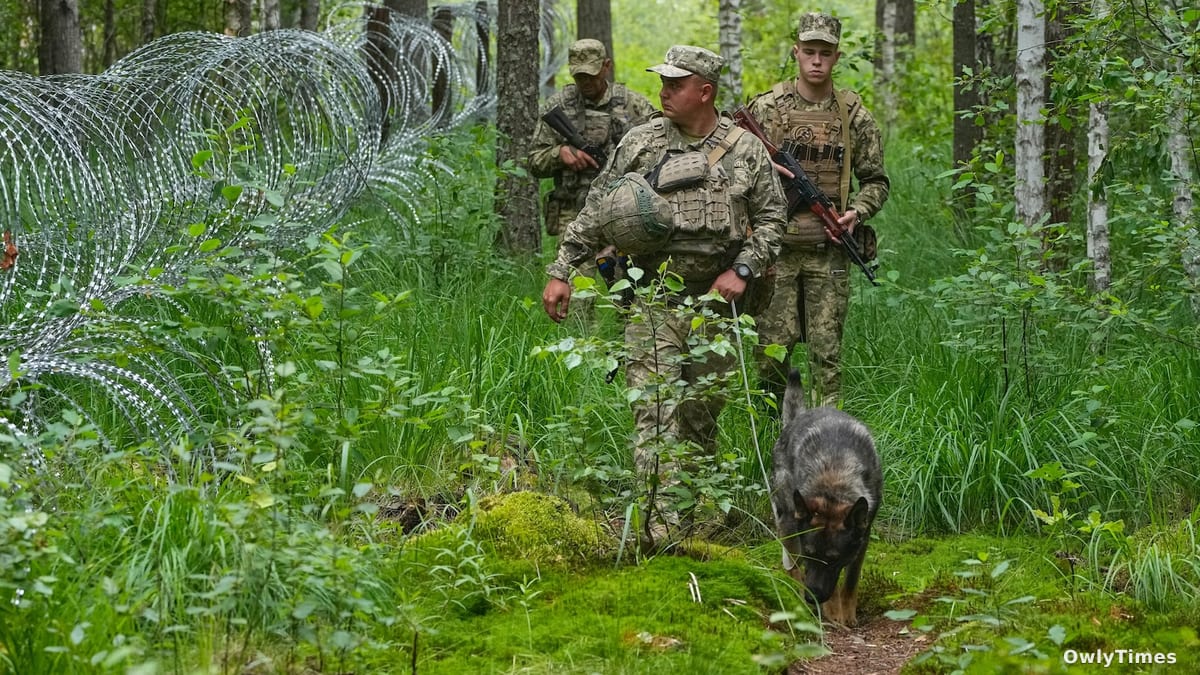
While Ukraine focuses on dismantling the digital and physical architecture of its adversary, the defensive measures on the northern front remain starkly analog. ABC News reports that Ukraine is doubling down on hardening its 1,084-kilometer (673-mile) border with Belarus. This isn't high-tech encryption; it is industrial-scale fortification featuring "dragon’s teeth" anti-tank barriers, razor wire, and dense minefields. It serves as a reminder that even in an era of drone warfare, the most effective deterrent against a ground invasion is still a wall of reinforced concrete.
The shift toward total economic decoupling is accelerating, moving beyond military targets and into the consumer’s living room. As detailed by Euronews, Latvia has passed legislation to ban the import of Russian and Belarusian goods that aren't already under EU sanctions. This is a significant escalation; the ban targets items like books, newspapers, and even video games, which lawmakers argue act as vectors for Kremlin propaganda. According to Euronews, these imports totaled €12.5 million in 2025. While that represents only 0.05% of Latvia’s total imports, the move signals a broader trend: the complete erasure of the "aggressor state" from the digital and cultural marketplace.
This transition is being championed by figures who view the integration of technology and defense as the new baseline for survival. Mykhailo Fedorov, the recently ousted Ukrainian defense minister, is a primary example of this mindset. According to The Independent, Italian Defense Minister Guido Crosetto has offered Fedorov an advisory role, specifically citing his ability to "rewrite the rules of the game" by pushing drone capabilities and rapid tech innovation into the combat zone. Fedorov’s career illustrates how a tech-savvy reformer can fundamentally alter the lethality of a battlefield.
For the ordinary user, these shifts mean the internet is no longer a neutral space for global commerce or entertainment—it is a contested territory where logistics hubs are now legitimate kinetic targets. We are moving toward a fractured global network where supply chains and content availability are dictated by national security imperatives rather than market efficiency.
What happens next is a definitive countdown: Latvia’s new import restrictions are set to remain in place until at least July 1, 2027, according to Euronews. Expect to see other EU member states face mounting pressure from their own foreign ministries to adopt similar, localized "digital and economic blockades" by the end of this year.