
$3 Billion at Stake: Smithfield’s Move Reveals Sioux Falls’ Manufacturing Future
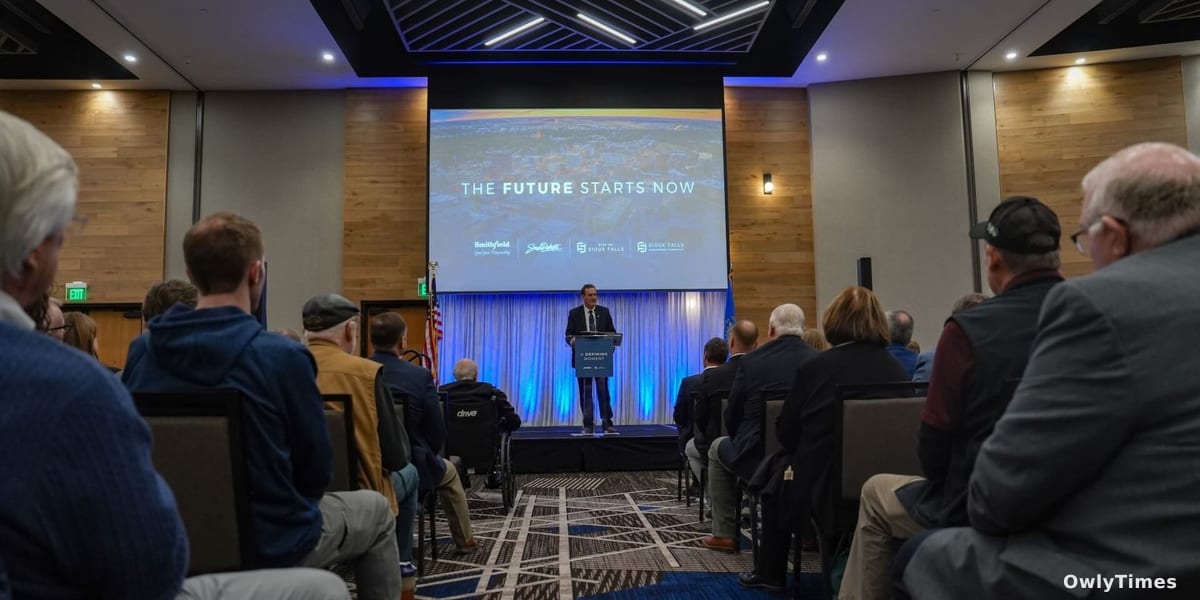
February 22, 2026. The date itself felt symbolic, a Presidents Day announcement signaling a potential new era for Sioux Falls. But beyond the patriotic timing, Smithfield Foods’ decision to relocate its pork processing plant to Foundation Park and sell its downtown property represents a $3 billion inflection point for the city’s economic trajectory – and a testament to proactive local leadership. This isn’t simply a real estate transaction; it’s a strategic realignment driven by industrial evolution and a calculated bet on Sioux Falls’ manufacturing capacity.
See the original siouxfalls.business story for the full account.
The story, as recounted by Mayor Paul TenHaken, began subtly in 2023-2024 with initial discussions about a potential expansion of the existing downtown facility. However, a deeper analysis quickly revealed a critical cost differential. Building anew, leveraging the infrastructure at Foundation Park, proved financially superior. This pivot wasn’t accidental. Foundation Park, a 200-acre industrial zone, was deliberately created over a decade ago to attract precisely this type of large-scale manufacturing – a foresight that is now paying dividends. Compared to the national average cost of constructing a modern food processing plant, estimated at $200-$250 per square foot, the availability of pre-zoned, readily-available land in Sioux Falls significantly lowered Smithfield’s barrier to entry.
The decision wasn’t solely about cost, however. It was about future-proofing. Smithfield’s analysis, according to city officials, indicated the downtown location was increasingly constrained, hindering the adoption of the latest processing technologies. The new plant, poised to be “the most modern, sophisticated plant of its kind in the nation,” will require significantly more space and infrastructure than the century-old downtown site could provide. This mirrors a broader trend within the food processing industry, where automation and data analytics are driving demand for larger, more flexible facilities. In 2023, capital expenditure in the US food processing sector reached $18.7 billion, a 12% increase year-over-year, largely fueled by investments in technology upgrades. Smithfield’s move positions them to capitalize on this trend.
But the most remarkable aspect of this deal isn’t Smithfield’s relocation, it’s what happens to the 120 acres of prime real estate they’re leaving behind. The key to unlocking this potential came in the form of a $50 million gift from philanthropist Denny Sanford. This wasn’t a typical incentive package – other states routinely offer free land to attract businesses. Instead, Sanford purchased the property outright, effectively handing control of its future to the community. This is a critical distinction. While a free land offer might secure a short-term win, Sanford’s investment provides long-term leverage, allowing Sioux Falls to dictate the redevelopment in a way that aligns with its broader vision. The economic impact of Smithfield is estimated at $3 billion annually; losing that would have been devastating, but retaining it and gaining control of a strategically valuable parcel of land is a uniquely advantageous outcome.
The implications extend beyond economics. The story is steeped in local history, recalling past efforts to retain major employers like John Morrell & Co. in the 1990s. The involvement of Bill Even, the new leader of the Governor’s Office of Economic Development and former CEO of the National Pork Board, highlights the importance of industry expertise in navigating complex negotiations. This wasn’t a deal brokered by abstract economic principles, but by individuals with deep understanding of the pork industry and established relationships with key stakeholders. The success underscores the value of institutional knowledge and proactive engagement from both state and local leaders.
What this means for your wallet: Expect a ripple effect. The new Smithfield plant will create jobs, both directly and indirectly, boosting local income and spending. The redevelopment of the downtown property presents an opportunity for significant investment and further economic growth. However, the scale of the project also raises questions about infrastructure capacity and potential strains on housing availability. The key question for residents and investors alike is this: will Sioux Falls be able to manage this growth effectively, ensuring that the benefits are broadly shared and that the city remains an attractive place to live and work? The next five years will reveal whether this Presidents Day announcement truly marks the beginning of a new era of prosperity for Sioux Falls.