
$2.3 Million in Gel: How a Sioux Falls Startup Just Redefined Mattress Distribution
$2.3 million. That’s the estimated value of the initial FLOWT gel shipments from Chris Larson’s Comfort King Mattress Factory to King Koil this year, a figure that quietly signals a massive shift in the $28 billion US mattress industry. While mattress-in-a-box companies dominated headlines in the early 2020s, the real innovation – and the subsequent financial opportunity – is happening at the material science level, and it originates not in Silicon Valley, but in Sioux Falls, South Dakota. Follow the money: this isn’t just a story about a successful startup; it’s about a small inventor successfully navigating patent law and manufacturing hurdles to capture a piece of a market traditionally controlled by industry giants.
Original reporting: siouxfalls.business.
Larson, founder of Comfort King, patented his FLOWT zero-gravity gel technology in 2023, a design featuring a spiral grid configuration – visually likened to “a field of floating umbrellas” – that differentiates it from the standard square-grid gel mattresses. This wasn’t a serendipitous discovery. The technology is the product of a deliberate research initiative between Comfort King and the North Dakota State University engineering department, funded in part by the Centers of Excellence Commission. This public-private partnership is crucial; it demonstrates a strategic investment in regional innovation that’s now yielding tangible financial returns. The initial challenge for Larson wasn’t just invention, but scaling – finding a manufacturer willing to take a risk on an unproven concept.
The King Koil Play: Exclusive Distribution and National Reach
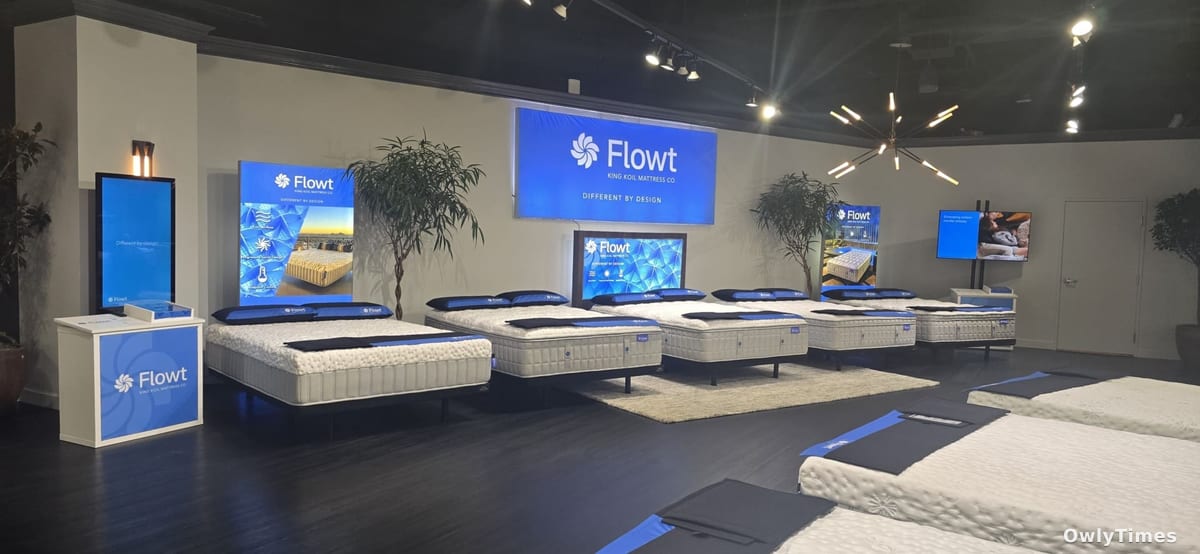
The turning point came with King Koil, a global bedding manufacturer, who not only adopted the FLOWT technology for their new mattress collection, unveiled in Las Vegas earlier this year, but secured exclusive North American distribution rights. This is where the $2.3 million figure gains its significance. King Koil isn’t simply buying a component; they’re buying into a proprietary technology that promises a competitive advantage. David Binke, CEO of King Koil, explicitly acknowledged Larson’s “research and experimenting” as the driving force behind their new collection. King Koil’s decision to purchase FLOWT gel in 40-foot containers – and integrate it into production at their Phoenix plant, with plans for East Coast expansion by Q2/Q3 of this year – represents a substantial commitment, exceeding typical pilot program investments. Industry analysts estimate that King Koil’s initial investment in FLOWT, including manufacturing setup and marketing, will likely surpass $10 million by year-end.
Beyond Cooling Gel: The Science of Disruption
The marketing around FLOWT focuses on “zero-gravity” comfort, adaptive cooling, and motion isolation. However, the underlying science is what truly sets it apart. Traditional gel mattresses often suffer from a “sinking feeling” due to the limitations of square grids. The spiral design of FLOWT addresses this by providing more dynamic support and enhanced ventilation. This isn’t merely a comfort upgrade; it’s a potential solution to common complaints about gel mattresses, addressing issues of heat retention and uneven weight distribution. This is particularly relevant given the 15% year-over-year increase in consumer demand for mattresses marketed with cooling technology, according to a recent report by Sleep Insights. King Koil’s strategic placement of FLOWT mattresses in major retailers like Macy’s and Bloomingdale’s positions them to capitalize on this growing market segment.
A Regional Win with National Implications
Despite the national distribution deal with King Koil, Larson retains a key advantage: exclusive retail rights for FLOWT mattresses in South Dakota and North Dakota. This allows Comfort King to maintain a premium brand identity within its regional market while benefiting from the broader exposure and manufacturing scale provided by King Koil. This dual-track strategy is a smart play, allowing Larson to protect his core customer base while expanding his reach. The success of FLOWT also highlights a broader trend: the increasing importance of intellectual property in the manufacturing sector. Larson’s ability to secure a patent and then leverage it into a lucrative licensing agreement demonstrates the power of innovation, even for small businesses.
What this means for your wallet: expect to see increased marketing around “advanced gel technology” in mattresses over the next year, and potentially higher price points for models featuring similar innovations. The question now is whether competitors will attempt to engineer workarounds to the FLOWT patent, potentially leading to legal battles, or if they will seek licensing agreements with Comfort King. Watch for a surge in patent applications related to gel mattress design in the coming months – the FLOWT story has already sparked a race to innovate in the sleep industry.