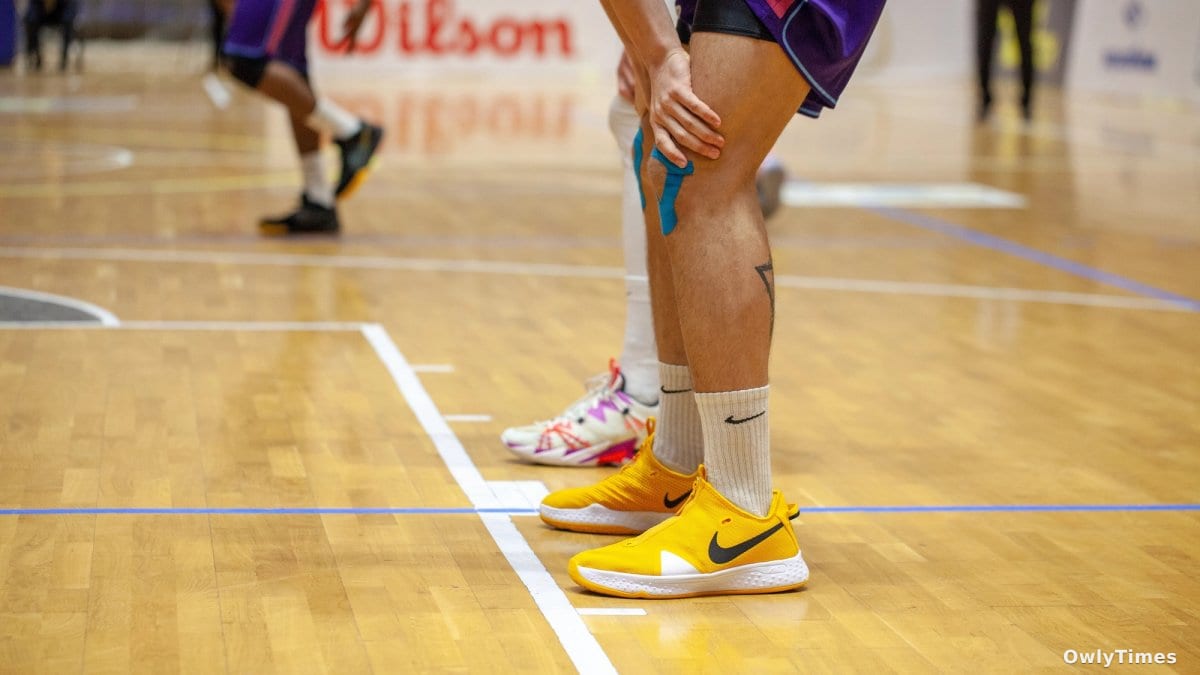

The persistent squeak of athletic shoes on a basketball court is more than just an auditory backdrop to the game; it’s a surprisingly complex physical phenomenon that researchers are only beginning to unravel. For centuries, scientists have attributed these sounds to “stick-slip” friction – the momentary adhesion and release between two surfaces. However, a new study published in Nature challenges this long-held understanding, revealing that the geometry of surfaces, not just the materials themselves, dictates the frequency and character of squeaks, and even allows for the deliberate “playing” of friction to produce recognizable sounds. This isn’t simply about quieter sneakers; it’s a fundamental shift in how we understand friction, with implications ranging from materials science to seismology.
The research, led by Adel Djellouli at Harvard’s School of Engineering and Applied Sciences (SEAS), began with a deceptively simple question: why do basketball shoes squeak? To answer it, the team adopted a surprisingly historical approach, drawing inspiration from the work of Leonardo da Vinci. The 15th-century polymath famously designed angled contraptions to study friction, and Djellouli’s team mirrored this spirit by combining cutting-edge technology with a focus on the mechanics of contact. They employed internal reflection imaging and cameras capable of recording at one million frames per second to meticulously document the shifting contact points between rubber sneaker soles and glass surfaces, simultaneously measuring the resulting audio. This level of detail was crucial, as previous studies lacked the resolution to capture the rapid, dynamic processes at play.
Reporting from popsci.com informs this analysis.
What the team discovered was unexpected. Rather than random occurrences, squeaking frequencies are determined by the repetition rate of propagating pulses along the contact surface. Critically, this repetition rate isn’t a property of the materials themselves, but is instead dictated by the stiffness and thickness of the rubber. Further experiments with flat-sided rubber blocks revealed that even subtle changes in geometry dramatically altered the sound produced, shifting from distinct squeaks to broader, swishing noises. “We were surprised that tiny surface features could so strongly reorganize frictional motion,” noted study co-author Gabriele Albertini of the University of Nottingham. This finding directly challenges the prevailing assumption that friction can be adequately modeled using simplified, one-dimensional approaches.
The implications of this discovery extend far beyond the basketball court. Demonstrating the power of their understanding, the researchers even managed to “play” friction, arranging rubber blocks at varying heights to recreate the iconic theme song from Star Wars. This playful demonstration underscores the level of control they achieved over the frictional process. Furthermore, the team observed instances of triboelectric discharges – essentially, miniature sparks – generated during slip pulses, a phenomenon reminiscent of the “force lightning” seen in science fiction. While not a practical energy source, this observation highlights the complex interplay of mechanical and electrical forces at the frictional interface.
However, it’s important to note the specific conditions of this study. The experiments were conducted with rubber on glass, a relatively simple system. Real-world scenarios involve a far wider range of materials, surface textures, and environmental factors like humidity and temperature. These variables could significantly influence the observed dynamics. The study also focused primarily on the generation of squeaks, not necessarily on their complete elimination. While the findings pave the way for designing materials with tunable friction, achieving truly silent sneakers remains a complex engineering challenge.
Looking ahead, the research team plans to investigate how these principles can be applied to create “frictional metamaterials” – materials engineered to exhibit specific frictional properties on demand. Katia Bertoldi, a materials scientist at SEAS, explained that “tuning frictional behavior on the fly has been a long-standing engineering dream,” and this new insight provides a pathway to achieving it. Perhaps more surprisingly, the team also recognizes a connection to the study of earthquakes. The same physics governing slip pulses in squeaking sneakers also appears to operate during seismic events, where tectonic faults rupture at incredibly high speeds. Physicist Shmuel Rubinstein emphasized that this research “bridges two fields that are traditionally disconnected,” suggesting that a deeper understanding of friction at the microscale could ultimately improve our ability to predict and mitigate earthquake risks. The question now is whether the insights gained from a squeaky sneaker can truly unlock secrets hidden within the Earth’s most powerful forces.





