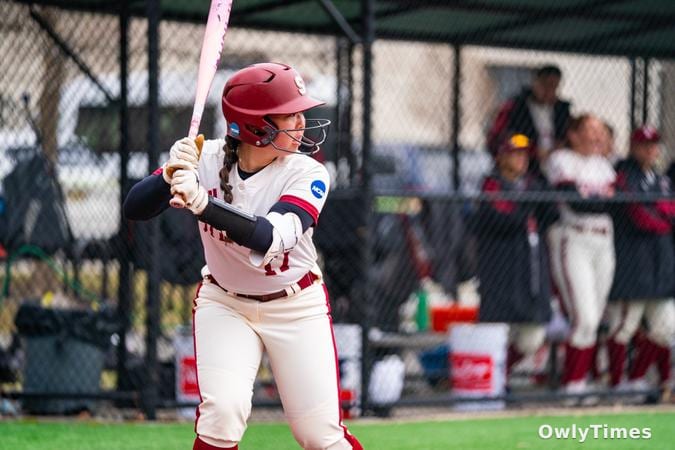

Is a softball doubleheader really a microcosm of everything wrong with data-driven decision-making? Because watching the Stevens Institute of Technology Ducks get clipped by Lebanon Valley College on Friday – 8-3 and 2-1 – felt less like a sports loss and more like a cautionary tale. The Ducks, now 14-12 overall and 3-5 in the MAC Freedom, aren’t a bad team. They’re a team that momentarily looked good, then got systematically dismantled, and the box score reveals a story far more nuanced than just “Dutchmen win.” The real story here isn't the final score – it's how easily momentum can evaporate when relying on individual sparks instead of consistent, strategic play.
Let’s break down game one. Stevens briefly seized control in the second inning, stringing together hits from Jessica Hsu, Riley Lawrence, Isabella Won, Lilian Cournoyer, and Emma Quattrochi to take a 3-2 lead. That’s a textbook example of offensive synergy – runners moving, smart at-bats, capitalizing on opportunities. But then…nothing. One walk in the fourth, and then a shutdown. Lebanon Valley, meanwhile, didn’t need flashy rallies. They chipped away, punctuated by a two-run homer in the third and consistent scoring in the fourth and fifth. It wasn’t about overpowering Stevens; it was about exploiting their inability to sustain pressure. This isn’t a talent issue, it’s an execution issue, and it’s a pattern we see replicated across industries – a brilliant initial push followed by a frustrating stall.
This piece references the stevensducks.com report.
Game two was even more agonizing. A single run in the first, courtesy of a defensive error and a well-placed groundout from Carmelita Murphy-Brown, felt like a potential reset. But Lebanon Valley immediately answered with a home run, and then an RBI single. The Ducks’ offense went into hibernation, managing only one baserunner over the next three innings. The pitching change – Kyra Fischer relieving Jessica Hsu – offered a temporary reprieve, with Fischer navigating a bases-loaded situation in the fifth thanks to a spectacular diving catch by Emma Quattrochi. That play, frankly, deserved a win. But a near-rally in the seventh, ending with a heartbreaking tag-out at home plate, underscored the team’s inability to close.
The box score offers some glimmers of hope. Ella Tozduman pitched 1 2/3 scoreless innings of relief in game two, and Kyra Fischer tossed three scoreless innings. But relief pitching can only do so much when the offense is consistently failing to extend leads. These are valuable arms, but they’re being asked to clean up messes that shouldn’t be happening in the first place. The Ducks are relying on heroic individual efforts – the diving catch, the scoreless innings – to compensate for systemic offensive inconsistencies. That’s not a sustainable strategy. It’s the equivalent of a tech startup relying on “growth hacks” instead of building a solid product and a loyal customer base.
This isn’t about blaming the players. It’s about recognizing a pattern. Stevens has the individual pieces, but they haven’t figured out how to consistently assemble them into a winning formula. They’re a team that flashes potential, then fades. And that’s a problem that extends far beyond the softball diamond. We see it in companies that prioritize flashy innovation over incremental improvements, in political campaigns that rely on viral moments instead of grassroots organizing, and in individuals who chase quick wins instead of building long-term habits.
Looking ahead, the Ducks host Ramapo College next Wednesday. Here’s what to watch for: can Stevens demonstrate a consistent offensive approach, stringing together hits and capitalizing on scoring opportunities throughout the entire game? Or will they continue to rely on individual brilliance and hope for a lucky break? Because if they don’t address this fundamental issue, the next doubleheader won’t be an anomaly – it will be a continuation of a frustratingly familiar pattern. I predict that if Stevens doesn’t show a marked improvement in offensive consistency against Ramapo, we’ll see a further slide in the MAC Freedom standings, and a serious conversation about whether this team can truly contend this season.