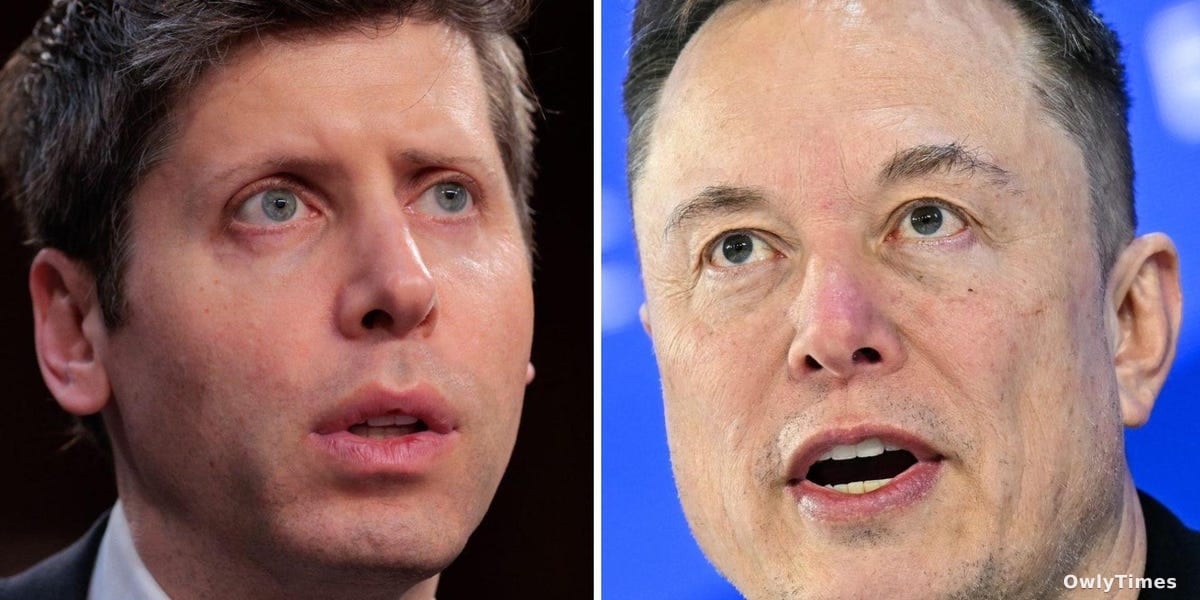

Is the future of computing…above us? That’s the question swirling around Silicon Valley as Elon Musk’s SpaceX barrels ahead with plans to launch a million satellites acting as orbital data centers. While the tech press fixates on the billionaire rivalry between Musk and OpenAI’s Sam Altman, and the resulting public spat – Altman famously called the idea “ridiculous” during a recent event in New Delhi – the real story here isn't about ego clashes, it’s about a looming crisis on Earth and a desperate search for solutions that bypass increasingly vocal local opposition.
The immediate context is simple: we’re running out of viable real estate for data centers. The insatiable appetite of AI, and the companies building it, demands exponentially more processing power. As reported by Business Insider last year, over 1,200 data centers were approved for construction across the US by the end of 2024, a nearly 400% increase from 2010. This isn’t just an industry problem; it’s a strain on resources. These facilities guzzle water, stress power grids, and contribute to pollution, sparking backlash from communities in states like Texas and Oklahoma where massive campuses are planned. The promise of AI is colliding with the reality of its environmental footprint, and that’s a PR nightmare no amount of marketing can fix.
Drawn from Business Insider.
Altman’s dismissal of space-based data centers isn’t simply contrarianism. He’s right to point out the current hurdles: launch costs remain astronomical, and the logistics of repairing a fried chip orbiting the planet are…challenging, to say the least. He estimates orbital data centers “won’t matter at scale this decade,” a timeframe that feels generous considering the engineering complexities. But to frame it as simply “ridiculous” ignores the underlying pressure forcing companies to look beyond terrestrial solutions. Google’s Project Suncatcher, aiming for deployment as early as 2027, demonstrates that Altman isn’t the only one considering the possibility. Google CEO Sundar Pichai’s public commitment signals a serious investment, and a belief that the benefits – potentially limitless, solar-powered computing – outweigh the risks.
The irony is thick. Musk, who built his empire on disrupting established industries, is now attempting to leapfrog a problem created by the very technologies he champions. His acquisition of xAI is explicitly framed as accelerating the orbital data center project, suggesting he sees it as a critical component of AI development. This isn’t about altruism; it’s about control. Owning the infrastructure – even if it’s in orbit – gives SpaceX and xAI a significant advantage in the AI arms race. It’s a vertical integration play of galactic proportions. But even if SpaceX can overcome the technical hurdles, the question remains: who benefits from a future where computing power is concentrated in the hands of a few private companies, literally beyond the reach of regulation?
The public debate, so far, has been dominated by technical feasibility and billionaire squabbles. What’s missing is a conversation about access and equity. If data processing becomes prohibitively expensive on Earth, and the alternative is reliant on a handful of orbital monopolies, the promise of democratized AI will evaporate. The real cost of these satellites won’t be measured in dollars, but in the widening digital divide. Watch for this: by late 2028, we’ll see the first major legal challenge to orbital data center deployment, not from environmental groups concerned about space debris, but from consumer advocacy groups arguing that access to fundamental computing resources is a public utility, not a luxury commodity.