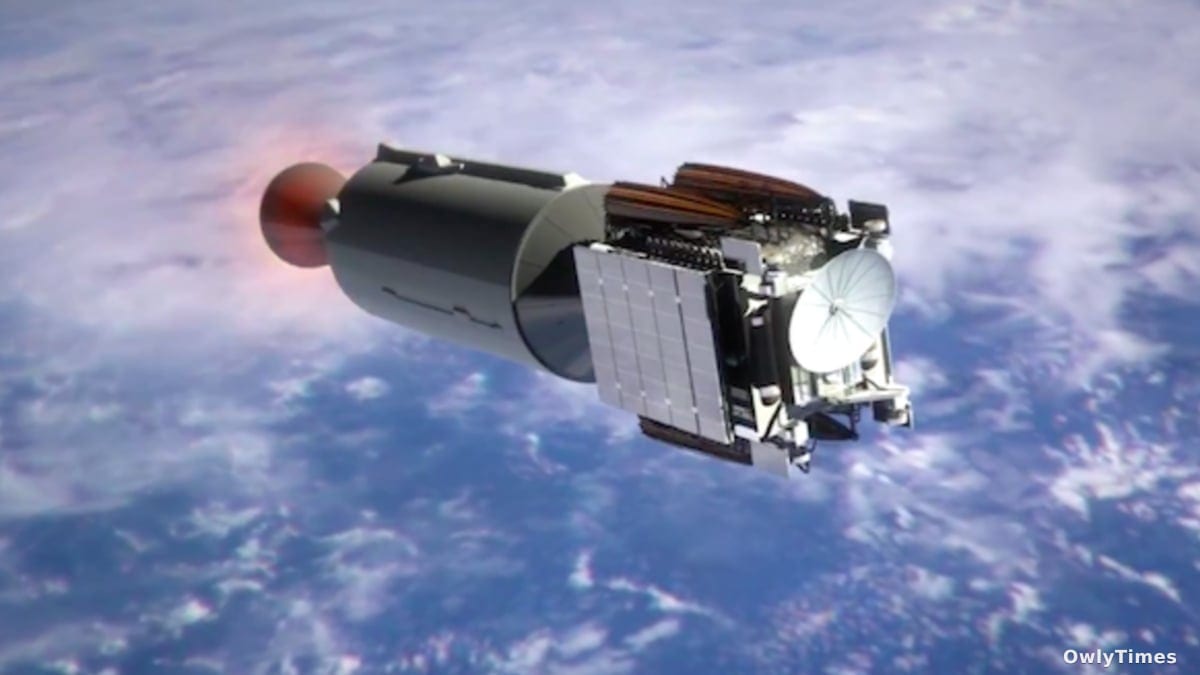

The question of what happens to defunct satellites and rocket stages once their operational life ends has largely been out of sight, and therefore, out of mind. But a new study, published today in Communications Earth & Environment, demonstrates that the disintegration of space debris upon re-entry isn’t a clean burn – it’s a source of measurable metal pollution in a critically understudied region of our atmosphere. This isn’t simply about space junk falling from the sky; it’s about introducing novel chemical signatures into the upper atmosphere with potentially far-reaching consequences for everything from radio communications to the ozone layer. While headlines might suggest a sudden crisis, the significance lies in establishing a baseline – proving that these emissions are detectable and traceable, opening the door to accountability and informed regulation.
The research, led by Robin Wing from the Leibniz Institute of Atmospheric Physics in Germany, utilized highly sensitive laser-based sensors to detect trace metals in the mesosphere and lower thermosphere, a region between 80 and 120 kilometers above Earth. This atmospheric layer is notoriously difficult to study, being too high for conventional aircraft and balloons, and too low for most satellites. On February 20, 2025, Wing and his team observed a distinct and sudden increase in lithium ions. Crucially, this wasn’t the typical metallic signature associated with meteors; atmospheric trajectory modelling linked the lithium plume directly to the re-entry of a discarded SpaceX Falcon 9 rocket stage burning up over the Atlantic Ocean, west of Ireland. This marks the first time a pollutant plume has been definitively linked to a specific re-entry event through ground-based observation.
This article draws on reporting from ScienceAlert.
The detection of lithium is particularly noteworthy because it’s not a naturally abundant element at those altitudes. It originates from the lithium-ion batteries and metal casings used in satellites. This isn’t a negligible contribution either. The number of satellites in orbit has surged from a few thousand just a couple of years ago to roughly 14,000 today, largely driven by the proliferation of megaconstellations like SpaceX’s Starlink. With SpaceX alone seeking approval for a constellation of up to one million satellites, and countless other launches planned, the scale of potential atmospheric contamination is rapidly escalating. Current estimates predict that by 2030, several tonnes of spacecraft material will burn up in the upper atmosphere every day. To put that in perspective, this represents a significant, and currently unregulated, influx of foreign material into a previously pristine environment.
It’s important to understand what this study didn’t find, and what previous research has suggested. The team didn’t quantify the overall impact of lithium on the upper atmosphere, nor did they directly assess its effect on the ozone layer. However, existing research, such as a 2024 study, indicates that emissions of aluminum and chlorine from rocket launches and re-entries may impede the ozone layer’s recovery. Soot from rocket exhaust is also believed to contribute to warming in the upper atmosphere. The lithium detection, therefore, adds another piece to a growing puzzle, highlighting the complexity of the issue and the need for comprehensive monitoring. The study’s success in tracing the plume to a specific rocket stage is a methodological breakthrough, demonstrating the feasibility of attributing pollution to individual actors.
Limitations to consider include the localized nature of the observation. The Leibniz Institute’s laser sensors provide incredibly precise data, but their coverage is limited. A broader network of monitoring stations would be necessary to assess the global impact of re-entry emissions. Furthermore, the study focused on lithium; other metals and compounds released during re-entry, such as aluminum, titanium, and various combustion byproducts, require similar investigation. The atmospheric models used to trace the plume also rely on certain assumptions about atmospheric conditions, which could introduce some degree of uncertainty.
The next crucial research step is establishing a global network of sensors capable of detecting and tracking these pollutants. This requires investment from both governments and the private space industry. Equally important is the development of robust atmospheric models that can accurately predict the dispersion and impact of these emissions. Beyond monitoring, the conversation needs to shift towards mitigation. Could satellite designs be altered to minimize the use of polluting materials? Are there viable technologies for deorbiting spacecraft in a controlled manner, reducing the amount of material that burns up in the atmosphere? The detection of lithium isn’t a warning of immediate catastrophe, but a clear signal that we need to start asking these questions – and demanding answers – before the skies above become irrevocably altered. We should be watching for the establishment of international regulatory bodies, and specifically, whether those bodies will prioritize proactive monitoring and emission standards, or remain reactive to emerging threats.





