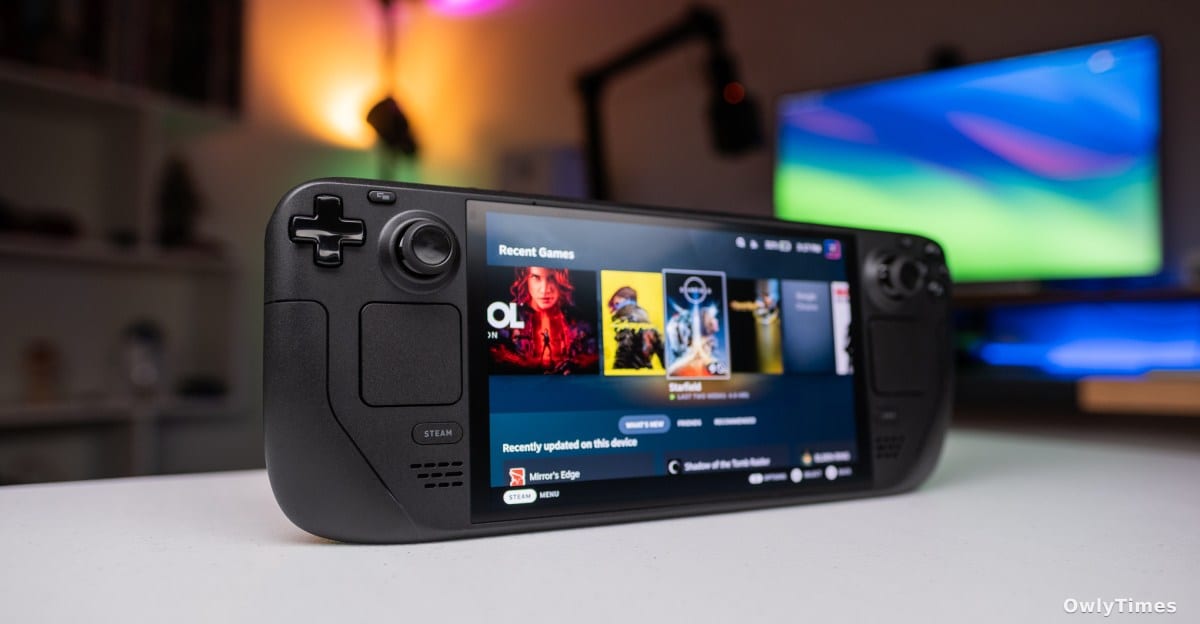

Is the future of gaming less about bigger graphics and more about…supply chain logistics? That’s the unsettling question bubbling up as Valve grapples with shortages impacting not just the coveted Steam Deck OLED, but its entire hardware pipeline. The news that the Steam Deck OLED is facing “intermittent” stockouts, reported by Jay Peters at The Verge, isn’t a blip – it’s a symptom of a deeper problem that’s about to hit gamers, and frankly, anyone relying on increasingly complex electronics, right in the wallet. The real story here isn't a popular handheld being hard to find – it's the fragility of the components we take for granted and the cascading effects when those components become scarce.
Beyond the Deck: A Hardware Delay Ripple Effect
The timing is particularly brutal. Just weeks ago, Valve announced delays for the Steam Machine, Steam Frame, and Steam Controller, all pushed back from an early 2026 launch. The culprit? The same memory and storage crunch now plaguing the Steam Deck OLED. This isn’t a case of Valve mismanaging its production schedule; it’s a clear indication that securing essential components is becoming a major bottleneck for even well-resourced companies. Consider this: the gaming industry projected a 7.5% growth in hardware sales for 2026, according to Newzoo’s latest report. That forecast was built on the assumption of relatively stable supply chains. These shortages throw that entire calculation into question. We’re talking about potentially hundreds of millions of dollars in lost revenue, and more importantly, frustrated consumers.
This piece references the The Verge report.
The 256GB Disappearance and the Shrinking Options
The quiet discontinuation of the 256GB LCD Steam Deck late last year now feels less like a product lifecycle decision and more like a preemptive move. Valve was likely already anticipating these supply constraints and streamlining its offerings to focus on models with more readily available components. This is a trend we’re seeing across the tech landscape – manufacturers are simplifying product lines, reducing customization options, and prioritizing higher-margin items to navigate these shortages. For the average gamer, this translates to fewer choices and potentially higher prices. Remember when building a custom PC was a relatively affordable option? Those days are rapidly fading as the cost of RAM and SSDs continues to fluctuate wildly.
Memory and Storage: The New Oil?
The specific components causing the headache – memory (RAM and flash storage) and storage (SSDs) – are the workhorses of modern electronics. They’re not glamorous, but they’re absolutely essential. And their production is concentrated in a handful of regions, making them vulnerable to geopolitical instability, natural disasters, and, as we’re seeing now, simple demand exceeding capacity. The situation is particularly acute with SSDs, where a handful of manufacturers control a significant portion of the market. This lack of diversification creates a single point of failure, and Valve is currently feeling the impact. It’s a stark reminder that the sleek, futuristic devices we love are built on a surprisingly fragile foundation. This isn’t just about gaming; it’s about the entire consumer electronics industry, from smartphones to laptops to even washing machines.
What to Expect When You Can't Expect Availability
The official line from Valve is that they’re working to “finalize plans as soon as possible” for the Steam Machine, Steam Frame, and Steam Controller. But “as soon as possible” is a dangerously vague promise in the current climate. Don’t expect a swift resolution. The real question isn’t if these devices will launch in 2026, but when and at what price point. I predict that by Q4 2026, we’ll see a significant increase in “component-adjusted pricing” across the board – meaning manufacturers will openly factor in supply chain risks into the base price of their products. Gamers, and all tech consumers, should prepare for a future where “in stock” isn’t a given, and “affordable” requires a little more digging. The next time you see a deal on RAM or an SSD, buy it. You might not get another chance for a while.