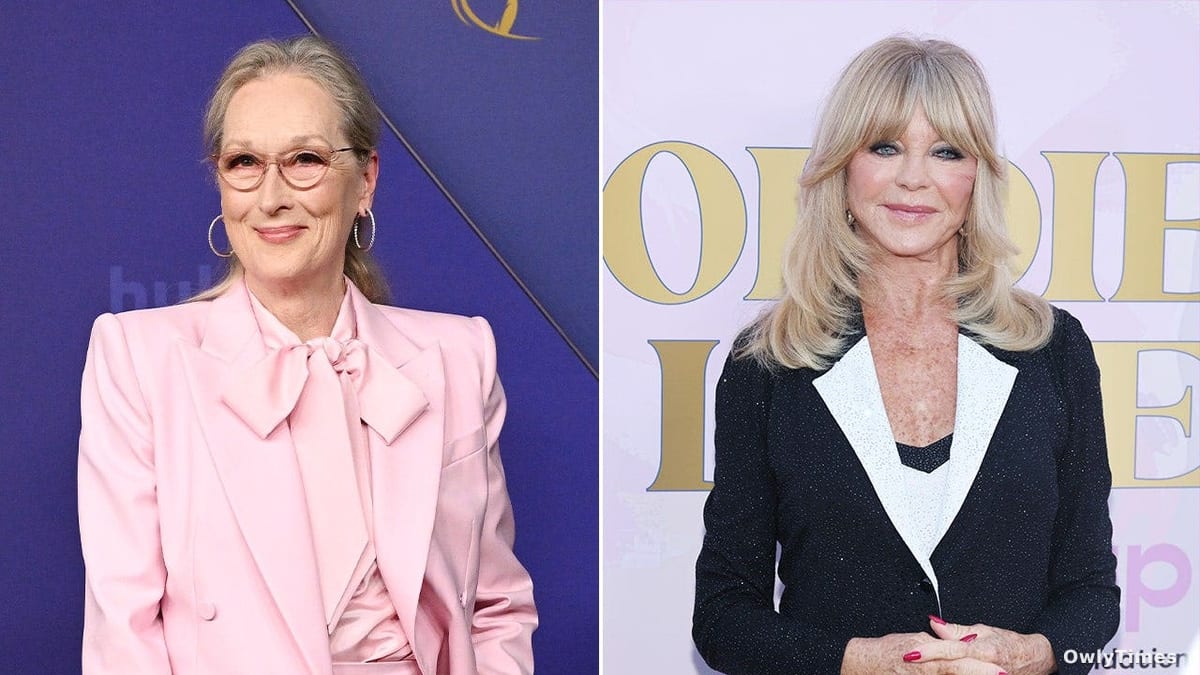

The red convertible pulled into the lot, hair tousled and an infectious, disarming apology already on her lips. For Meryl Streep, watching Goldie Hawn arrive on the set of their 1992 film Death Becomes Her wasn't just a moment of professional irritation; it was a masterclass in the Hollywood charm offensive. Streep, who identifies as the perpetually punctual and perhaps "annoying" professional, found herself clashing with Hawn’s more relaxed approach to the clock. Yet, as she recently revealed in an interview with Vanity Fair, that "beef" was less about a professional breakdown and more about the stark contrast between two icons navigating the pressures of fame.
The Clock vs. The Charisma
In the rigid, high-stakes environment of a film set, time is quite literally money. Streep’s admission that she was "always on time" while Hawn was "always late" highlights a fundamental tension that exists in every workplace: the friction between the rule-follower and the free spirit. However, the conflict never soured into genuine animosity. Instead, it underscored the magnetic personality that made Hawn a household name. When Hawn arrived, looking "so adorable" and offering her sheepish excuses, the entire production was effectively disarmed. The frustration Streep felt was, by her own admission, a testament to how effectively Hawn could bypass the usual consequences of unprofessionalism through sheer force of personality.
Finding Chemistry in the Absurd
Beyond the scheduling tensions, the production of Death Becomes Her—a dark comedy that Streep famously dubbed a "documentary on Beverly Hills"—became a crucible for a lasting friendship. While their characters, Madeline Ashton and Helen Sharp, spent the film locked in a vicious rivalry over Bruce Willis’s character, Dr. Ernest Menville, the reality behind the camera was defined by laughter. Streep described Hawn as having "the best laughter in America," a trait so infectious that it frequently forced the production to halt filming. For an industry often obsessed with the "difficult" reputations of its stars, the genuine joy shared by these women offers a refreshing counter-narrative. Even Willis, who arrived on set with a reputation for being a "bad boy," was characterized by Streep as "a gent" who was "willing to be ridiculous."
The Enduring Legacy of "Silly and Fabulous"
The industry’s fascination with this specific pairing hasn't waned in the three decades since the film’s release. The "beef" Streep describes serves as a reminder that the most iconic on-screen partnerships are often built on the ability to navigate personality differences with humor rather than ego. In an era where celebrity feuds are often amplified by social media, the fact that these two stars have remained "buddies" long after the cameras stopped rolling is a testament to the longevity of professional respect. Streep’s reflection on the film provides a rare, grounded look at how two women at the top of their game managed to balance personal eccentricities with the demands of a major studio project.
As the industry continues to look back at the cult status of Death Becomes Her, the next reading of the film's enduring popularity will likely center on the warmth of that off-screen dynamic, proving that even when stars are miles apart in their approach to the workday, the ability to laugh at the absurdity of it all remains the most valuable asset on set.