
$2 Million Commitment Reveals a Growing Market for Financial Literacy Support
$2 million. That’s the figure Synchrony is putting behind its latest push for K-12 financial literacy, a commitment announced this April and signaling a significant bet on a rapidly expanding market – not for credit products, but for financial education. While seemingly philanthropic, Synchrony’s investment through its Empowering Financial Futures program isn’t simply altruism; it’s a calculated response to a widening gap between perceived need and actual preparedness in American classrooms, and a strategic positioning within a landscape where financial well-being is increasingly linked to economic stability. Follow the money, and you’ll find a company recognizing that a financially literate consumer base is, ultimately, a more stable and predictable one.
See the original ctmirror.org story for the full account.
The core problem isn’t a lack of recognition of the need for financial education. A Synchrony-commissioned survey of nearly 400 K-12 public school educators in August 2025 revealed that over 80% believe financial education is essential for student success. The bottleneck, however, is confidence: fewer than 60% of those same teachers feel equipped to deliver it effectively. This disconnect is precisely what Synchrony is attempting to address, moving beyond simply advocating for financial literacy to actively building the infrastructure – and, crucially, the teacher training – required to make it a reality. The $3 million committed to Empowering Financial Futures since its launch last year isn’t just a donation; it’s an investment in a supply chain for financial knowledge.
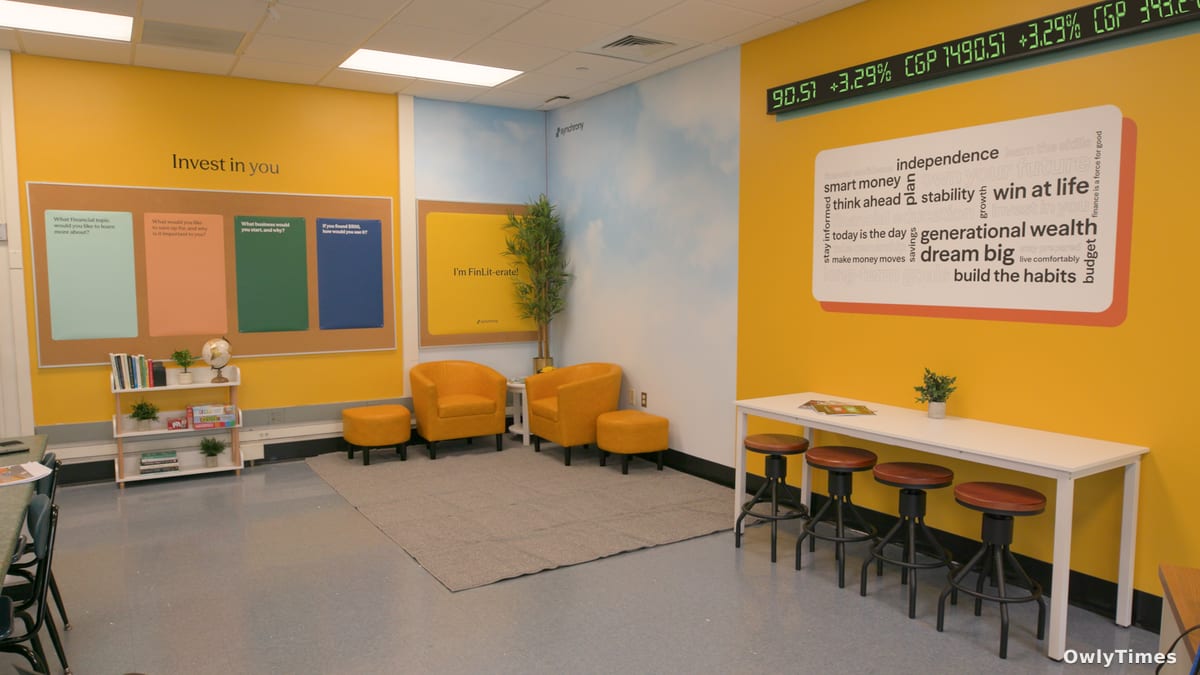
The launch of the Financial Literacy Lab at Stamford High School in March, in partnership with Connecticut Financial Scholars (CTFS), exemplifies this approach. This isn’t a textbook donation; it’s a complete classroom transformation, designed to be “a vibrant, high-energy environment” with interactive tools like stock tickers and digital monitors. The accompanying $150,000 grant to CTFS isn’t just for materials, but for 30 hours of paid teacher training, ongoing coaching, and customizable lesson plans. This is a critical detail. While 39 states now mandate a personal finance course for graduation – a figure from the Council for Economic Education’s 2026 Survey of the States – simply requiring the course doesn’t guarantee quality instruction. The demand for qualified teachers is demonstrably outpacing the supply, and the consequences of that shortfall will disproportionately impact students in under-resourced communities.
Synchrony’s strategy extends beyond classroom resources. Nearly half of the Empowering Financial Futures grant funding is dedicated to providing free, one-on-one financial counseling for eligible U.S. public school teachers. This is a particularly astute move. Recognizing that teachers grappling with their own financial stress are less effective educators, Synchrony is addressing a systemic issue that often goes unacknowledged. It’s a subtle but powerful acknowledgement that financial literacy isn’t just about teaching students to budget; it’s about fostering a culture of financial well-being that starts with the educators themselves. This approach also subtly reinforces Synchrony’s brand as a partner in financial health, rather than simply a provider of credit.
The Stamford Lab is positioned as a “blueprint” for nationwide expansion, with nine more labs planned near Synchrony offices. This geographic focus isn’t accidental. It allows Synchrony to directly impact the communities where it operates, building brand loyalty and potentially influencing future consumer behavior. The company’s President of the Synchrony Foundation, Denise Yap, frames the initiative as equipping educators and organizations to “bring personal finance lessons to life,” but the underlying economic logic is clear: financially empowered students are more likely to become financially responsible adults, and financially responsible adults are more likely to be stable customers.
What this means for your wallet: Watch for a growing emphasis on “financial wellness” programs, not just from financial institutions like Synchrony, but from employers and community organizations as well. The increasing state-level mandates for financial literacy education will drive demand for these services, creating both opportunities and potential costs. The key question for consumers isn’t if financial literacy will be prioritized, but who will be providing it, and at what cost – both in terms of direct fees and potential brand influence. Will these programs genuinely empower individuals, or simply steer them towards specific financial products?




