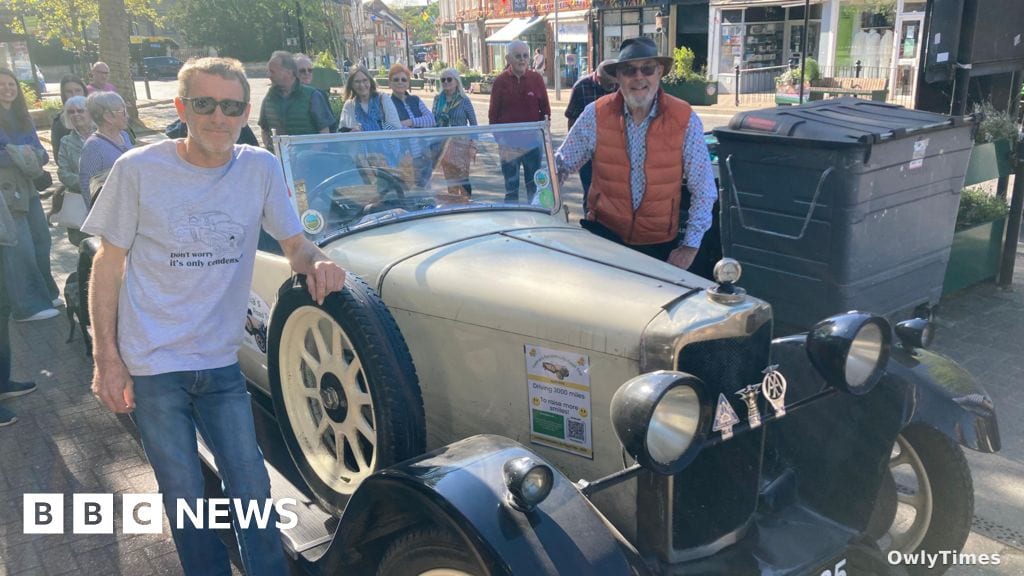

Mechanical reliability and human resilience are rarely discussed in the same breath, yet a century-old automobile has just provided a compelling case study for both. While most modern road-trip narratives focus on fuel efficiency or speed, the recent 3,500-mile coastal tour of the United Kingdom serves as a deliberate exercise in physical endurance and community advocacy. By pairing the mechanical longevity of a Talbot 14/45—a vehicle nearing its centennial—with the long-term work of the mental health charity Reclaim Life, the project highlights a shift toward using heritage assets to drive contemporary social awareness.
A Century of Engineering Meets Modern Advocacy
The journey, which concluded on 30 April, was spearheaded by Harry Sear, the founder and a trustee of Reclaim Life, and his travel companion Paul Harold, a former lorry driver. The pair departed from the charity’s offices in Leighton Buzzard, Bedfordshire, on 11 April, embarking on a clockwise route around the British coastline. Their transport, a 1920s-era Talbot 14/45 affectionately dubbed Lavinia, was more than a mere passenger; it served as a mobile billboard for the organization’s mission. The choice of vehicle was not accidental, as the tour coincided with the 100th anniversary of both the Talbot Owners' Club and the specific model year of the car itself.
Beyond the celebration of automotive history, the expedition aimed to publicize a model of mental health support that deviates from standard clinical pathways. Sear notes that for the past 15 years, Reclaim Life has assisted over 2,000 individuals suffering from various forms of mental health distress. The charity relies on a network of volunteers trained to provide five free sessions of life coaching. While the public often equates mental health intervention exclusively with pharmaceutical or long-term therapeutic models, the charity’s focus on short-term, volunteer-led coaching represents an attempt to decentralize care, moving the responsibility for support into the hands of local communities.
Mechanical Performance vs. Headline Sentiment
Headlines regarding the trip have understandably focused on the "charity tour" aspect, often framing the narrative as a simple fundraising jaunt. However, the technical reality of driving a 100-year-old vehicle across 3,500 miles—a distance roughly equivalent to driving from London to Cairo—suggests a higher level of mechanical grit. Harold reported that the car "ate the roads up," requiring only one minor component replacement throughout the entire three-week duration. This performance is statistically impressive given the age of the machine and the varied topography of the UK coastline, ranging from the flat terrain of the English coast to the more challenging elevations near Ullapool and Edinburgh.
Limitations and the Path Ahead
It is important to maintain a measured view of the impact such awareness campaigns provide. While the tour successfully engaged local communities across a broad route—including stops in Brighton, Blackpool, and Dundee—the scalability of a volunteer-run, five-session coaching model remains an open question in public health research. The effectiveness of this specific intervention, which Sear describes as "really effective," will be tested by the charity’s ability to recruit and train a sufficient volunteer base to meet demand as their profile grows.
The next indicator of this project’s influence will be the volume of inquiries and community-led groups established in the regions visited during the tour. As Reclaim Life continues its efforts to encourage towns to "make it happen" by establishing their own support groups, the measurable expansion of these local branches will serve as the primary indicator of whether this high-visibility, heritage-focused advocacy can translate into long-term, sustainable improvements in community mental health infrastructure.