
The persistent tension between accessibility and strategic depth defines the ongoing evolution of Teamfight Tactics. Patch 16.5, released Thursday, isn’t a revolution, but a carefully calibrated response to the shifts introduced in the previous patch – and a signal that Riot Games is listening closely to player feedback regarding reroll strategies and late-game composition viability. While headlines proclaim a “buff-heavy” patch, a closer look reveals a more nuanced set of changes aimed at refining existing systems rather than fundamentally altering the metagame. It’s a move that prioritizes incremental improvement over disruptive upheaval, a choice that reflects a growing understanding of the complex interplay within TFT’s ecosystem.
The core of 16.5’s design philosophy centers on bolstering underperforming strategies, specifically those reliant on rerolling two and three-cost units. Last patch focused on making it easier to hit those three-star units; this patch aims to make those units worth hitting. Katie “Riot Ukime” Guo and Rodger “Riot Prism” Caudill outlined this intention clearly, acknowledging that simply increasing accessibility isn’t enough – the units themselves need to be powerful enough to justify the investment. This isn’t simply about raw number increases; it’s about addressing the power curves of individual champions and traits to create more compelling build paths. For example, buffs to Graves, Orianna, and Rek’Sai are targeted at their three-star forms, acknowledging their potential when fully upgraded but recognizing their current fall-off in the late game.
Based on the original teamfighttactics.leagueoflegends.com report.
Beyond unit-specific adjustments, the patch also tackles some frustrating inconsistencies in trait scaling. The Arcanist trait, for instance, had seen its vertical compositions largely disappear from the meta. Riot Ukime explained that the design team observed a lack of diversity in AP-focused builds, with Demacia often overshadowing Arcanist in terms of overall power. The changes – reducing the power of Arcanist at the (2) breakpoint while boosting its later stages – are intended to re-establish Arcanist as a viable archetype without completely invalidating Demacia. This is a delicate balancing act, and the success of these adjustments will depend on how players adapt and innovate. Similarly, adjustments to the Ixtal trait address a specific exploit – players were able to repeatedly trigger the health-based quest by briefly swapping units in and out of the Ixtal composition. This highlights a recurring theme in TFT development: identifying and addressing unintended interactions that undermine the intended gameplay experience.
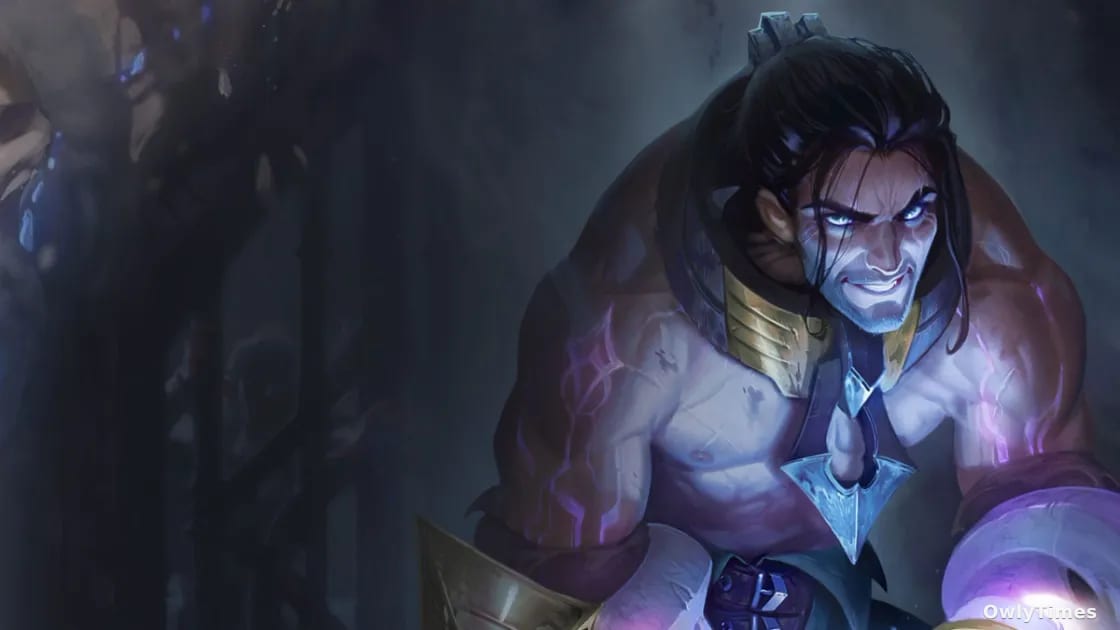
The changes to unlock conditions for Sylas are particularly interesting, demonstrating a commitment to integrating lore with gameplay. Previously, unlocking Sylas required selling a two-star Lux, a decision that felt counterintuitive given Sylas’s lore as a mage rebellion leader who benefits from the presence of powerful mages like Lux. The new unlock condition – selling two-star Garen and Jarvan IV, plus reaching level 9 – aligns more closely with Sylas’s narrative and provides a more satisfying gameplay loop. It’s a subtle change, but it speaks to a broader effort to create a more cohesive and immersive experience. However, it’s important to note that this change doesn’t necessarily make Sylas inherently stronger; it simply makes him more accessible to players who are building compositions that synergize with his lore.
Several limitations should be considered when interpreting these changes. The patch notes themselves acknowledge that some adjustments, like those to Bel’Veth and Yunara, are based on observations of current meta trends and may require further refinement. The effectiveness of these changes will depend on how players respond and whether they discover new synergies or exploits. Furthermore, the impact of Augment adjustments is notoriously difficult to predict, as Augments introduce a significant element of randomness and variance into the game. While Riot has made efforts to balance the Augment pool, it’s likely that some Augments will remain significantly more powerful than others. The team is also actively monitoring the impact of the new Riot Client integration, which allows players to launch TFT directly from the Game Hub, but the impact of this change on gameplay remains to be seen.
Looking ahead, the next crucial step will be to observe how these changes affect the diversity of compositions at all levels of play. Will we see a resurgence of reroll strategies? Will Arcanist and other underperforming traits become more viable? And perhaps most importantly, will these changes create a more engaging and rewarding experience for players of all skill levels? The release of the next set, currently shrouded in mystery, will undoubtedly introduce new challenges and opportunities, but the lessons learned from Patch 16.5 will be invaluable in shaping the future of Teamfight Tactics. Specifically, players should watch for how the adjusted Noxus trait, particularly Atakahn, impacts mid-to-late game scaling – will the increased HP modification create a dominant late-game force, or will other compositions find ways to counter it? The answer to that question will likely define the next phase of the meta.

