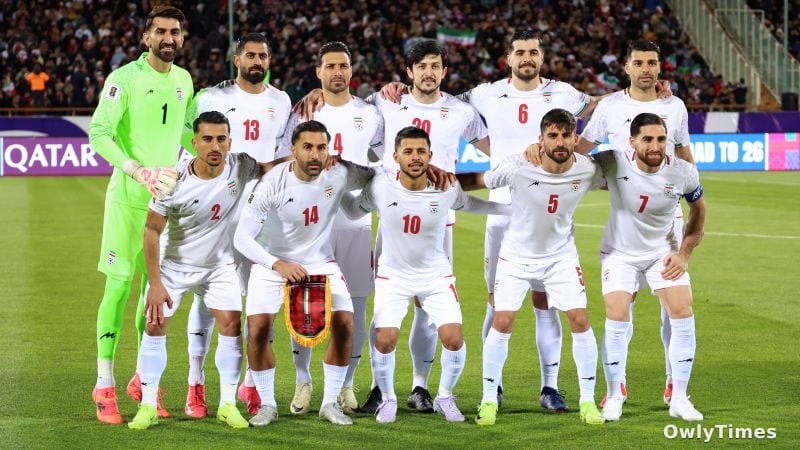

The air in Los Angeles crackled with anticipation just weeks ago, a city gearing up to host Iran’s first World Cup match against New Zealand on June 15th. Now, 100 days out from the opening whistle of the expanded 48-team tournament – a tournament already billed as the biggest in history – that anticipation feels impossibly distant, replaced by a chilling uncertainty. It’s not just about soccer anymore. The escalating conflict in the Middle East, and the devastating strikes exchanged between the United States and Iran, have thrown the nation’s participation into profound doubt, forcing a reckoning with the uncomfortable intersection of geopolitics and the “beautiful game.” This isn’t simply a question of whether a team can compete; it’s about the very idea of normalcy in the face of potential war.
A Tournament Already Marked by Division
Even before the recent surge in violence, the 2026 World Cup, hosted across the United States, Canada, and Mexico, was shadowed by political friction. The legacy of Donald Trump’s travel bans, implemented during his presidency, already barred Iranian fans from entering the US, effectively silencing a significant portion of their support base. While athletes and coaches were exempt, the initial denial of visas to members of the Iranian delegation for the December draw in Washington, D.C., sparked a diplomatic standoff and a very public display of tension. Iran ultimately sent a small delegation, including head coach, but the incident served as a stark reminder of the pre-existing fractures. The draw placed Iran in Group G alongside New Zealand, Egypt, and Belgium – a group that now feels almost secondary to the larger crisis unfolding.
Based on the original CNN report.
The Weight of Leadership and a Nation in Turmoil
The stakes have been dramatically raised with the reported killing of Iran’s supreme leader, Ayatollah Ali Khamenei. This creates a dangerous power vacuum within the regime, leaving the question of a potential boycott unanswered, and the future relationship with the US even more unpredictable. Who will make the call on participation now? And will that decision reflect a desire for international engagement, or a further entrenchment of isolation? Mehdi Taj, president of Iran’s soccer federation, has already expressed deep skepticism, stating, “What is certain is that after this attack, we cannot be expected to look forward to the World Cup with hope.” This isn’t a statement about sporting chances; it’s a reflection of national trauma.
FIFA’s Delicate Balancing Act
FIFA, the governing body of world soccer, finds itself in an extraordinarily difficult position. General Secretary Mattias Grafström offered a carefully worded response, stating it was “a bit premature to comment in detail” but affirming FIFA would “monitor the developments around all issues around the world.” Their stated focus is on a “safe World Cup with everyone participating,” a sentiment that rings hollow when one of the potential participants is actively engaged in conflict. The inherent contradiction is glaring: how can FIFA guarantee safety and inclusivity while navigating a situation where participation itself feels like a political statement? The organization is walking a tightrope, attempting to uphold its image as a unifying force while acknowledging the brutal realities of international politics.
Beyond the Pitch: A Ripple Effect Across Sports
The disruption extends beyond soccer. The Qatar soccer federation (QFA) has already postponed all tournaments and matches in Doha, a city recently targeted by Iranian airstrikes. Travel restrictions are impacting teams preparing for the Formula 1 season opener in Melbourne, with key transit hubs like Doha and Dubai becoming problematic. This isn’t isolated; the conflict is sending shockwaves through the entire sporting world, forcing organizers to confront the fragility of schedules and the limitations of their control. The QFA’s decision, while not explicitly linked to the strikes, underscores the pervasive sense of unease and the prioritization of safety above all else.
This moment matters because it exposes the myth of sport as a separate sphere, immune to the forces of global politics. The 2026 World Cup was intended to be a celebration of unity and international cooperation. Instead, it’s rapidly becoming a symbol of the world’s fractured state. The question now isn’t just whether Iran will participate, but whether the tournament can truly proceed as planned, and whether the spectacle of the World Cup can – or should – continue while a nation is at war. Will FIFA be forced to make unprecedented decisions, potentially excluding a nation from the competition? And if so, what precedent does that set for future tournaments and the role of sport in a world increasingly defined by conflict?