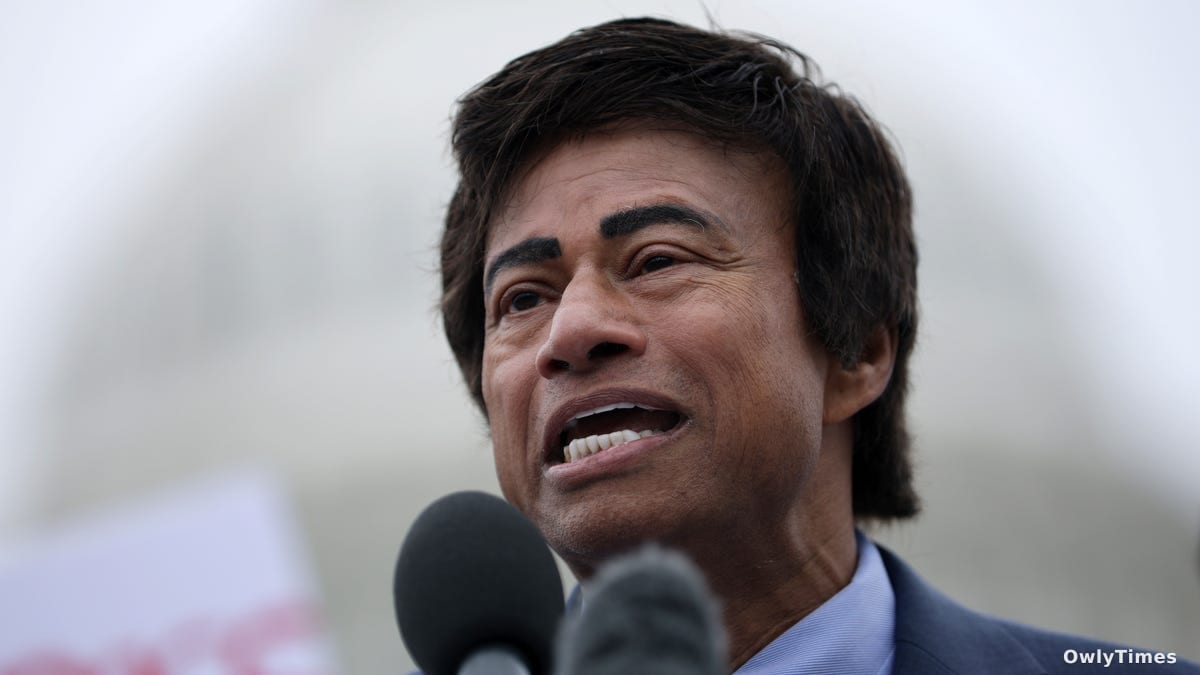

$6.4 million is the figure sitting at the center of a growing transparency gap in Michigan’s 13th Congressional District, yet it remains an incomplete picture of Representative Shri Thanedar’s actual financial standing. While his latest filing with the Federal Election Commission (FEC) claims this total in cash on hand as of March 30, the report notably omits the current valuation of his campaign’s high-stakes cryptocurrency investments. Follow the money, and you find a strategy that deviates sharply from traditional political war chests, creating a volatile reliance on digital assets that remains unquantified for voters and donors alike.
The Volatility of Campaign Capital
In 2023, the millionaire businessman turned lawmaker diverted nearly $4 million of his campaign funds into a cryptocurrency exchange-traded fund. While federal law permits such investments, the strategy carries inherent market risks that have already manifested in his ledger. The campaign reported a staggering loss of $1.87 million during the fourth quarter of 2025 alone. By opting to tie significant campaign reserves to the fluctuations of the crypto market, Thanedar has effectively swapped the steady, predictable growth of traditional political accounts for the boom-and-bust cycles of digital assets.
This reliance on market performance has created a competitive opening for challengers. Donavan McKinney, a state representative from Detroit, successfully outraised Thanedar during the period where the incumbent’s crypto holdings faced heavy losses. McKinney’s most recent report shows $245,840 in quarterly receipts and roughly $458,670 in liquid cash. While Thanedar maintains a massive lead in total reserves, his fundraising infrastructure appears lean; he reported only $66,700 in receipts for the first quarter, with $45,000 coming from individual donors, and spent $38,000 on operations.
Transparency and the Amendment Gap
The immediate issue for voters is the lack of a current, accurate disclosure. Although Thanedar indicated via text to The Detroit News that he intended to file an amendment to his April 15 FEC disclosure, he has yet to do so more than a week after the initial inquiry. Without the amended documentation, there is no way for the public to determine the actual value of the campaign’s reserves, as the crypto portfolio’s performance directly impacts the total cash available for his reelection bid.
The pressure is mounting as the August primary election approaches. The field of challengers, which now includes Detroit City Councilwoman Mary Waters and John Goci on the Democratic ticket, alongside Republicans Martell Bivings, Raphiel King, and T.P. Nykoriak, are operating within a conventional financial framework. By contrast, Thanedar has explicitly stated he prefers personal investment over traditional fundraising to minimize the time spent soliciting donors. However, this model requires the campaign to liquidate or transfer those crypto holdings back into the main account before they can be deployed for campaign expenditures, adding a layer of bureaucratic and financial friction to his spending power.
What This Means for Your Wallet
For those monitoring the financial health of the 13th District’s representation, the upcoming filing of the revised FEC report is the primary trigger to watch. Until that document is submitted, the true "cash on hand" figure remains an accounting fiction. The next reading of the campaign’s FEC disclosures will reveal whether the crypto strategy is a viable substitute for traditional fundraising or a liability that could leave his campaign under-capitalized at a critical juncture in the primary cycle.