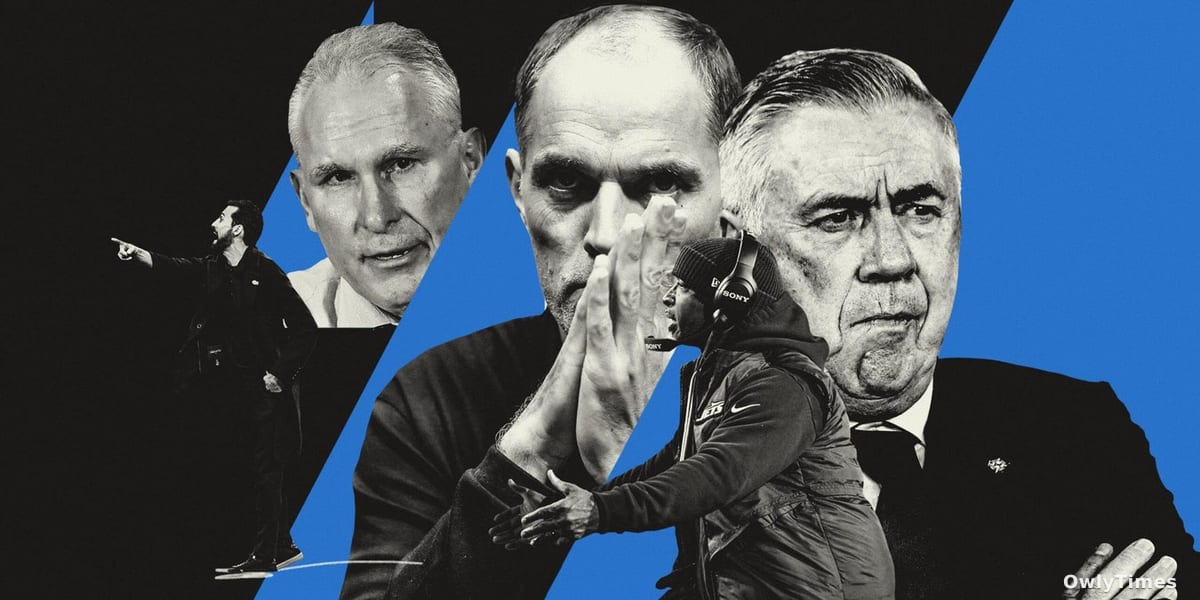

The air in the Tottenham Hotspur Stadium felt thick with disbelief, even for a club accustomed to heartbreak. Just sixteen days. Sixteen days after Ange Postecoglou lifted the Europa League trophy, ending a 17-year trophy drought, he was dismissed. The image of the Australian manager, a figure who’d briefly ignited hope in North London, became a stark symbol of a deeper malaise. It wasn’t just a firing; it felt like a confirmation. A confirmation that, for Tottenham Hotspur, sustained success remains a phantom, a cruel joke played on a loyal fanbase. This isn’t simply about one manager’s failure; it’s about a systemic inability to build lasting triumph, a reality reflected in a recent OwlyTimes poll that ranked the Tottenham head coach job as tied for the hardest in world sport.
More than 5,700 readers responded to our call to identify the most unforgiving coaching positions, regardless of who holds the title. The results weren’t about glamorous leagues or global superstars alone. They revealed a pattern: jobs burdened by crippling expectations, meddling ownership, and the weight of history. And Tottenham, finishing level with the India cricket team – a nation of 1.4 billion cricket fanatics – embodies all three. The sheer volume of high-profile managers who have taken the helm at Spurs – Jose Mourinho, Antonio Conte, even Postecoglou himself – and ultimately fallen short speaks volumes. It’s a graveyard of reputations, a place where pedigree offers no guarantee of survival.
This article draws on reporting from The New York Times.
The poll’s top spot was claimed by the England men’s football manager (15.7 per cent of the vote, 907 responses), a position perpetually haunted by the ghosts of 1966. Manchester United followed closely behind (12.9 per cent, 745 votes), a club wrestling with the impossible standard set by Sir Alex Ferguson and a frustrating cycle of tactical shifts. Real Madrid (12.8 per cent, 742 votes) rounded out the top three, a testament to the relentless pressure of a club steeped in winning tradition and fueled by a powerful, often demanding, presidency. But it’s the presence of Tottenham, alongside these giants, that truly underscores the unique challenges facing their next appointment.
What sets Tottenham apart isn’t a lack of resources – the stadium is world-class, the financial backing is substantial. It’s the expectation, the relentless demand for a style of play that is both exciting and consistently successful, a combination that has proven elusive. The club’s history is littered with near misses, with moments of promise that ultimately fizzled out. This creates a toxic cycle of impatience, where managers are judged not just on results, but on the way those results are achieved. Thomas Frank, Postecoglou’s successor, lasted just eight months, a victim of the same unforgiving scrutiny. The poll results aren’t just about identifying difficult jobs; they’re about pinpointing where the intersection of expectation and structural weakness creates a uniquely volatile environment.
The same dynamic is at play with India cricket (3.8 per cent, 222 votes), tied with Tottenham. While enjoying recent success – winning the T20 World Cup and ICC Champions Trophy – the sheer scale of the fanbase and the cultural significance of the sport create an immense pressure cooker. Manchester United and Brazil also grapple with this duality, facing both sky-high expectations and underlying structural issues. But the poll also highlighted jobs where the pressure stems from a different source. The New York Jets (11.6 per cent, 668 votes) represent a franchise defined by decades of failure, while the Cleveland Browns (listed as an honourable mention) are plagued by a seemingly endless quarterback carousel and an often-meddling ownership group.
Even seemingly glamorous positions, like the Ferrari team principal (4.7 per cent, 273 votes), carry a unique burden. In Italy, Ferrari isn’t just a Formula 1 team; it’s a national obsession, a symbol of pride and engineering prowess. Every race is a referendum on the nation’s capabilities, and any prolonged period without championship success is met with intense scrutiny. This national weight, combined with the team’s deep resources and appeal to top talent, creates a pressure cooker unlike any other in motorsport. The poll’s results, taken as a whole, reveal a fascinating truth: the hardest jobs in sport aren’t necessarily the most visible or the most lucrative. They’re the ones where the weight of history, expectation, and structural challenges combine to create an environment where even the most accomplished leaders struggle to thrive.
The OwlyTimes poll isn’t a definitive ranking, but it’s a powerful snapshot of the pressures facing coaches across the sporting world. It forces us to look beyond the headlines, to understand the human drama unfolding behind the victories and defeats. And as Tottenham Hotspur begins its latest managerial search, the question isn’t simply who will take the job, but can anyone succeed where so many have failed? Will the club finally address the underlying issues that have plagued it for decades, or will it continue to be a revolving door for ambitious managers destined for disappointment? The answer will not only define the future of Tottenham Hotspur, but will also serve as a cautionary tale for any coach considering taking on one of the most unforgiving jobs in world sport.

