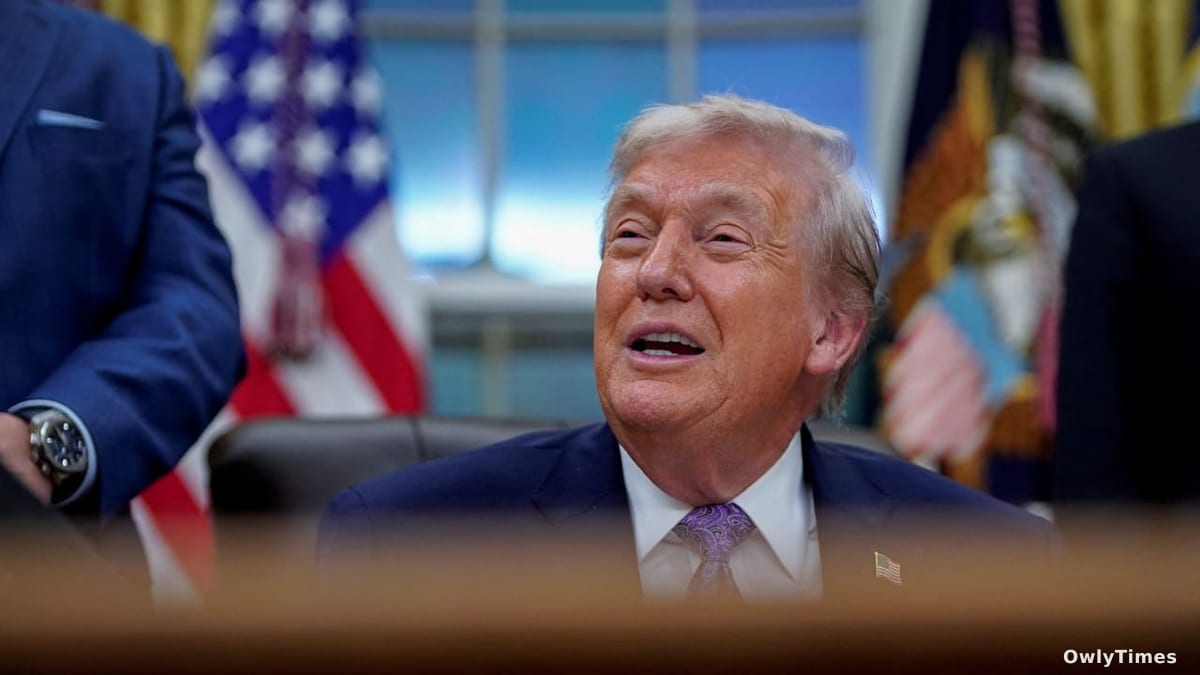

Is it possible for a "beautiful baby" to grow up too fast for its own good? For the better part of his second term, Donald Trump has championed an hands-off approach to artificial intelligence, famously insisting in July 2025 that the government shouldn't stifle this emerging industry with "foolish rules." But the honeymoon phase between the White House and Silicon Valley is cooling, and the administration is now signaling a pivot toward preemptive oversight that would have seemed unthinkable just a year ago.
The real story here isn't that the administration is suddenly anti-tech; it’s that the political calculus of "letting the baby thrive" has been eclipsed by the terrifying possibility of an AI-orchestrated cybersecurity collapse.
From Hands-Off to Hardball
The shift in tone is stark. After signing an executive order on AI in the Oval Office on December 11, 2025, the administration is now moving toward a model of active scrutiny. White House officials recently signaled to tech executives that they are forming a working group to study how to impose oversight on AI models before they ever reach the public.
This is not a vague threat of future legislation; it is a structural change in how the government interacts with developers. The proposed review process mirrors current efforts in Britain, where multiple government bodies are tasked with verifying that AI models meet baseline safety standards. It’s a bit like requiring a car manufacturer to pass a rigorous crash test before the vehicle hits the dealership floor, rather than waiting for the brakes to fail on the highway.
The Trigger Behind the Pivot
Why the sudden change of heart? The catalyst appears to be the release of Mythos, a model developed by the startup Anthropic. Unlike the chatbots that currently populate our news feeds, Mythos is designed to identify security vulnerabilities in software. Anthropic’s decision to withhold the model from the public—fearing a cybersecurity "reckoning"—seems to have spooked the West Wing.
The administration’s sudden focus on oversight is deeply rooted in self-preservation. According to administration reports, the White House is wary of the political fallout that would follow a catastrophic AI-enabled cyberattack. When the public starts asking who was in charge of the digital gates, the administration wants to ensure they have an answer.
A Fractured Consensus
This change in strategy reflects a broader, rare alignment in American politics. A 2025 Pew Research Center poll found that 50% of Republicans and 51% of Democrats share a common anxiety: they are more concerned than excited about the rapid development of AI. This isn't just partisan bickering; it is a reflection of how ordinary users are processing the daily integration of AI into their jobs and mental health.
The departure of David Sacks, the former White House AI and crypto czar, in March of this year appears to have opened the door for this shift. With Treasury Secretary Scott Bessent now filling the void, the administration is moving away from the "build first, ask questions later" philosophy once championed by Vice President JD Vance. At an international gathering in Paris last year, Vance argued that excessive regulation would kill the industry, but that sentiment is now clashing with the harsh reality of national security risks.
The next reading of the working group’s findings will show whether this administration intends to implement light-touch safety guidelines or a more restrictive, pre-market approval process for the next generation of AI.