
The Weaponization of Humor: CNN’s Strategic Shift in Political Commentary
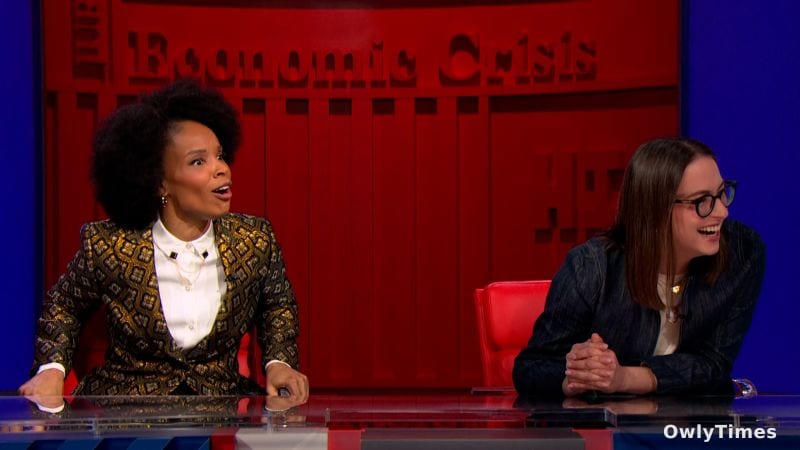
The decision by CNN to prominently feature comedic takes on current events, specifically through segments like “Have I Got News For You” hosted by Roy Wood Jr., isn’t a spontaneous embrace of levity. It’s a calculated response to a shifting media landscape where traditional political analysis struggles to capture audience attention, and where the perceived objectivity of mainstream outlets is increasingly questioned. The network is leveraging humor – and the inherent skepticism it carries – as a new vector for political commentary, a move that simultaneously acknowledges public distrust and attempts to re-engage a disillusioned viewership. The timing, coinciding with a particularly divisive political cycle and Donald Trump’s continued dominance, is no accident.
This article draws on reporting from CNN.
The content itself – jokes about Trump’s fundraising needs, reactions to controversial statements from figures like Florida’s surgeon general, and mockery of JD Vance’s social media activity – isn’t groundbreaking in its substance. What is notable is the platform. CNN isn’t simply reporting on these controversies; it’s actively soliciting comedic deconstruction of them. This signals a tacit admission that straightforward reporting often fails to resonate, particularly with younger demographics who increasingly consume news through social media and late-night talk shows. Who benefits? CNN, potentially, by attracting a broader audience and cultivating a more “hip” image. Who loses? Traditional political pundits, whose authority is subtly undermined by the elevation of comedic voices.
This strategy echoes historical precedents. During the Cold War, political satire – from “Dr. Strangelove” to “That Was The Week That Was” – served as a crucial outlet for dissent and a means of challenging official narratives. While the context is vastly different, the underlying principle remains: humor can bypass defenses and deliver pointed critiques in a way that direct confrontation cannot. The late-night circuit, historically a proving ground for political comedians, has become increasingly influential in shaping public opinion, a trend CNN is now attempting to capitalize on. The network’s move isn’t about replacing serious journalism, but about supplementing it with a format that acknowledges the public’s growing appetite for cynicism and irreverence.
The selection of topics for comedic treatment is also revealing. The segments highlighted – reactions to the State of the Union, controversies surrounding vaccines, and political gaffes – are all highly charged issues that already dominate the news cycle. By framing these issues through a comedic lens, CNN isn’t necessarily offering new information, but rather a new perspective. This is a subtle but important distinction. The network is positioning itself not as an arbiter of truth, but as a curator of reactions, allowing comedians to express the frustrations and anxieties that many viewers already feel. The segment featuring Roy Wood Jr. joking about a “call from the FCC” is particularly telling, referencing ongoing concerns about government overreach and censorship.
However, this approach isn’t without risks. Relying on humor to convey political messages can easily devolve into trivialization, potentially diminishing the seriousness of important issues. The line between satire and endorsement is often blurry, and a poorly executed joke can backfire, alienating viewers and reinforcing existing biases. Furthermore, the very act of seeking comedic validation for political analysis raises questions about journalistic integrity. Is CNN prioritizing entertainment value over substantive reporting? The network’s financial incentives – driving viewership and app downloads, as evidenced by the QR code promotions – suggest that the answer is, at least in part, yes. The next political chess move to watch is whether other major news networks will follow suit, and if so, how they will navigate the inherent tensions between humor, journalism, and political influence.





