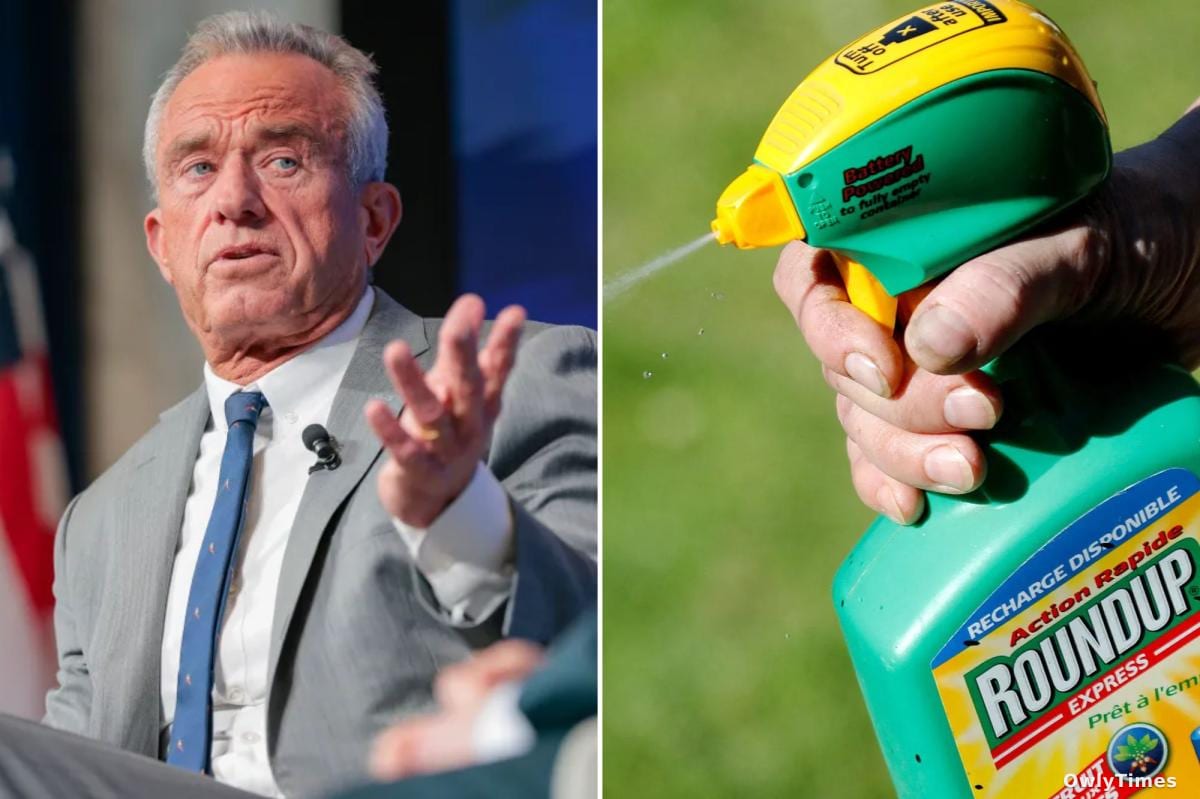

The invocation of a decades-old emergency law to bolster glyphosate production isn’t simply a policy shift – it’s a stark illustration of how national security concerns are reshaping the debate around public health and agricultural practices. President Donald Trump’s Wednesday executive order, utilizing the Defense Production Act to increase domestic glyphosate output, arrives at a particularly fraught moment. Just one day prior, Bayer, Roundup’s manufacturer, finalized a $7 billion-plus settlement addressing tens of thousands of lawsuits alleging a link between the herbicide and non-Hodgkin’s lymphoma. The timing suggests a calculated prioritization of perceived economic and strategic needs over ongoing health concerns, a tension that demands closer scrutiny than headlines currently allow.
The core of the issue isn’t simply whether glyphosate causes cancer, but how risk is assessed and by whom. In 2015, the International Agency for Research on Cancer (IARC) classified glyphosate as “probably carcinogenic to humans,” a designation that fueled the litigation against Monsanto (now Bayer). However, the Environmental Protection Agency (EPA) countered in 2017, stating that glyphosate is “unlikely” to pose a carcinogenic risk. This divergence highlights a critical point: scientific consensus is rarely absolute, and regulatory bodies can interpret the same data differently, often influenced by economic and political pressures. More recent research, like a 2023 study in Chemosphere, continues to support the IARC’s assessment, providing “biological plausibility” for the observed link between glyphosate exposure and non-Hodgkin’s lymphoma. The 2018 case spearheaded by Robert F. Kennedy Jr., resulting in a $289 million judgment for plaintiff Dewayne Johnson, a pest control worker diagnosed with lymphoma, underscored the human cost of prolonged exposure.
The executive order itself frames the issue as one of national security and food supply stability. The argument, echoing statements from the administration, is that limiting access to glyphosate would “critically jeopardize” American agricultural productivity. This echoes the logic used by President Joe Biden in 2021 when invoking the same Defense Production Act to accelerate vaccine production during the pandemic. However, the comparison is imperfect. Vaccine production directly addressed an immediate public health emergency; boosting glyphosate production addresses a potential future disruption, framed as a threat to the food supply. The order also includes provisions for increased phosphorus mining, further broadening the scope of the initiative beyond weed control. Kennedy, surprisingly, publicly supported the order, stating it “puts America first” regarding both defense readiness and food security, a position that sharply contrasts with his earlier advocacy for reducing reliance on synthetic pesticides while campaigning for president.
Based on the original the New York Post report.
It’s crucial to understand who bears the greatest risk from glyphosate exposure. While the EPA maintains that risks are low for the average consumer, the evidence points to significantly higher exposure – and therefore, higher risk – for agricultural workers, groundskeepers, and those living near treated fields. Studies have documented elevated glyphosate levels in the urine of farmworkers and even nearby residents, particularly during spraying seasons. Cynthia Curl, an environmental health scientist at Boise State University, highlighted to The New York Times the “compelling evidence” of exposure simply from proximity to agricultural areas. Beyond non-Hodgkin’s lymphoma, research published in 2024 in the journal Cancer linked other chemicals in Roundup to an increased risk of terminal prostate cancer, and glyphosate is classified as an endocrine disruptor, potentially impacting reproductive health. Symptoms of non-Hodgkin’s lymphoma, as outlined by the Mayo Clinic, range from swollen lymph nodes to unexplained weight loss, and while the 5-year relative survival rate is 74%, it declines with age and later-stage diagnoses.
However, the order’s implications extend beyond direct health risks. The Defense Production Act is intended for genuine emergencies, and its application to glyphosate raises questions about the definition of “national security.” Is maintaining current agricultural practices, reliant on a potentially harmful herbicide, truly a matter of national survival? The move also appears to preemptively address the ongoing legal challenges to glyphosate, potentially shielding Bayer from further liability. This raises a broader concern: are economic interests being prioritized over public health, and is the government effectively signaling support for an industry facing significant legal and scientific scrutiny?
Looking ahead, the critical question isn’t simply whether glyphosate is safe, but how we weigh the risks and benefits in a complex agricultural system. Future research should focus on long-term exposure effects, particularly in vulnerable populations, and explore alternative weed management strategies that minimize reliance on chemical herbicides. More importantly, we need to watch for how this executive order impacts the EPA’s regulatory review of glyphosate, scheduled for 2026. Will the agency’s assessment be influenced by the administration’s stated commitment to domestic production, or will it prioritize independent scientific evidence and public health concerns? The answer will reveal whether this move was a genuine effort to bolster national security, or a calculated maneuver to protect a powerful industry.





