
Is the future of artificial intelligence going to be dictated by who’s willing to play ball with the Pentagon, regardless of ethical qualms? That’s the question simmering beneath the surface of the recent OpenAI-Department of War (DoW) agreement, and President Donald Trump’s simultaneous directive to federal agencies to ditch Anthropic. The real story here isn't about two AI companies winning or losing a government contract – it’s about the rapidly eroding line between technological innovation and unquestioning military application, and what that means for the rest of us.
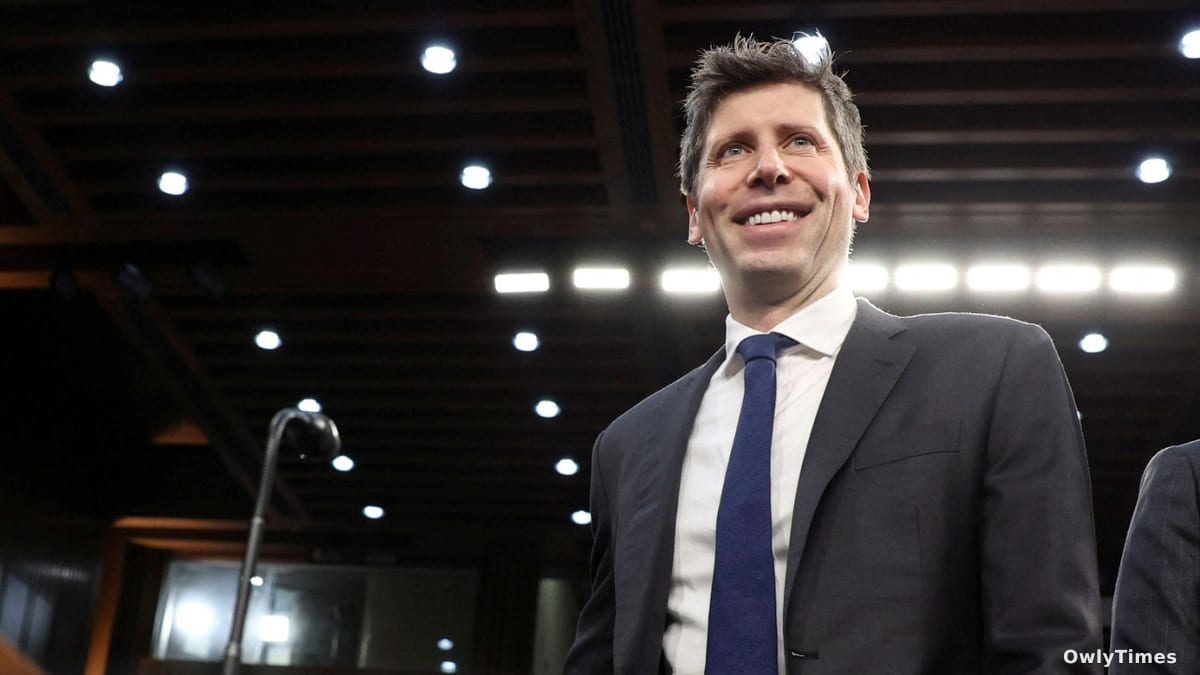
The situation escalated quickly. Just hours after a joint U.S.-Israel strike against Iran, Sam Altman, CEO of OpenAI, publicly defended his company’s deal to allow its AI models access to the DoW’s classified network. This followed Trump’s order to phase out Anthropic’s technology across the federal government, labeling it a “supply-chain risk to National Security” according to Secretary of War Pete Hegseth. The timing, frankly, feels less like coincidence and more like a calculated power play. Anthropic, led by Dario Amodei, had refused to grant the Pentagon “all lawful purposes” access to its AI, specifically raising concerns about “mass domestic surveillance” and “fully autonomous weapons.”
Altman’s explanation for why OpenAI was deemed acceptable while Anthropic wasn’t is… revealing. He claims Anthropic focused on “specific prohibitions in the contract, rather than citing applicable laws,” implying a willingness to work within existing legal frameworks was the deciding factor. He also suggested Anthropic desired more “operational control,” a point that hints at a deeper struggle over who ultimately dictates how this technology is deployed. This isn’t about safety principles; it’s about control. OpenAI, it seems, was willing to cede more authority to the DoW. The $110 billion funding round OpenAI recently secured from giants like Amazon, NVIDIA, and SoftBank certainly provides a cushion, allowing them to absorb the political fallout of such a decision.
This article draws on reporting from foxbusiness.com.
The speed with which this unfolded is also alarming. Altman admitted OpenAI initially planned to limit its work with the Pentagon to non-classified projects, but “things shifted into high gear” this week. He characterized the move as an attempt to “de-escalate the situation,” even suggesting he negotiated to ensure other AI labs would be offered similar terms. This reads less like altruism and more like a preemptive attempt to establish OpenAI as the preferred partner for military AI development, effectively cornering the market. He acknowledged the risk of being designated a supply-chain risk himself, a threat he’s willing to face, but hopes to avoid.
Altman’s willingness to accept some level of foreign surveillance, while expressing discomfort, is particularly unsettling. He frames it as a pragmatic concession – “I have accepted that the US military is going to do some amount of surveillance on foreigners” – but it normalizes a practice that fundamentally undermines privacy and democratic principles. His stated concern that surveillance could hinder the “democratization” of AI is a rare moment of clarity, acknowledging the inherent tension between powerful technology and equitable access. The fact that he then immediately qualifies it with “I also respect the democratic process” feels like a carefully constructed hedge.
The implications extend far beyond Silicon Valley boardrooms. Consider the average user, increasingly reliant on AI-powered tools for everything from email filtering to medical diagnoses. As AI becomes more deeply integrated into our lives, the potential for government influence – and potential misuse – grows exponentially. The debate isn’t just about autonomous weapons; it’s about who controls the algorithms that shape our information landscape, our healthcare decisions, and even our political opinions. Anthropic’s refusal to allow its AI to be used for mass surveillance wasn’t a roadblock to progress; it was a crucial safeguard against a dystopian future.
Looking ahead, watch closely for the development of standardized “AI safety” protocols that are, in reality, designed to legitimize military applications. The DoW will likely push for broader adoption of OpenAI’s model, framing it as a necessary step for national security. The question isn’t if AI will be weaponized, but how thoroughly the lines between civilian technology and military control will be blurred. And the real test will come when – not if – a legal challenge arises, forcing OpenAI to defend its agreement and potentially expose itself to the same “supply-chain risk” designation it so readily accepted for Anthropic.