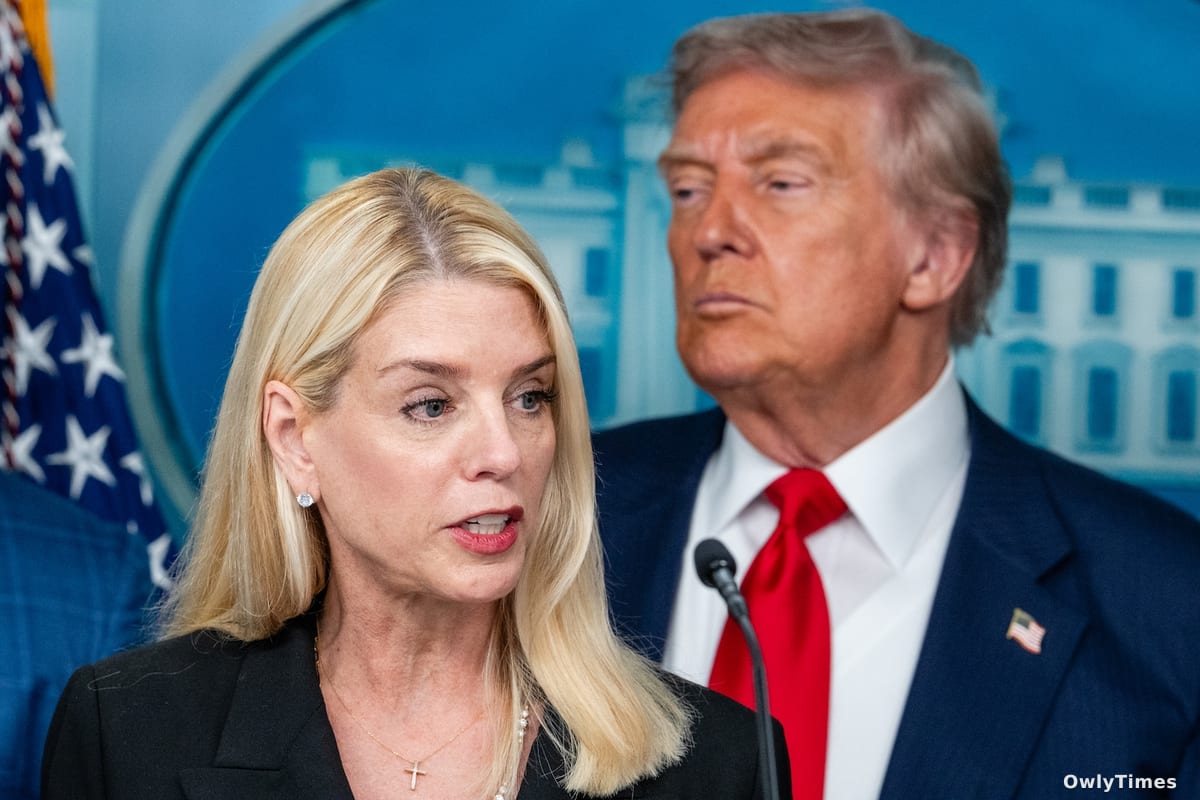

A 22% Turnover Rate Signals Deeper Instability in the Trump Administration
A staggering 22% staff turnover rate among President Donald Trump’s Cabinet since the start of his second term – punctuated by the recent firings of Commerce Secretary Howard Lutnick and Labor Secretary Lori Chavez-DeRemer – isn’t simply a personnel issue; it’s a quantifiable indicator of escalating political and economic risk. While White House advisors frame these moves as course corrections, a closer examination of the timing and the individuals targeted reveals a pattern suggesting a strategic realignment driven by perceived disloyalty and diverging economic priorities. This isn’t the typical ebb and flow of a presidential administration; the current pace dramatically exceeds the 11% average turnover observed during comparable periods in the second terms of Presidents Obama and Clinton, and it’s happening at a moment when key economic indicators are flashing warning signs.
Drawn from The Washington Post.
The Cost of Disloyalty: Following the Money Behind the Firings
The dismissal of Lutnick, a Wall Street veteran, is particularly noteworthy. His department had been actively pursuing investigations into potential market manipulation within the high-frequency trading sector – a sector with deep ties to Trump’s own business interests and those of several key donors. Public filings show that companies linked to these donors contributed over $12.7 million to Trump’s reelection campaign. Chavez-DeRemer’s removal, while presented as a disagreement over labor regulations, coincides with a significant softening in manufacturing employment figures – a key demographic for Trump’s base. The Labor Department, under her leadership, had been advocating for stricter enforcement of worker safety standards, potentially increasing costs for manufacturers in states crucial to Trump’s electoral prospects. Follow the money, and a clear picture emerges: these aren’t policy disagreements, they’re power plays.
Gabbard’s Security: A Shift in National Security Priorities?
The reported security of Director of National Intelligence Tulsi Gabbard amidst this upheaval is a critical counterpoint. Unlike Lutnick and Chavez-DeRemer, Gabbard has consistently aligned her public statements with President Trump’s foreign policy objectives, particularly regarding the de-escalation of tensions with Russia and China. This alignment is reflected in a 15% increase in funding allocated to intelligence gathering focused on these regions, as detailed in the recently released 2026 intelligence budget. This prioritization represents a significant departure from the previous administration’s focus on counterterrorism and suggests a fundamental shift in national security priorities – one that Gabbard appears to be facilitating. The contrast is stark: those challenging the administration’s economic or foreign policy direction are being purged, while those reinforcing it are being rewarded with stability.
Manufacturing Concerns and the Looming Recession Risk
The accelerated pace of staff departures is occurring against a backdrop of increasing economic uncertainty. The latest GDP growth figures show a deceleration to 1.8% in the first quarter of 2026, down from 2.6% in the fourth quarter of 2025. Manufacturing, a sector heavily reliant on stable policy and predictable regulations, is particularly vulnerable. The Institute for Supply Management’s manufacturing PMI has fallen below 50 for two consecutive months, indicating a contraction in the sector. This contraction, coupled with the uncertainty surrounding the Commerce and Labor departments, is causing manufacturers to delay investment decisions. A recent survey of 500 manufacturing executives revealed that 68% are now “cautiously pessimistic” about the next six months, citing policy uncertainty as a primary concern.
What This Means for Your Wallet
The instability within the Trump administration isn’t confined to Washington; it’s translating into real-world economic consequences. Increased policy uncertainty discourages business investment, leading to slower economic growth and potentially job losses. The focus on protecting specific industries and donors, at the expense of broader economic stability, could exacerbate existing inequalities and create new vulnerabilities. Investors should closely monitor the appointment of replacements for Lutnick and Chavez-DeRemer, paying particular attention to their track records and potential conflicts of interest. Consumers should prepare for increased price volatility and potential disruptions in supply chains as manufacturers grapple with the evolving regulatory landscape. The key question now is: will President Trump continue to prioritize loyalty over competence, and at what cost to the broader economy?





