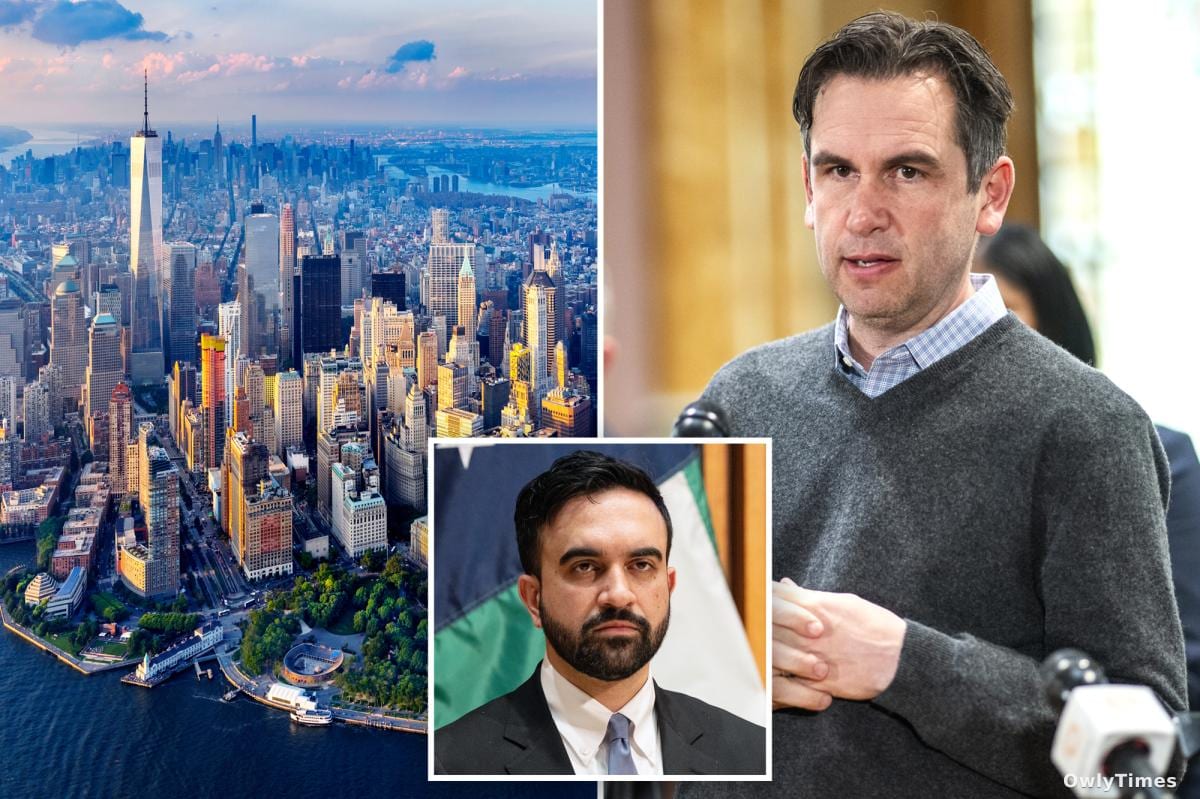

$900 billion in assets under management is the figure signaling a potential seismic shift in the New York City economic landscape. The revelation that Apollo Global Management is establishing a second headquarters in the Sunbelt isn’t an isolated incident, but rather the leading edge of a corporate retreat triggered by Mayor Zohran Mamdani’s proposed tax hikes. Follow the money, and the trail leads directly from City Hall’s policy decisions to boardrooms contemplating relocation – a pattern confirmed by the city’s most influential business advocacy group.
Steve Fulop, CEO of the Partnership for the City of New York, stated bluntly that multiple major corporations are actively “exploring options” in Florida and Texas, mirroring Apollo’s move. This isn’t speculation; Fulop revealed these discussions occurred within the last week alone, a direct response to the escalating tax proposals. While he declined to name the firms – citing the sensitivity of ongoing deliberations and potential employee impact – the fact that companies with century-long ties to New York City are seriously considering leaving underscores the gravity of the situation. This contrasts sharply with the narrative of consistent growth touted by the Mamdani administration, which points to recent job gains and office space occupancy rates. However, those figures don’t account for the potential loss of future investment and the erosion of the city’s competitive edge.
The core of the conflict lies in Mayor Mamdani’s progressive agenda, funded by proposed increases to income, estate, and corporate taxes. These proposals, requiring state approval, aim to close a projected $5.4 billion budget gap. However, the timing is critical: Governor Kathy Hochul, facing re-election, is resisting the pressure from the left wing of her party, while the City Council itself has presented a financial analysis suggesting the budget can be balanced without tax increases. This internal contradiction highlights a fundamental tension – the Mayor’s reliance on increased taxation versus alternative solutions identified within the city’s own government. The proposed corporate tax hikes are particularly aggressive, potentially raising rates to 11.5% for major corporations, a significant jump from the current 7.25%.
The Partnership for the City of New York is responding with a multi-million dollar ad campaign aimed at persuading Governor Hochul to hold the line on taxes. This isn’t simply a lobbying effort; it’s a direct investment by 300 member companies, signaling a widespread concern about the city’s fiscal direction. The campaign’s urgency is further underscored by comments from Jamie Dimon, CEO of JP Morgan, who recently warned that New York State’s high-tax environment is creating a competitive disadvantage. Dimon’s statement, coming from a titan of the financial industry, carries significant weight and reinforces Fulop’s warning that the proposed tax increases will “force people out of here.” The state Assembly and Senate are also considering similar corporate tax increases, with projections of generating $1.9 billion and $1.5 billion respectively, further amplifying the potential financial impact.
Based on the original the New York Post report.
Mamdani’s office dismisses the concerns as “scare mongering,” pointing to recent job growth and investment from companies like Bank of America and American Express. While these developments are positive, they don’t negate the broader trend identified by Fulop – a growing unease among major corporations regarding the city’s long-term economic viability. The administration’s focus on affordability for working people, while laudable, appears to be framed as an either/or proposition with corporate investment, a false dichotomy that ignores the symbiotic relationship between a thriving business sector and a healthy labor market. The question investors and consumers should be asking now is: will Governor Hochul prioritize short-term revenue gains through tax hikes, or will she address the affordability crisis through alternative means that preserve New York City’s position as a global economic powerhouse? The next six weeks, as the state budget negotiations continue, will determine whether the city’s economic future remains anchored in Manhattan, or begins to drift south.





