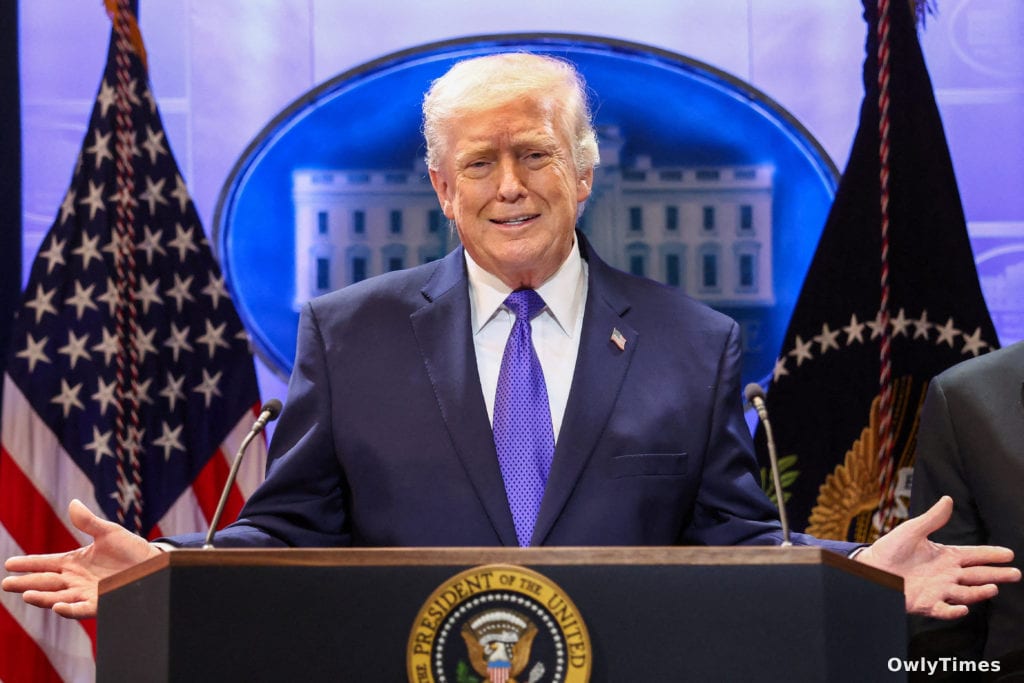

The Supreme Court’s rejection of President Trump’s global tariffs isn’t simply a legal setback; it’s a calculated risk in a long-running power struggle over the boundaries of executive authority, and a demonstration of the court’s evolving internal dynamics. The immediate consequence is the dismantling of tariffs impacting roughly $300 billion in goods annually – a figure representing 1.1% of 2025 US GDP – but the deeper play is about establishing precedents for future economic policy and, crucially, defining the limits of presidential power in the 21st century. This decision wasn’t about trade; it was about who writes the rules of economic engagement.
The Erosion of Executive Prerogative
President Trump’s reliance on the International Emergency Economic Powers Act (IEEPA) to impose these tariffs was a strategic maneuver designed to bypass Congressional oversight. IEEPA, originally intended for responding to genuine national security emergencies, had become a tool for aggressive trade negotiation, effectively allowing the executive branch to dictate economic terms without legislative approval. The 6-3 ruling, authored by Chief Justice John Roberts, directly challenges this expansion of executive power, demanding “clear congressional authorization” for such sweeping economic actions. This echoes the historical tension between the presidency and Congress dating back to the early 20th century, particularly the debates surrounding the New Deal, where Franklin D. Roosevelt faced similar challenges to his expansive use of executive authority. The court, in this instance, is signaling a return to a more traditional balance of power.
This article draws on reporting from PBS.
Who Benefits and Who Loses in the Aftermath
The immediate beneficiaries are American importers and consumers, who will see a reduction in the cost of goods subject to the now-defunct tariffs. The Peterson Institute for International Economics estimates that these tariffs added approximately 0.7% to consumer prices in 2025. However, the impact is far from uniform. Domestic industries that benefited from the protection afforded by the tariffs – particularly in sectors like steel and aluminum – now face increased competition. More significantly, the decision weakens President Trump’s negotiating leverage in future trade deals. The threat of unilateral tariffs was a key component of his trade strategy, and its removal diminishes his hand. Conversely, nations like China and the European Union, previously targeted by the tariffs, gain increased access to the US market.
The Court’s Internal Fracture on Display
President Trump’s public shaming of Justices Neil Gorsuch and Amy Coney Barrett – both his nominees – is a particularly revealing element of this situation. He explicitly framed their decision as a personal betrayal and an “embarrassment to their families.” This isn’t merely rhetorical excess; it’s a deliberate attempt to delegitimize the court’s authority and sow doubt in the public’s mind. The praise heaped upon Justices Clarence Thomas, Samuel Alito, and Brett Kavanaugh underscores a clear ideological alignment, but also highlights the growing fracture within the court. The dissent, while upholding the principle of executive power, represents a shrinking minority view. The fact that two Trump-appointed justices sided with the majority suggests a degree of judicial independence, but also invites scrutiny of the nomination process and the long-term consequences of ideological appointments. Trump’s unsubstantiated claims of “foreign interests” influencing the court are a dangerous escalation, mirroring historical accusations of political interference in judicial proceedings, such as the “switch in time that saved nine” during the New Deal era.
The Next Tariff Play: A Legislative Bypass?
Despite the setback, President Trump has already signaled his intention to pursue tariffs through alternative legal avenues. He stated his plan to invoke other federal laws to achieve the same outcome. This suggests a strategy of legislative bypass, seeking loopholes or less-challenged statutes to re-establish tariff barriers. The question now is which law he will attempt to leverage. Will he revisit Section 232 of the Trade Expansion Act of 1962, which allows for tariffs based on national security concerns – a justification that has faced legal challenges but remains potentially viable? Or will he attempt a more complex maneuver, potentially involving a reinterpretation of existing trade agreements? The next 60 days will reveal whether President Trump intends to genuinely pursue a new legislative path, or simply engage in a symbolic gesture to appease his base while attempting to circumvent the Supreme Court’s ruling.





