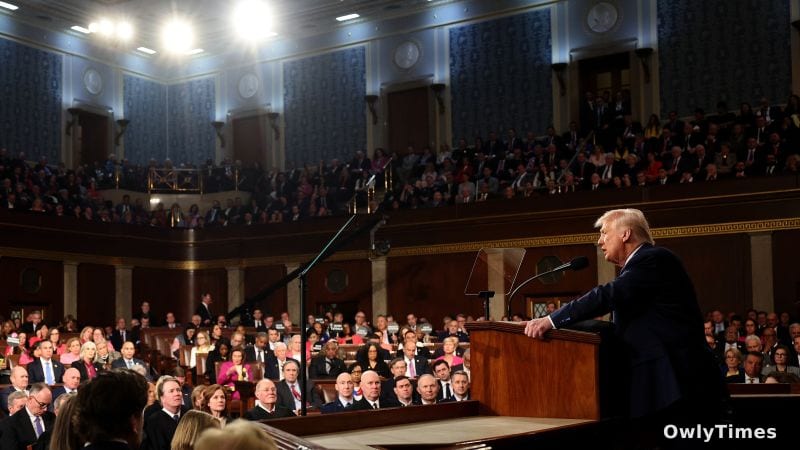

The timing is deliberate. As President Donald Trump prepares to deliver his 2026 State of the Union address, punctuated by a newly imposed 10% tariff on all trading partners – a figure initially touted as 15% – the move isn’t simply about economic policy. It’s a calculated response to a Supreme Court defeat, a demonstration of executive authority reasserted, and a strategic gambit to control the narrative ahead of a speech likely to be met with significant Democratic opposition. The tariff announcement, arriving just days before the address, forces a reactive posture from both Congress and international partners, effectively setting the terms of debate. This isn’t policy born of economic necessity; it’s power politics played out in trade regulations.
The immediate fallout is clear: who benefits and who loses. American manufacturers reliant on imported components will face increased costs, potentially impacting competitiveness. Consumers will likely see those costs passed down through higher prices. Conversely, industries competing with foreign imports could see a temporary boost. But the larger beneficiary is President Trump himself, who can now present himself as a defender of American jobs and a strong negotiator, even as the tariff’s long-term effects remain uncertain. The Democrats, already signaling their discontent with a planned boycott of the address – with at least a dozen lawmakers opting for a counterprogram at the National Mall led by Abigail Spanberger – are positioned as obstructionists, resisting the President’s efforts to “Make America Strong, Prosperous, and Respected,” the chosen theme of the speech.
See the original CNN story for the full account.
This tactic of leveraging economic policy for political gain isn’t novel. The historical parallel to the Smoot-Hawley Tariff Act of 1930 is striking, though the scale is different. Passed during the Great Depression, Smoot-Hawley aimed to protect American industries but ultimately exacerbated the economic downturn by triggering retaliatory tariffs from other nations. While the current tariffs are lower and framed as a national security measure, the underlying principle – prioritizing domestic interests over free trade – echoes the protectionist sentiment of the 1930s. The difference lies in the context: Trump isn’t responding to a global economic collapse, but to a legal setback and a desire to project strength. The Supreme Court’s invalidation of his widespread use of emergency tariff powers was a direct challenge to his authority, and this new strategy is a clear attempt to circumvent that limitation, albeit within the confines of a 150-day window and a maximum 15% rate.
The situation in Venezuela further complicates the geopolitical landscape. The dramatic shift in relations, marked by Acting President Delcy Rodríguez’s openness to foreign oil speculation and a visit from US Energy Secretary Chris Wright, represents a significant foreign policy win for the administration. The Amnesty Law, passed under pressure from Washington, and the planned closure of a notorious Caracas prison are presented as evidence of progress. However, skepticism remains, with democracy advocates pointing to the rearrest of opposition figures as evidence of superficial change. This duality – presenting a narrative of success while acknowledging underlying instability – is a recurring theme in the Trump administration’s foreign policy approach. The willingness to engage with regimes previously considered pariahs, while simultaneously touting a commitment to democratic values, creates a tension that will likely be addressed, if at all, with carefully crafted rhetoric during the State of the Union.
The internal contradictions are also apparent. While the White House digital communications team launches “Trump TV” on YouTube and SOTU.gov to amplify the President’s message, CNN polling reveals a public increasingly questioning his priorities and doubting the effectiveness of his policies. His approval rating among independents has plummeted to 32%, and a majority believe his policies are moving the country in the wrong direction. This disconnect between the administration’s self-promotion and public perception underscores the challenge President Trump faces in convincing a skeptical electorate of his accomplishments. Even the seemingly innocuous invitation extended to the US men’s hockey team – a gesture intended to project national unity – has been met with criticism, highlighting the sensitivity surrounding political endorsements.
The political chess move to watch next isn’t the potential increase of tariffs to 15%, but rather the response from Congress. Will Republicans rally behind the President’s trade strategy, or will moderate voices within the party express concerns about the potential economic consequences? More crucially, will Democrats attempt to use the tariff issue to further undermine the President’s agenda, potentially introducing legislation to limit his trade authority? The answer to that question will reveal the true extent of the power dynamics at play and foreshadow the battles to come in the lead-up to the next election cycle.





