
The Calculus of Completion: Trump’s Framing of the Iran Operation
The timing of President Trump’s public defense of the military operation in Iran – delivered immediately before a Medal of Honor ceremony – wasn’t accidental. It was a deliberate framing exercise, positioning a potentially protracted and costly conflict as a swift, decisive “completion” of unfinished business. The strategic calculation is clear: to preemptively inoculate against criticism of escalation by presenting the operation not as a new war, but as the forceful conclusion of a long-standing threat. This narrative hinges on portraying Iran as the aggressor, and the U.S. as reluctantly forced into action after diplomatic efforts failed, a familiar refrain in the Trump administration’s foreign policy playbook.
Defining Victory: Missile Capabilities and Regional Power
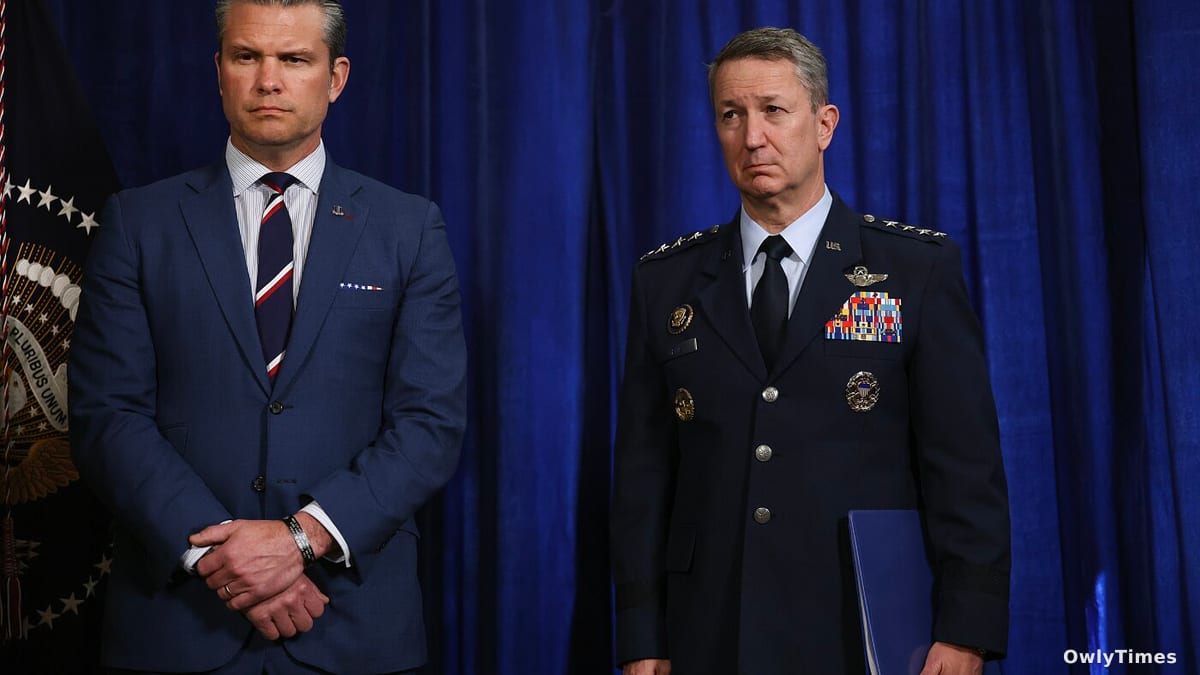
The stated objectives – destroying Iran’s missile capabilities, crippling its navy, preventing nuclear proliferation, and halting support for terrorism – are ambitious, and notably focused on capabilities rather than regime change. Pentagon chief Pete Hegseth’s blunt assertion that the U.S. is “finishing” a war suggests a limited scope, but General Dan Caine’s acknowledgement of “difficult and gritty work” and anticipated “additional losses” paints a more complex picture. Who benefits and who loses from this narrowly defined mission? Israel stands to gain from a weakened Iranian capacity to project power, as does Saudi Arabia, both key U.S. partners in the region. Conversely, Iran’s regional allies – Syria, Hezbollah, and various Iraqi militias – face a diminished patron, while global oil markets brace for potential disruption. The U.S., domestically, risks a protracted commitment and escalating costs, even if the administration insists against “nation-building.”
Drawn from NPR.
Echoes of Past Interventions: A Pattern of Limited Objectives
The emphasis on destroying specific capabilities, rather than pursuing broader political goals, echoes previous U.S. military interventions. The 1986 bombing of Libya under President Reagan, ostensibly to retaliate for terrorist attacks and deter further aggression, shares a similar logic of targeted strikes. However, that operation failed to eliminate Muammar Gaddafi or fundamentally alter Libya’s behavior. Similarly, the Clinton administration’s strikes against al-Qaeda targets in Sudan and Afghanistan in 1998, while damaging those organizations, did not prevent the 9/11 attacks. The common thread is a belief in the efficacy of limited military force to address complex geopolitical problems – a belief repeatedly challenged by history. The administration’s projection of a four-to-five-week timeline, while offering a degree of reassurance, also carries the risk of setting unrealistic expectations, particularly given Caine’s admission of potential setbacks.
The Shifting Sands of Regional Alliances
The operation’s impact extends beyond Iran’s immediate capabilities. The involvement of Israel, though not explicitly detailed in the initial statements, is a crucial factor. This joint action further solidifies the burgeoning strategic alignment between the U.S. and Israel, a partnership that has deepened in recent years, particularly in their shared opposition to Iran. However, this alignment risks alienating Arab states that do not share Israel’s hawkish stance on Iran, potentially fracturing the anti-Iran coalition the U.S. is attempting to maintain. The deaths of four American service members in Kuwait, a detail initially downplayed, underscores the vulnerability of U.S. forces in the region and the potential for escalation. The administration’s insistence on a defensive posture – “We didn’t start this war, but under President Trump we’re finishing it” – is a rhetorical attempt to deflect blame and justify the operation, but it doesn’t negate the inherent risks of a military confrontation.
The Next Chess Move: Monitoring Iranian Response and Regional Stability
The immediate political chess move to watch isn’t within Iran, but around it. The critical question is not simply how Iran retaliates – that is almost guaranteed – but where and against whom. Will Iran focus its response on U.S. assets directly, risking a further escalation? Or will it leverage its proxy networks to attack regional allies of the U.S. and Israel, attempting to broaden the conflict and complicate the U.S.’s exit strategy? The administration’s success in achieving its limited objectives will depend not only on military effectiveness, but also on its ability to manage the fallout and prevent the operation from spiraling into a wider regional war. The coming weeks will reveal whether this “completion” is a strategic masterstroke or a dangerous miscalculation.





