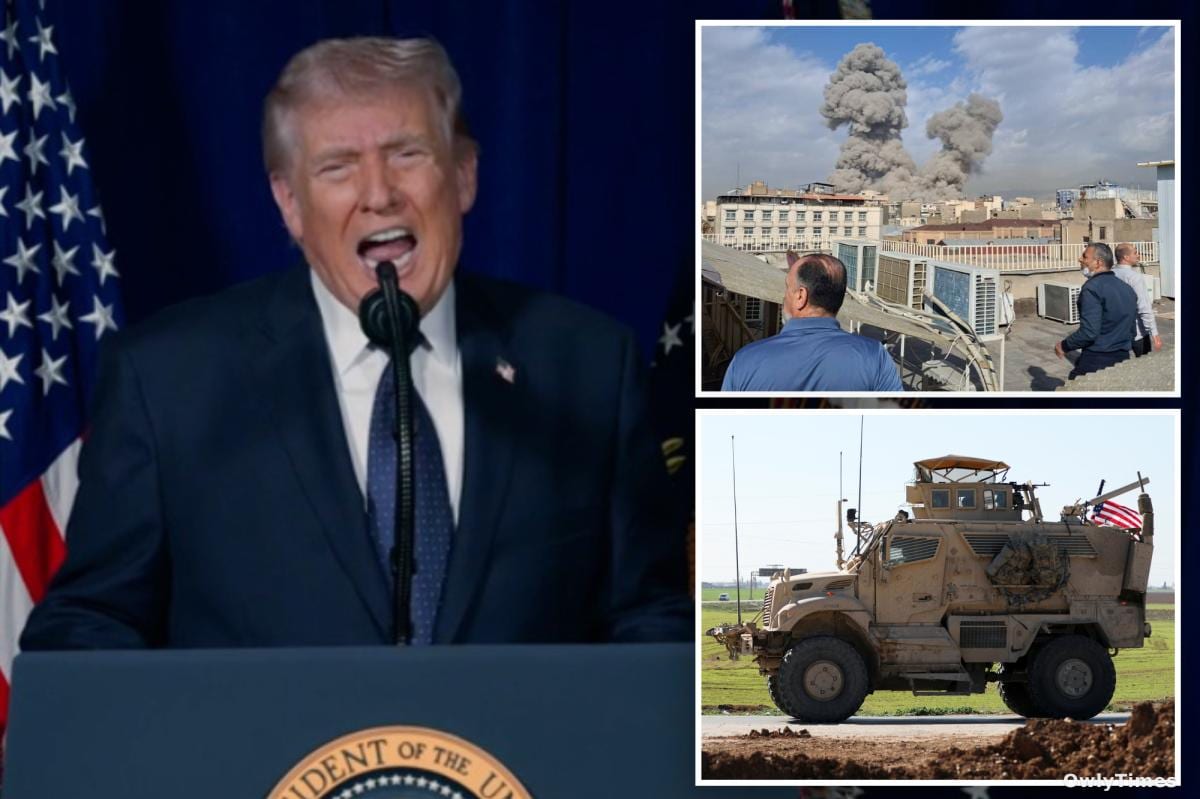

The calculated ambiguity surrounding potential US ground troops in Iran isn’t a sign of indecision, but a deliberate escalation tactic by the Trump administration. While Secretary of War Pete Hegseth publicly states no troops are currently deployed within Iran, President Trump’s insistence he “doesn’t rule it out” serves to maintain maximum pressure on Tehran and signal a willingness to exceed the parameters of what was initially presented as a limited retaliatory strike – Operation Epic Fury. This isn’t about military necessity at this stage; it’s about controlling the narrative and dictating the terms of engagement.
The swiftness with which Trump claims Operation Epic Fury is “way ahead of schedule” – boasting 49 high-value targets eliminated in a single day – is designed to project strength and preemptively dismiss criticism of the operation’s scope. The claim, however, clashes with initial polling data. A Reuters/Ipsos poll shows only 27% approval of the strikes, a figure marginally lower than the 44% approval for Operation Midnight Hammer in June 2026, which targeted three Iranian nuclear sites. Trump’s dismissal of these polls as irrelevant reveals a strategy of governing independent of public opinion, relying instead on a perceived “silent majority” and the backing of key allies like Israel. This echoes the approach taken by President Johnson during the early stages of the Vietnam War, where optimistic pronouncements from the White House consistently outpaced the growing public dissent.
Original reporting: the New York Post.
The justification for the strikes – the discovery of a “totally different site” where Iran was resuming nuclear enrichment – is a familiar pattern. It mirrors the Bush administration’s rationale for the 2003 invasion of Iraq, predicated on the claim of active weapons of mass destruction programs. While the intelligence regarding Iran’s nuclear activities is undoubtedly a concern, the timing of this revelation, immediately preceding the strikes, raises questions about its role as a pre-emptive justification. Trump’s assertion that Iran “always” pulls back from agreements reinforces a long-held distrust and frames any future negotiations as inherently futile. This narrative, while appealing to a base wary of diplomatic concessions, effectively closes off potential avenues for de-escalation.
Who benefits and who loses from this escalation? Israel is the clear short-term beneficiary, having partnered with the US on the strikes and seeing a key regional adversary significantly weakened. Domestic defense contractors, poised to profit from a prolonged conflict, also stand to gain. Conversely, the Iranian population faces immediate instability and potential humanitarian consequences. The US, while projecting strength, risks entanglement in a protracted regional conflict with unpredictable ramifications. The deaths of four US service members in a retaliatory Iranian strike on Kuwait underscore the very real costs of this escalation, a fact downplayed by the administration’s focus on eliminating Iranian leadership. The Kuwaiti claim of mistakenly shooting down three US fighter jets – a $93 million loss – adds a layer of operational complexity and potential friction with a key ally.
Trump’s invocation of historical grievances – the 1983 Beirut barracks bombings and the 1979-1981 hostage crisis – serves to personalize the conflict and frame it as a decades-long reckoning. This appeals to a sense of national honor and justifies the current actions as a necessary response to past injustices. However, it also risks fueling a cycle of retribution and hindering any possibility of a diplomatic resolution. The comparison to the Obama-era Iran nuclear deal, dismissed as “the dumbest deal ever made,” is a consistent theme, solidifying Trump’s commitment to a policy of maximum pressure and regime change.
The political chess move to watch next isn’t whether boots hit the ground in Iran, but rather how the administration responds to the inevitable Iranian counterattacks. Will Trump continue to escalate, framing each response as a proportionate measure against Iranian aggression? Or will he seize an opportunity – however manufactured – to claim a swift victory and de-escalate before the conflict spirals out of control? The answer will reveal whether Operation Epic Fury is a calculated gamble for regional dominance, or a path towards a far more dangerous and unpredictable future.





