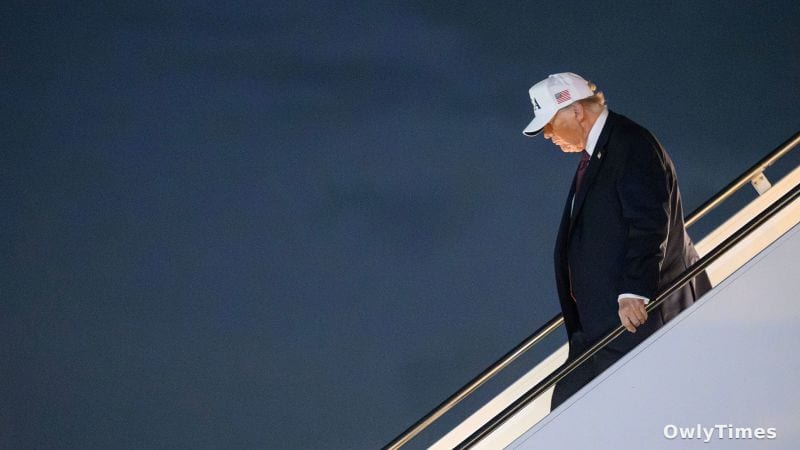

The calculated ambiguity surrounding President Trump’s recent strikes against Iran isn’t a legal oversight, it’s the core of the strategy. While the White House frames the action as a justified response to Iranian aggression, the lack of explicit congressional authorization isn’t a bug, but a feature – a deliberate escalation of executive power predicated on a long-running, and increasingly strained, interpretation of Article II of the Constitution. This isn’t simply about responding to a threat; it’s about testing the boundaries of presidential authority, and the willingness of Congress – and the courts – to defer to it.
A Pattern of Preemptive Action
This isn’t an isolated incident. The strikes echo previous actions taken by the Trump administration, notably the 2023 bombing of Iranian nuclear facilities and the attempted military capture of Venezuelan President Nicolás Maduro. Each instance has served as a pressure test for the limits of executive power, pushing the definition of “war” to its breaking point. The common thread is the invocation of Article II, which grants the President, as Commander in Chief, the authority to direct military forces in defense of national interests. However, the Constitution explicitly reserves the power to declare war to Congress. The White House, and previously the Justice Department under Trump, have argued that limited, preemptive strikes don’t constitute “war” in the constitutional sense, and therefore don’t require congressional approval. This argument hinges on the scale, scope, and duration of the military action – a definition that Trump himself appears to be challenging with his description of the current campaign as “massive and ongoing.”
Original reporting: CNN.
Who Benefits and Who Loses?
The immediate beneficiaries of this expanded executive power are, predictably, the office of the President and those advisors advocating for a more assertive foreign policy. A successful assertion of Article II authority would grant future administrations greater latitude in responding to perceived threats without the delays and constraints of congressional debate. Conversely, Congress stands to lose significant constitutional ground, effectively ceding its war powers authority. The American public also loses, as the decision to commit troops to conflict shifts further away from democratic oversight. Legal scholars like Christopher Anders of the American Civil Liberties Union are unequivocal: “Trump violated the Constitution by invading Iran because the Constitution is crystal clear on who has the authority to declare war and commit American service members to battle and that is Congress alone.”
Historical Echoes of Executive Overreach
The current situation isn’t unprecedented. Throughout American history, presidents have invoked emergency powers and stretched the boundaries of their authority during times of conflict. President George H.W. Bush’s intervention in Panama to oust Manuel Noriega, President Barack Obama’s air strikes in Libya, and even earlier actions by President Truman during the Korean War all relied on similar justifications. However, the frequency and scope of these assertions of executive power have increased in recent decades, particularly under Trump. This trend mirrors a broader historical pattern: periods of perceived national crisis often lead to a concentration of power in the executive branch, with the promise of swift and decisive action. The question is whether these expansions of power are temporary measures justified by extraordinary circumstances, or permanent shifts in the balance of power.
The Supreme Court’s Role and the AUMF Problem
Complicating matters is the Supreme Court’s recent track record of deference to Trump’s expansive claims of power, most notably in its 2024 immunity ruling. This history suggests the Court may be reluctant to intervene and curtail the President’s authority. Furthermore, Congress has repeatedly exploited existing authorizations for use of military force (AUMFs) – originally intended for specific conflicts like the Iraq War and the fight against al Qaeda – to justify military actions in unrelated theaters. This practice has effectively created a “blank check” for military intervention, further eroding Congress’s oversight role. As Steve Vladeck, a CNN Supreme Court analyst, points out, the Justice Department’s legal justifications for these strikes are becoming “increasingly dubious,” relying on the assertion that they are limited and won’t escalate into a broader conflict – an assertion that Trump’s own rhetoric directly contradicts.
The Next Chess Move: Congressional Response
The immediate political chess move to watch isn’t a military one, but a legislative one. Will Congress attempt to reassert its authority by passing a resolution explicitly prohibiting further military action against Iran without a formal declaration of war? The likelihood of success is uncertain, given the deep partisan divisions and the potential for a presidential veto. However, the very act of attempting to do so would send a powerful signal about the limits of executive power. More importantly, it would force a direct confrontation between the executive and legislative branches, potentially leading to a constitutional crisis. The question isn’t simply whether President Trump can wage war against Iran without Congress’s approval, but whether he will face meaningful resistance if he attempts to do so.





