
The Calculus of Preemptive Action: Trump’s Iran Strikes and the Looming Constitutional Clash
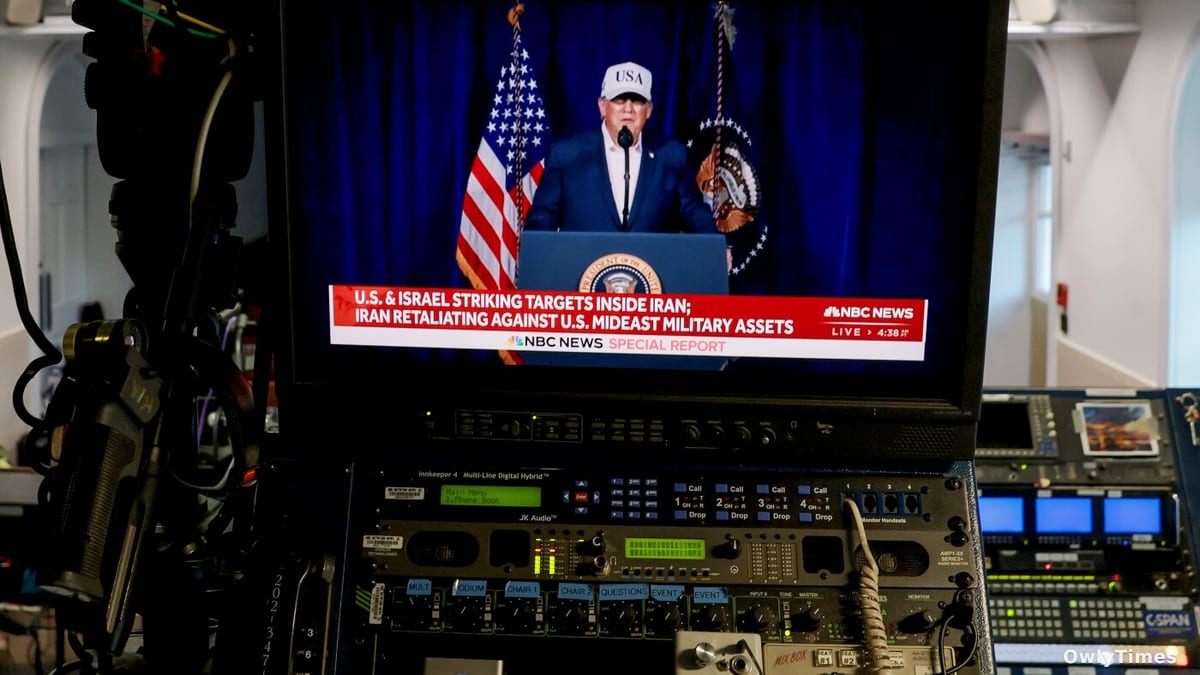
The strikes launched by the U.S. and Israel against Iran on February 28, 2026, weren’t a spontaneous reaction to perceived threats, but a calculated gamble by President Trump to reshape the regional power dynamic – and a direct challenge to the constitutional authority of Congress. The decision to proceed without congressional authorization, despite a last-minute notification to the “Gang of Eight” – the bipartisan leadership of both chambers and Intelligence committees – reveals a strategic prioritization of executive power over established norms of war-making authority. This isn’t simply about Iran; it’s about establishing a precedent for unilateral presidential action, a pattern already visible in recent interventions in Venezuela and the Caribbean. The immediate political fallout demonstrates a fracturing along predictable, yet not entirely rigid, lines, with Republicans largely offering support and Democrats voicing sharp criticism.
Source material: NPR.
The core question driving the current crisis is simple: who benefits and who loses from a destabilized Iran? For President Trump, a successful overthrow of the current regime fulfills a long-held foreign policy objective and reinforces his image as a decisive leader willing to take risks. The initial praise from figures like House Speaker Mike Johnson and Senate Majority Leader John Thune underscores the political advantage Trump gains from projecting strength, particularly within the Republican base. Conversely, Democrats, led by Senate Minority Leader Chuck Schumer and Senator Mark Warner, stand to lose political capital if the operation spirals into a protracted conflict. Their calls for transparency and congressional authorization aren’t merely procedural; they’re an attempt to mitigate the risk of being associated with an unpopular and potentially disastrous war. The fact that even some Republicans, like Representative Rick Crawford, are publicly urging Iran to heed President Trump’s warnings highlights the pressure to align with the executive branch in a moment of perceived national security crisis.
This situation echoes historical precedents of executive overreach in wartime. The Tonkin Gulf Resolution of 1964, used to escalate U.S. involvement in Vietnam, serves as a cautionary tale. While the circumstances differ, the underlying dynamic is the same: a president seeking broad authorization for military action based on contested intelligence and a desire to avoid congressional scrutiny. The key difference now is the pre-emptive nature of the challenge to Congress. Unlike the gradual escalation in Vietnam, President Trump initiated a significant military operation before seeking, or even seriously attempting to secure, legislative approval. This is a more direct assault on the constitutional separation of powers, and the resulting backlash from Democrats – and a handful of Republicans – is a predictable consequence. The administration’s justification, citing Iran’s nuclear ambitions, support for terrorism, and internal repression, mirrors the rhetoric used to justify interventions in Iraq and Libya, both of which ultimately failed to achieve their stated objectives.
The push for a war powers resolution, spearheaded by Representatives Thomas Massie and Ro Khanna, and Senators Tim Kaine and Rand Paul, isn’t necessarily about stopping the current operation – though that is the stated goal. It’s about establishing a clear legal and political boundary for future presidential actions. Even if these resolutions fail, as a similar measure did in Venezuela earlier this year, the votes themselves will force lawmakers to take a public position on the issue of presidential authority. This accountability is crucial, particularly given the administration’s warning of potential American casualties. The contrast between the administration’s assurances of limited action in Venezuela and President Trump’s explicit acknowledgement of potential losses in Iran is significant. It suggests a willingness to accept a higher level of risk, and a corresponding disregard for congressional concerns. The fact that Senator John Fetterman, a Democrat, publicly supports the strikes demonstrates the internal divisions within the party and the potential for a bipartisan coalition to emerge in favor of a more assertive foreign policy.
The political chess move to watch next isn’t simply whether the war powers resolutions pass, but how the administration responds if they do. Will President Trump veto the legislation, further escalating the constitutional conflict? Or will he attempt to circumvent Congress through other means, such as invoking emergency powers or relying on ambiguous interpretations of existing authorizations? The answer to that question will reveal the true extent of his commitment to unilateral executive action and will set the stage for a potentially protracted struggle over the future of American foreign policy. The success of the operation in Iran is secondary to the larger battle over who controls the power to wage war.





