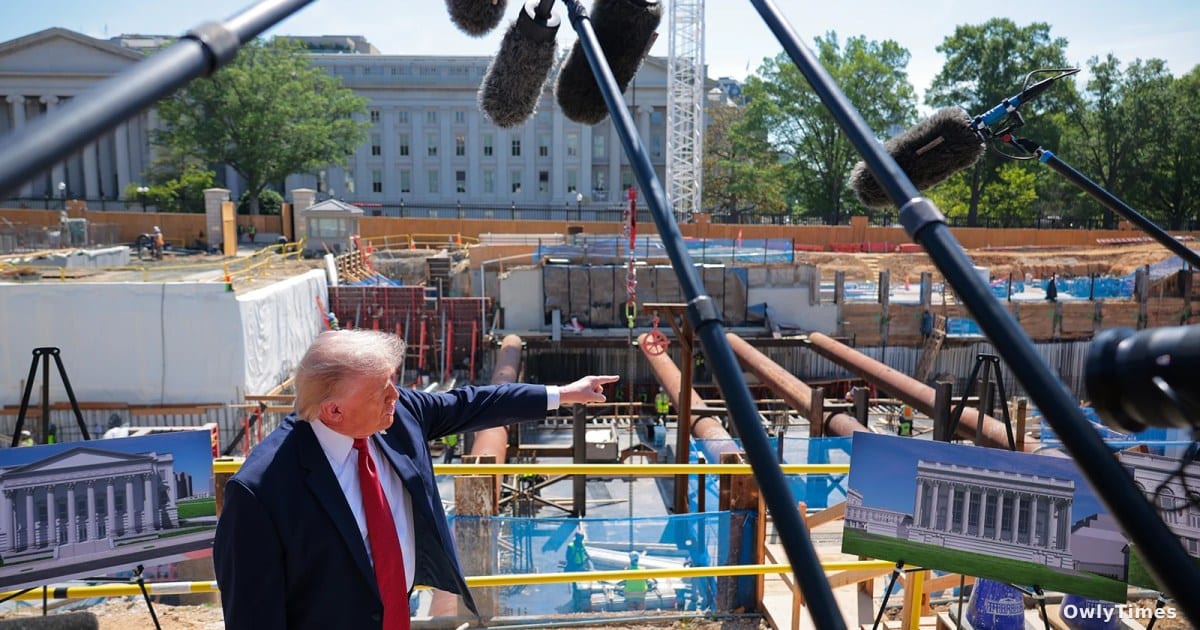

The strategic calculus behind Donald Trump’s recent decision to invite the press corps to the construction site of his new White House ballroom is a masterclass in political insulation. By physically centering his administration’s focus on a personal, high-dollar architectural project, the president is attempting to project strength and permanence. However, the optics of such an endeavor—particularly the push for $1 billion in public funds for "security" measures—create a stark divide between the executive’s priorities and the economic realities facing the electorate.
The "who benefits and who loses" dynamic here is lopsided. While the president secures a legacy project and a venue for political gatherings, the public loses both in tangible treasury dollars and, more importantly, in the perception of empathetic leadership. According to the MaddowBlog report, the president’s dismissive characterization of rising gas prices as "peanuts" stands in sharp contrast to the 69% of the public who currently disapprove of his handling of the cost of living. With only 28% backing his economic performance, the political cost of appearing detached from wartime financial hardships is mounting.
This disconnect mirrors the historical phenomenon of leaders losing touch with the "kitchen table" concerns of their constituents during periods of austerity. Much like historical figures who failed to read the room during times of inflation, Trump is currently navigating a sentiment shift described by a Republican strategist in Arizona as a transition from "flaunting wealth" to actively "adding to our pain." When a leader explicitly states, "I don’t think about Americans’ financial situation," they relinquish the traditional political buffer that usually protects them from scrutiny over personal vanity projects.
The Cost of Public Perception
The political volatility is compounded by the president’s insistence that his rhetoric regarding the economy and the "peanuts" cost of gas is "perfect." By doubling down on claims of substantial price drops—which lack supporting evidence—Trump creates a contradiction between his official narrative and the observable data points tracked by institutions like the Bureau of Labor Statistics. This creates an opening for his opponents to frame the ballroom construction not merely as a building project, but as a symbol of structural negligence.
Strategic Risks of the Ballroom Initiative
The push for $1 billion in federal spending for security at a time when the broader economy is struggling creates a clear target for legislative resistance. As the debate over the budget continues, the ballroom has transformed from a personal preference into a political liability. It serves as a physical representation of the "weird priorities" that have increasingly alienated the base, according to the recent polling data from the New York Times/Siena College survey.
The political chess move to watch next will be the upcoming congressional vote on the $1 billion security funding request. The margin of support for this specific appropriation will serve as a definitive metric for how much political capital the president retains within his own party to prioritize his personal vanity project over competing national interests. If the funding stalls, it will signal that the "peanuts" narrative has successfully shifted the legislative appetite away from the president’s personal agenda.





