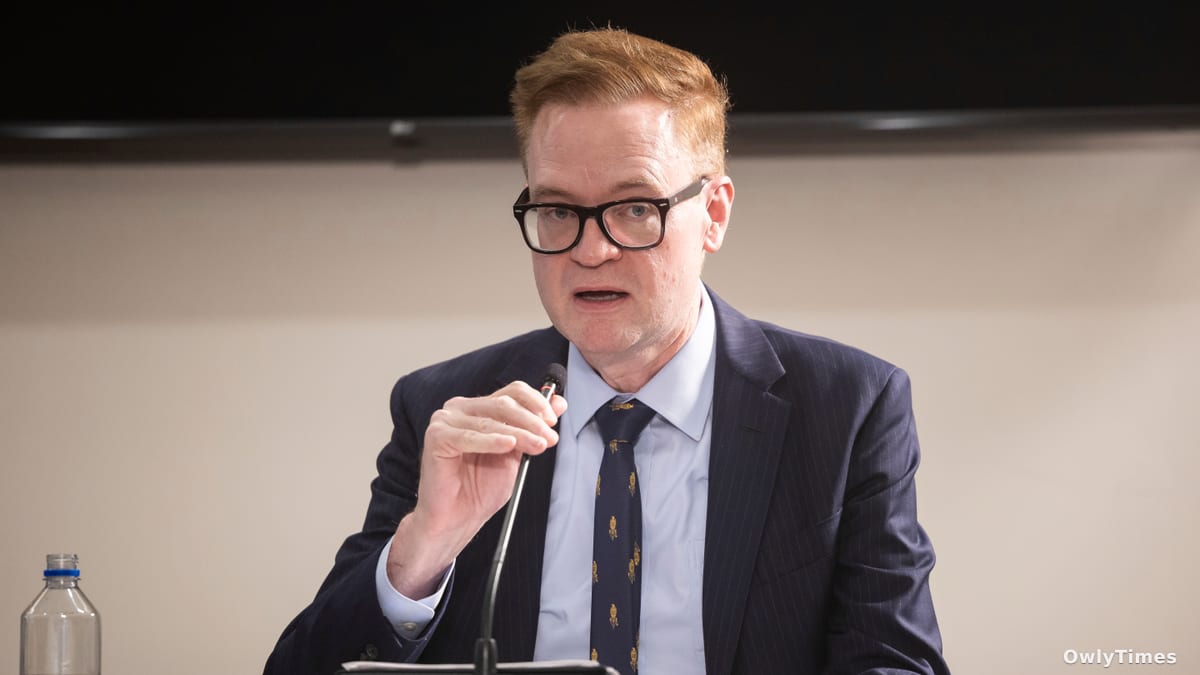

The current moment in American science funding isn’t defined by a single dramatic event, but by a constellation of quiet shifts – budget pressures, personnel changes, and increasingly restrictive policies – that collectively signal a fundamental recalibration of how the nation approaches research and innovation. The recent announcement that Donald Trump intends to nominate Jim O’Neill as the next director of the National Science Foundation (NSF) isn’t an isolated decision; it’s a key piece of this larger puzzle, occurring alongside tightened security protocols for foreign researchers and a renewed, partisan focus on the regulation of artificial intelligence. While headlines focus on the potential for political influence at NSF, the more significant story is the emerging tension between open scientific collaboration and a growing emphasis on national security and perceived economic competitiveness.
O’Neill’s Background and the NSF Transition
Jim O’Neill’s path to potentially leading the NSF is unconventional. Until recently, he served as acting director of the Centers for Disease Control and Prevention, a role now held by Jay Bhattacharya of the National Institutes of Health. His earlier experience includes work at the Department of Health and Human Services during the George W. Bush administration, followed by a career as an investor, including involvement with the Thiel Foundation’s Breakout Labs, which supports early-stage scientific commercialization. This background differs markedly from that of previous NSF directors, who typically possess extensive experience conducting scientific research. As White House spokesperson Kush Desai stated, the administration views O’Neill as someone who “slashed fraud and restored the Gold Standard of Science over ideology” at HHS. This framing, however, implicitly acknowledges a prior period where scientific rigor was perceived as compromised – a claim that warrants further scrutiny. The NSF itself has been in a state of flux since Sethuraman Panchanathan’s resignation last April, coinciding with proposed budget cuts (including a 50% reduction in the presidential budget request) and staff reduction threats. The agency is currently led by acting director Brian Stone, and the prolonged vacancy underscores the political sensitivity surrounding its leadership.
A Chill Wind for International Collaboration?
While the NSF nomination generates headlines, parallel developments at the National Institute of Standards and Technology (NIST) reveal a potentially more widespread shift in policy. Reports from the Boulder Reporting Lab indicate NIST is implementing a three-year limit for international graduate students and postdoctoral researchers. House Science Democrats, in a letter that received no response from NIST as of mid-February, argue this policy “effectively prevents any foreign student from being able to complete a doctorate at NIST.” NIST’s subsequent statement, characterizing the policy as “under development” and aligned with a presidential memo on national security, does little to quell concerns. The core issue isn’t simply about restricting access; it’s about the message this sends to the global scientific community. For decades, American research institutions have thrived on the influx of talent and ideas from around the world. Limiting this exchange, even under the guise of security, risks stifling innovation and eroding the nation’s competitive edge. The Democrats’ criticism that the policy “radically overstep[s]… what is reasonable and appropriate to protect research security” highlights the perceived imbalance between legitimate security concerns and the potential damage to scientific progress.
Original reporting: aip.org.
Navigating the AI Regulatory Landscape
The focus on national security extends to the rapidly evolving field of artificial intelligence. House Science Republicans have requested a review of federal and state AI regulations from the Government Accountability Office, signaling a desire to streamline – and potentially limit – oversight. This request comes despite a previous executive order issued during Trump’s first term relating to AI, and more recently, a December order attempting to preempt stricter state-level regulations. Simultaneously, NIST launched its AI Agent Standards Initiative, collaborating with the NSF to foster industry-led standards. This dual approach – pushing for deregulation at the federal level while simultaneously developing standards – suggests a complex strategy. The underlying tension is clear: how to encourage AI innovation while mitigating potential risks, and who should have the authority to make those decisions. The fact that the House Republicans are revisiting older executive orders, rather than building on the December order, suggests a desire to roll back existing regulatory efforts.
Beyond NSF and NIST: A Broader Pattern
The changes at NSF and NIST aren’t occurring in isolation. A Merit Systems Protection Board rule is removing appeal rights for federal workers reclassified into “excepted service” positions, potentially weakening protections for career civil servants. Congressional Republicans are investigating NASA’s compliance with the Wolf Amendment, which restricts cooperation with China. The Department of Defense has formally established a Science, Technical, and Innovation Board, merging existing advisory bodies. Even Alabama has enacted a law limiting the research used for environmental regulations. These seemingly disparate events share a common thread: a heightened focus on control, security, and a skepticism towards established scientific processes. The recent agreement by thirty-one universities to end partnerships with The Ph.D. Project, following Department of Education investigations into its diversity criteria, further illustrates this trend. A GAO report on “march-in rights” – allowing the government to license federally funded inventions to lower drug costs – found they would likely impact only a small number of drugs, suggesting limited appetite for using this mechanism to address pharmaceutical pricing.
The nomination of Jim O’Neill to lead the NSF, therefore, isn’t simply about one individual. It’s a symptom of a broader shift in priorities, one that prioritizes perceived national interests and economic competitiveness over the traditionally open and collaborative nature of scientific inquiry. The question now is whether this recalibration will ultimately strengthen American innovation, or whether it will inadvertently stifle the very engine that has driven it for decades. Specifically, observers should watch whether O’Neill, if confirmed, prioritizes funding for projects with clear, immediate commercial applications over basic research – and whether the NSF’s grant review process becomes more susceptible to political influence. The future of American science may well depend on the answer.