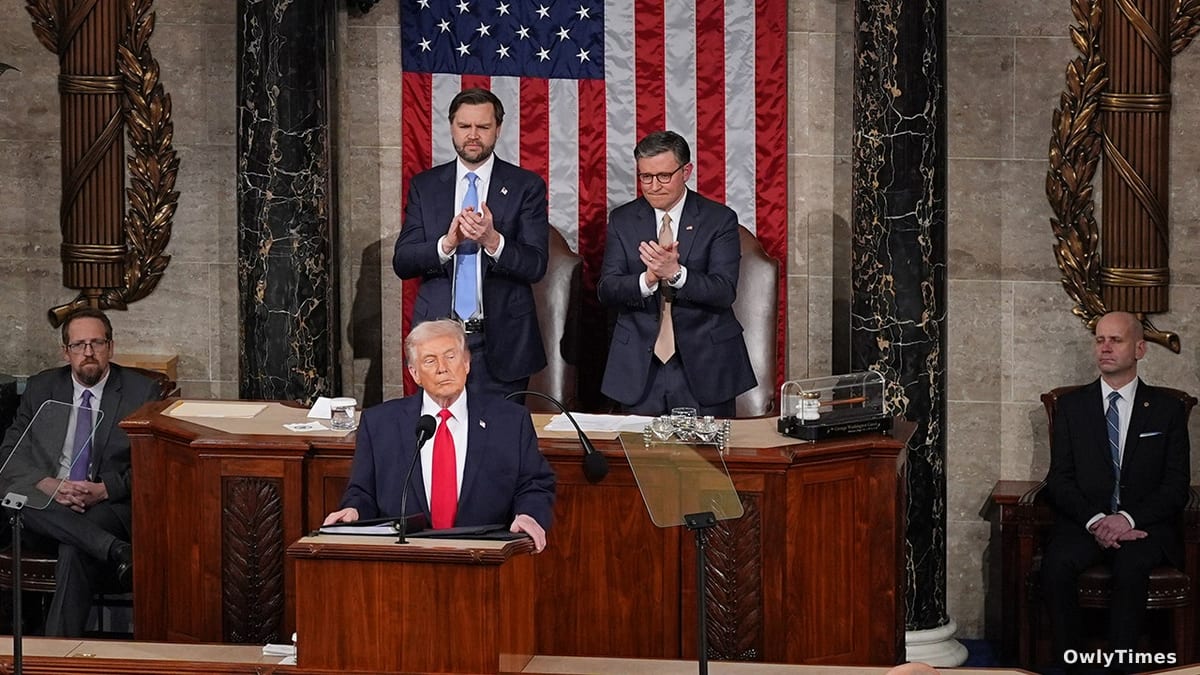

The strategic calculation behind President Trump’s recent address to Congress wasn’t about outlining a legislative agenda so much as re-establishing control over the terms of the political debate – and subtly testing the boundaries of executive power. While cloaked in the familiar rhetoric of aspiration, the speech revealed a deliberate effort to box in Congress, demanding support for initiatives that reinforce his core narratives while simultaneously attempting to preemptively neutralize opposition to his preferred policies, particularly regarding tariffs. This isn’t simply about passing laws; it’s about redefining the relationship between the executive and legislative branches, a dynamic that has been steadily shifting since Trump first took office.
The core of this strategy rests on a clear “who benefits and who loses” framework. Trump benefits from consolidating power, shaping the narrative around immigration and election integrity, and potentially securing a trade policy that directly funnels revenue to the executive branch – a direct substitute for income tax, as he posited. Conversely, Congress, particularly House Republicans wary of the economic impact of tariffs on their districts, stands to lose authority and the ability to respond to constituent concerns. The broader electorate loses a check on executive power, and potentially faces economic disruptions stemming from unchecked tariff policies. The tension is palpable: Trump wants legislative wins to bolster his re-election chances, but he’s increasingly willing to circumvent Congress altogether, relying on executive action and legal interpretations that push the limits of presidential authority.
This maneuver isn’t unprecedented. Throughout American history, presidents have sought to expand the scope of executive power, but Trump’s approach is particularly aggressive. Consider Andrew Jackson’s defiance of the Supreme Court in the 1830s over the Second Bank of the United States, or Abraham Lincoln’s suspension of habeas corpus during the Civil War. Both instances involved presidents asserting authority in the face of constitutional constraints, justified by perceived national emergencies or the need for decisive action. Trump’s invocation of a different law to justify his new tariffs, despite the Constitution explicitly granting tariff power to Congress – a power recently affirmed by the Supreme Court – echoes this pattern of stretching executive authority. The difference lies in the explicit dismissal of Congressional involvement; Trump stated plainly, “Congressional action will not be necessary.”
This piece references the Fox News report.
The legislative asks themselves – the SAVE Act requiring proof of citizenship for voting, a stock trading ban for members of Congress – are strategically designed to exploit existing political fissures. The SAVE Act, while ostensibly about election integrity, directly feeds into Trump’s long-standing claims of voter fraud and a “stolen” election, galvanizing his base and potentially justifying future challenges to election results. The stock trading ban, applauded even by Senator Elizabeth Warren, is a populist measure designed to deflect criticism of Washington’s perceived corruption and create a sense of bipartisan unity – even as Trump simultaneously undermines democratic norms elsewhere. However, the Heritage Foundation’s study revealing “minuscule” instances of election fraud in states like Pennsylvania exposes a contradiction between the rhetoric and the reality underpinning the SAVE Act.
The real battle, however, isn’t over these legislative proposals, but over the filibuster. Trump needs 60 votes in the Senate to overcome a filibuster and pass the SAVE Act, a threshold that appears increasingly out of reach. While 50 GOP senators support the legislation, Senate Majority Leader John Thune remains steadfastly opposed to altering Senate rules, fearing the consequences of a more streamlined legislative process. The debate over a “talking filibuster” – requiring senators to physically hold the floor to sustain an objection – highlights the internal divisions within the Republican party. The question isn’t simply whether the SAVE Act will pass, but whether Trump can successfully pressure Senate Republicans to dismantle a key procedural safeguard, fundamentally altering the balance of power in the upper chamber. The friction between House and Senate Republicans, with some senators bristling at pressure from the House, further complicates the situation.
The political chess move to watch next isn’t a vote on the SAVE Act or the stock trading ban. It’s whether Trump will escalate his efforts to circumvent Congress on tariffs, potentially imposing further duties without any legislative authorization. Will he directly challenge the Supreme Court’s recent affirmation of Congressional authority, or will he seek to exploit legal loopholes to maintain control over trade policy? The answer to that question will reveal the true extent of his willingness to test the limits of presidential power and the potential for a constitutional showdown.





