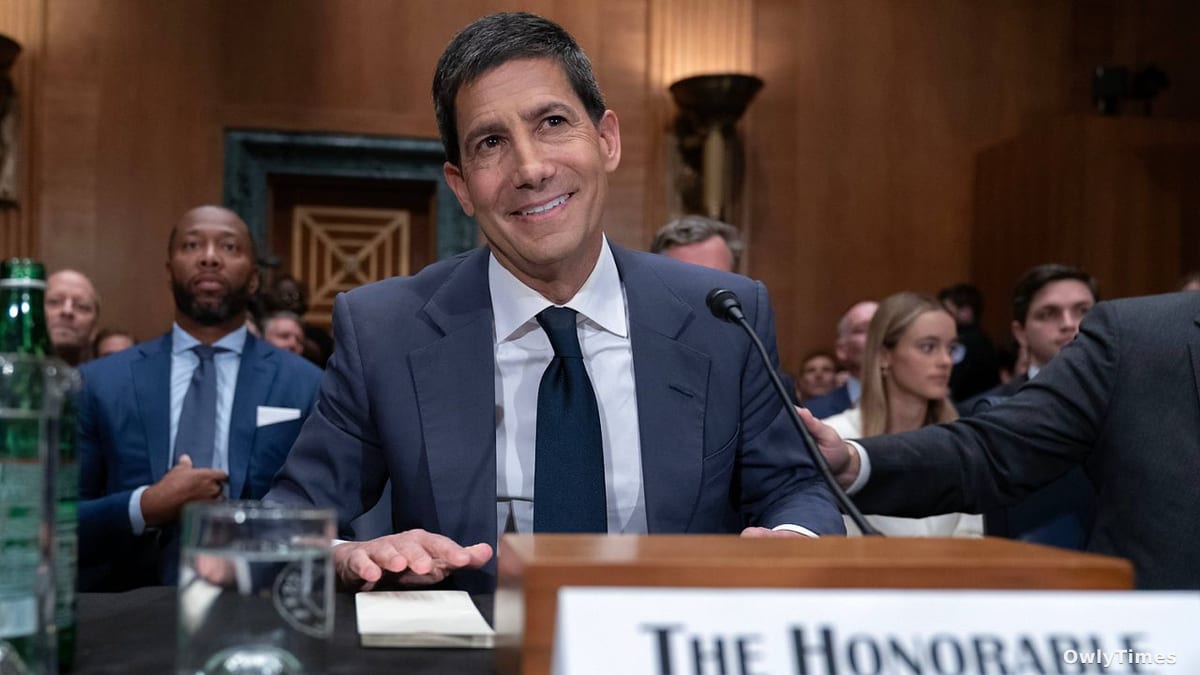

The confirmation of Kevin Warsh as chairman of the Federal Reserve by the Senate this Wednesday represents more than a mere change in leadership at the world's most powerful central bank. It is the culmination of a deliberate strategic play by President Donald Trump to exert greater influence over monetary policy, leveraging economic anxieties and internal political machinations to reshape the institution's direction. The immediate calculus behind this move centers on the administration's desire for lower interest rates, despite persistent inflation and a deeply divided rate-setting committee, signaling a potential shift from traditional economic independence to a more politically responsive stance.
A Confirmation Steeped in Political Strategy
The path to Warsh's confirmation was anything but straightforward, revealing the intricate power dynamics at play. His nomination faced significant uncertainty after Republican Sen. Thom Tillis of North Carolina threatened to block it. Tillis's leverage stemmed from a Justice Department investigation into then-Fed Chair Jerome Powell, a probe that effectively stalled the process until its cessation in April. Once the Powell probe was dropped, the legislative logjam cleared, allowing Warsh’s confirmation to proceed largely along party lines. This sequence of events suggests a calculated political maneuver, where the Justice Department's actions, regardless of their merits, created a temporary political hurdle that, once removed, paved the way for the President's preferred candidate. Senate Majority Leader John Thune, R-S.D., underscored the political imperative during his floor speech, emphasizing Warsh's purported understanding of both the "macro" and "microeconomy" as justification for his support.
The Battle for the Fed's Independence
Warsh, 56, a former top Fed official, steps into the role at an unusually difficult time, inheriting a landscape marked by stubborn inflation and internal discord. Inflation has consistently topped the Fed's 2% target for five years, now exacerbated by a 50% spike in gas prices following the Iran war, pushing the April inflation rate to 3.8%. This figure, while lower than the 9.1% peak in June 2022, still signifies a challenge that the Fed previously underestimated in the wake of the coronavirus pandemic. President Trump has repeatedly attacked Powell for not cutting interest rates, even seeking to fire Fed governor Lisa Cook and launching an investigation into Powell's testimony on a building renovation. White House National Economic Council director Kevin Hassett openly stated in a Fox News interview that markets were relieved Warsh "is going to help lower interest rates over time," despite adding a disclaimer of "data driven" decisions. These comments, combined with Trump's social media declaration in December that he wanted a Fed chair who would cut rates when the stock market rose—a stance contrary to traditional economics—have fueled concerns about the Fed's independence under Warsh. Sen. Elizabeth Warren, a Democrat from Massachusetts, famously derided Warsh as a "sock puppet" for Trump during his confirmation hearing, a criticism Warsh denied, asserting his independence despite refusing to affirm Joe Biden's 2020 election victory.
Internal Divisions and Powell's Lingering Presence
The "who benefits and who loses" framework reveals a complex picture within the Fed itself. Warsh benefits from the powerful appointment, but inherits a deeply divided interest rate-setting committee that saw the most dissenting votes in more than three decades last month. This internal dissent is a clear signal that Warsh will not have an easy path to engineering rate reductions, despite his public criticisms of the Fed's recent track record and calls for "regime change." His proposed "regime change," however, has been vague, with a notable call for limiting Fed communications—a stark departure from decades of increasing transparency.
Perhaps the most significant and unprecedented dynamic is Jerome Powell's decision to remain as a Fed governor until his term expires in January 2028. Powell, whose term as chair ended with Warsh’s confirmation, stated on April 29 that he would stay on the board until the Justice Department closes its investigation into the Fed's building project. While U.S. Attorney Jeanine Pirro has dropped the government’s probe, it could be reopened if the Fed’s inspector general, which has been investigating the renovation since last July, finds evidence of criminal activity. This marks the first time a former Fed chair has remained on the board for an extended period since 1948, creating a potential competing power center within the institution. This arrangement complicates Warsh's authority and could lead to internal friction on key policy decisions, as Powell's experience and institutional memory could serve as a check on the new chairman's initiatives.
The political chess move to watch next will be the initial decisions of the Federal Open Market Committee under Warsh's leadership. The committee's recent divisions, with three members objecting to language suggesting a rate cut and preferring neutrality, and Stephen Miran dissenting in favor of a cut at every meeting since September, signal a difficult path forward. The next meeting will reveal whether Warsh can consolidate power and steer the committee towards his desired "regime change," or if the entrenched divisions and the unprecedented presence of former Chair Powell will force a more cautious, deliberative approach to monetary policy. The integrity of the Fed's independence, long a bedrock of economic stability, hangs in the balance. For further context on the Federal Reserve's structure and functions, interested readers can visit the official Federal Reserve website.





