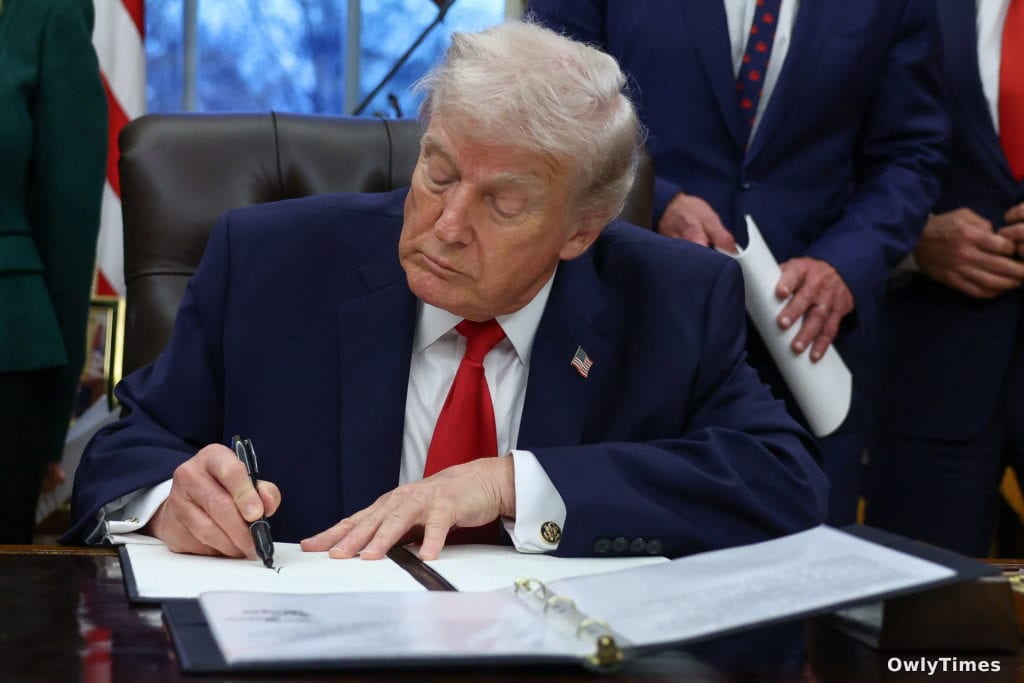

The timing is deliberate. With control of the House and Senate hanging in the balance this November, President Trump’s Friday signing of two executive orders on housing affordability isn’t a policy pivot, but a strategic maneuver to capture a key demographic – potential first-time homebuyers – and shore up support among existing homeowners. The orders, framed as deregulation to spur construction and ease mortgage access, represent a calculated attempt to address a political vulnerability while simultaneously navigating the inherent contradictions of the housing market. This isn’t about solving the affordability crisis; it’s about appearing to address it ahead of the election.
A Two-Pronged Approach to a Political Problem
The executive orders operate on two distinct, yet interconnected, tracks. The first targets regulatory barriers to construction, aiming to expedite permitting processes and roll back what the administration characterizes as “onerous mandates.” Specifically, the orders direct federal agencies – Commerce, Housing and Urban Development, Transportation, and the Federal Housing Finance Agency – to eliminate regulations deemed detrimental to residential development. A key target is Biden-era energy efficiency mandates, with White House officials claiming these could add up to $9,000 to construction costs. The second order focuses on streamlining the mortgage process, instructing the Consumer Financial Protection Bureau (CFPB) to revise guidelines to encourage lending by smaller community banks. The underlying theory is increased competition among lenders will drive down borrowing costs.
Drawn from PBS.
Who benefits and who loses here is immediately apparent. Builders, particularly those facing lengthy permitting delays and high compliance costs, stand to gain. Smaller banks, often constrained by regulatory burdens, could see increased market share. However, environmental protections are demonstrably weakened, and the potential for lower-quality construction – prioritizing speed over sustainability – increases. Crucially, the orders explicitly avoid addressing state and local zoning codes, signaling a prioritization of preserving suburban housing patterns over increasing density, a move that will likely appease a key segment of the Republican base. This is a calculated risk, acknowledging that increasing housing supply significantly requires tackling politically sensitive local regulations.
Echoes of Deregulation Past
This reliance on deregulation as a solution to economic woes isn’t new. The Trump administration’s approach echoes the supply-side economics of the Reagan era, predicated on the belief that reducing regulatory burdens will unleash economic growth. However, the historical record is mixed. While deregulation can stimulate certain sectors, it often comes at the cost of environmental safeguards and consumer protections. Moreover, the assumption that simply removing regulations will automatically translate into increased housing supply ignores the complex interplay of market forces, land availability, and labor costs. The current situation also bears a resemblance to the housing boom and subsequent bust of the 2000s, where deregulation of the mortgage industry contributed to unsustainable lending practices and ultimately, a financial crisis. While the administration insists these changes will preserve financial stability, the CFPB’s role in preventing predatory lending practices is now potentially compromised.
The Limits of Executive Action and the Senate’s Role
The effectiveness of these executive orders is inherently limited. As the Associated Press rightly points out, the key regulatory issues impacting home development reside at the state and local levels, beyond the direct reach of federal mandates. Mortgage rates, too, are largely dictated by broader financial market conditions. The Senate’s recent passage of a bipartisan housing bill – aiming to increase construction and limit institutional ownership – highlights the recognition that a more comprehensive approach is needed. The White House’s stated support for this bill, however, feels less like genuine collaboration and more like a preemptive attempt to claim credit for any positive outcomes. The bill’s uncertain path in the House adds another layer of political complexity.
The median price of an existing home at $398,000, nearly five times the median household income, underscores the severity of the affordability crisis. While mortgage rates have dipped slightly from their peak in February 2023 (6.05% vs. 6.84% the previous year), they remain significantly higher than the sub-3% averages seen during the pandemic. President Trump’s previous statements – prioritizing the wealth of existing homeowners over increasing access for renters – reveal a fundamental tension within his approach. He wants to appear to address affordability without jeopardizing the property values of his base. This balancing act is likely to prove unsustainable.
The Next Move: Fannie Mae and Freddie Mac
The political chess move to watch next isn’t further executive action, but the fate of Fannie Mae and Freddie Mac. President Trump has repeatedly called for directing these government-controlled mortgage companies to purchase $200 billion in mortgage bonds, a move intended to lower mortgage rates. However, this intervention raises concerns about market manipulation and potential financial risk. Will the administration push forward with this plan, potentially overriding objections from the Federal Housing Finance Agency? The answer will reveal whether this is a genuine attempt to address affordability or simply a last-ditch effort to influence voters before November. The outcome will also signal the extent to which the administration is willing to prioritize political expediency over long-term financial stability.





