
The calculated risk of direct military confrontation with Iran, long telegraphed by the Trump administration, has now been executed. The joint US-Israeli strikes launched Saturday aren’t simply a response to Iranian aggression; they represent a deliberate escalation intended to reshape the regional power balance and, crucially, to force a collapse of the current Iranian regime from within. This isn’t a conventional war aiming for territorial gains, but a high-stakes gambit predicated on the belief that the Iranian government is fundamentally unstable and vulnerable to internal pressure. The call for Iranian citizens to “seize control,” as articulated by President Trump, isn’t a rhetorical flourish – it’s a core component of the strategy.
The immediate trigger for these strikes, as presented by both Washington and Jerusalem, is the perceived “imminent threat” posed by Iran’s missile program and its potential for nuclear weaponization. Defense Minister Israel Katz framed the action as “preemptive,” a justification echoing arguments used before numerous conflicts throughout history. However, the timing is critical. These strikes follow months of escalating tensions, a substantial US military buildup in the region – including the deployment of two aircraft carrier strike groups, the USS Abraham Lincoln and USS Gerald R. Ford – and failed negotiations aimed at curtailing Iran’s nuclear ambitions. The previous US bombing of Iranian nuclear facilities in June 2025, Operation Midnight Hammer, demonstrated a willingness to use force, but the current operation, dubbed “Epic Fury,” signals a broader and more sustained commitment to regime change. Who benefits and who loses is starkly defined: Israel gains a reprieve from immediate missile threats, the US aims to reassert regional dominance, and the Iranian hardliners risk everything. The primary losers, however, are likely to be the Iranian people, facing the prospect of widespread instability and potential civil conflict.
This escalation isn’t occurring in a vacuum. The parallel to the 1953 Iranian coup d'état, orchestrated by the CIA and MI6 to overthrow Prime Minister Mohammad Mosaddegh, is unavoidable. While the methods differ – a direct military assault versus covert operations – the underlying objective remains the same: to install a government more amenable to Western interests. The key difference is the scale of the US military commitment and the explicit call for internal revolt. The 1953 coup relied on manipulating existing political factions; President Trump is attempting to bypass that process entirely, appealing directly to the Iranian populace. The risk, of course, is that this direct intervention could backfire, galvanizing support for the regime and triggering a wider regional war. The resistance from US allies – the UK and Jordan refusing to allow their bases to be used for attacks – underscores the lack of international consensus and the potential for diplomatic isolation.
Source material: Business Insider.
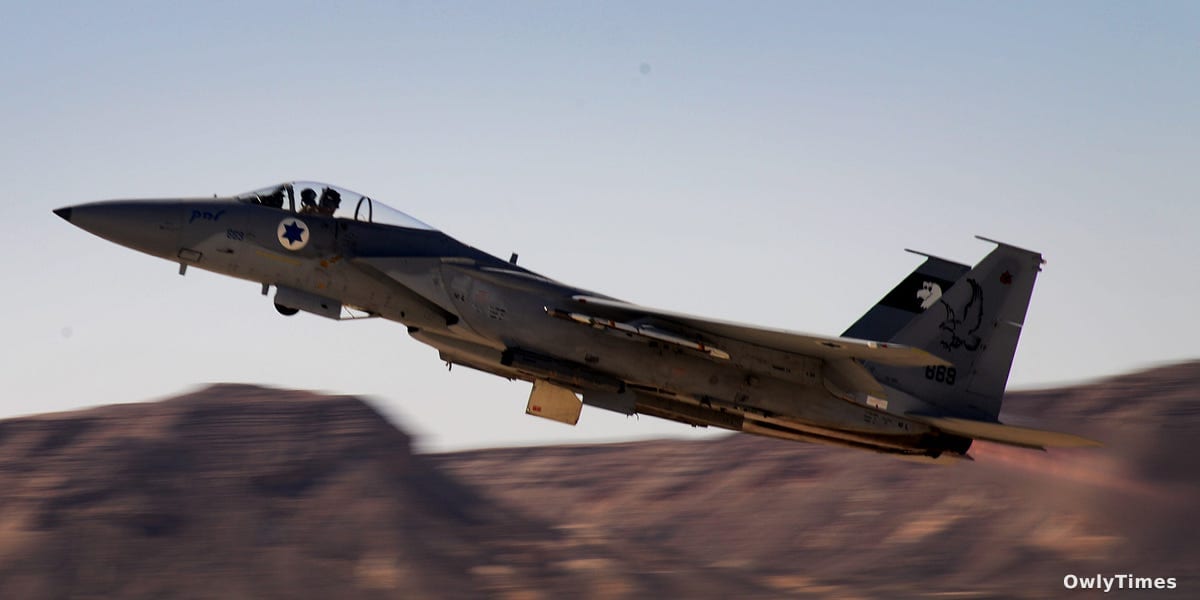
The Pentagon’s surge in military assets – hundreds of fighter jets, tankers, reconnaissance planes, and warships – isn’t simply about firepower. It’s about establishing overwhelming military superiority and deterring any potential escalation from Iran’s proxies, such as Hezbollah in Lebanon and Houthi rebels in Yemen. The fact that Iranian retaliatory strikes immediately targeted US bases across the region, engaging US air defenses, confirms this expectation. The deployment of F-35 stealth fighters, both by the US and Israel, is particularly significant, signaling a willingness to operate in contested airspace and neutralize Iranian air defenses. The photograph of eight B-2 Spirit stealth bombers posted by Dan Scavino, a White House official, served as a deliberate demonstration of force, a visual warning of the devastating consequences of further Iranian aggression. This isn’t a display of military capability meant to reassure allies; it’s a message directed squarely at the Iranian leadership.
The political chess move to watch next isn’t whether Iran will retaliate – that’s already happening. It’s whether the internal unrest President Trump is hoping for will materialize. The success of “Epic Fury” hinges not on military victories, but on the fracturing of the Iranian regime from within. Specifically, monitor the response from the Islamic Revolutionary Guard Corps (IRGC). Will they attempt to consolidate power and suppress dissent, or will internal divisions and a loss of morale lead to a collapse of their authority? The IRGC’s actions in the coming days will determine whether this gamble pays off, or whether the US and Israel are drawn into a protracted and far more dangerous conflict.





