
The Illusion of Economic Strength: Trump’s State of the Union as a Midterm Gambit
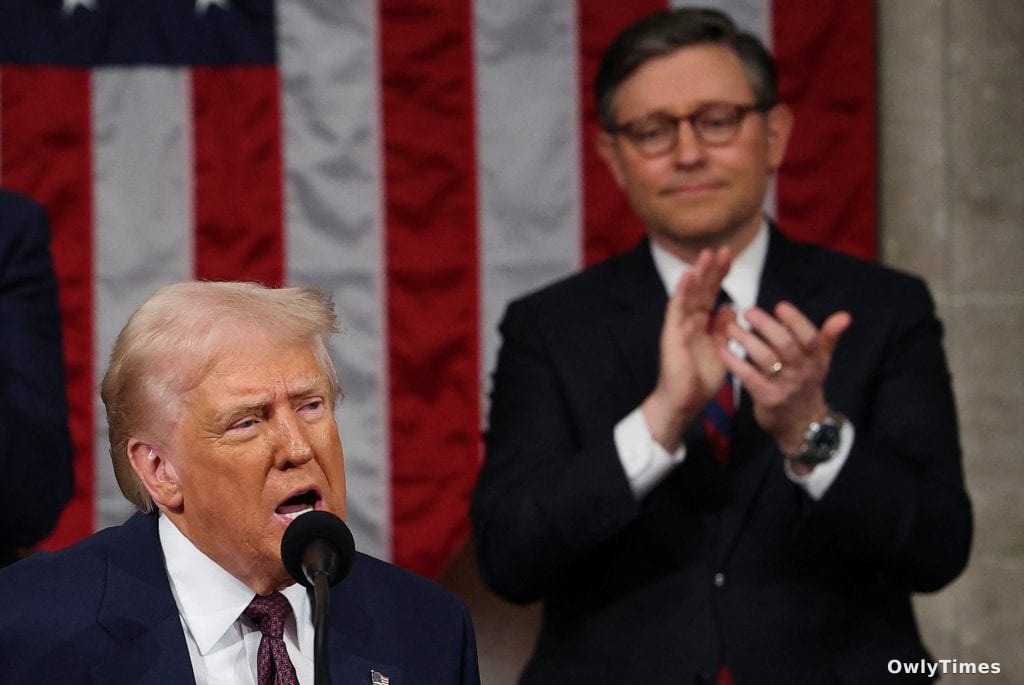
President Donald Trump’s upcoming State of the Union address isn’t a genuine accounting of national progress; it’s a strategic maneuver designed to shore up Republican support heading into a challenging midterm election cycle. The core calculus is simple: project an image of economic prosperity and strong leadership, even as indicators suggest a widening disconnect between official statistics and the lived experiences of many Americans. This isn’t a novel tactic – presidents routinely use the address to frame the narrative – but the degree of dissonance between Trump’s claims and the current economic reality elevates the stakes. The speech, as outlined by White House Press Secretary Karoline Leavitt, will center on a return to the economic successes of his first term, blaming the subsequent four years under Joe Biden for any current hardships. This framing isn’t about persuasion through data; it’s about activating a base motivated by nostalgia and grievance.
Drawn from PBS.
The inherent tension lies in the attempt to reconcile celebratory rhetoric with demonstrable economic anxieties. While the Dow Jones Industrial Average exceeding 50,000 points is a headline figure, it’s a metric largely irrelevant to those without significant investment portfolios. This mirrors the situation faced by Bill Clinton during his second term, as noted by former speechwriter Jeff Shesol, where the challenge was to convince the public to “love” the administration’s performance. However, Trump’s approach differs significantly. Where Clinton might have focused on broadly shared gains, Trump appears intent on selling a narrative of success to a segment of the population while dismissing the concerns of others. This strategy isn’t new to Trump – his history in real estate, as Shesol points out, has always been predicated on the belief that he can “sell anyone on anything.” The risk, however, is that this approach alienates the very voters Republicans need to mobilize.
The Supreme Court’s recent ruling against Trump’s signature tariff policies adds another layer of complexity. The address is expected to include a defense of these tariffs, despite their legal invalidation, and a discussion of attempts to circumvent Congress and financial markets to reinstate them. This echoes a pattern observed throughout Trump’s presidency: a willingness to challenge established norms and institutions when they impede his agenda. Historically, presidents facing judicial setbacks have either sought legislative remedies or adjusted their policies. Trump’s apparent intention to act unilaterally, bypassing both Congress and market forces, represents a more radical approach, potentially destabilizing economic confidence. Who benefits from this defiance? Primarily, those industries that were temporarily shielded by the tariffs, and Trump’s core base who view protectionism as a sign of strong leadership. Who loses? Consumers facing higher prices, businesses reliant on global supply chains, and the broader principle of the rule of law.
Foreign policy will also feature prominently, with expected boasts about airstrikes against Iran, the ousting of Nicolás Maduro in Venezuela, and brokering a ceasefire in Gaza. This emphasis on decisive action abroad serves a dual purpose: to project an image of strength and competence on the world stage, and to distract from domestic economic concerns. However, Trump’s foreign policy record is marked by contradictions. While touting successes, he simultaneously strained alliances with NATO, pursued controversial initiatives like acquiring Greenland, and adopted a relatively conciliatory stance towards Vladimir Putin’s Russia. This inconsistency undermines the narrative of consistent, effective leadership. The timing – the fourth anniversary of the Russia-Ukraine war – underscores this tension, forcing a reckoning with a foreign policy approach that has been widely criticized for its ambiguity and unpredictability.
The Democratic response, delivered by Virginia Governor Abigail Spanberger, will likely focus on affordability, a message that resonated with voters in her recent electoral victory. The planned boycott of the speech by several Democratic members of Congress, opting instead for a “People’s State of the Union” rally, signals a deliberate attempt to counter Trump’s narrative and highlight the concerns of ordinary Americans. The political chess move to watch next isn’t the speech itself, but the Republican response to the inevitable criticism. Will they attempt to defend Trump’s claims with data, or will they double down on the rhetoric of grievance and division? The answer will reveal whether the party is prioritizing short-term political gains or long-term electoral viability.





