
The strategic calculus behind Donald Trump’s recent claim—that his personal intervention successfully spared eight women from the death penalty in Iran—is a calculated effort to project American influence into a closed geopolitical system. By framing a humanitarian outcome as a direct result of his executive pressure, the president attempts to bypass traditional diplomatic channels, signaling to his domestic base that he holds unique leverage over adversarial regimes. This move serves to transform complex, opaque legal proceedings in Tehran into a clear-cut narrative of presidential efficacy.
The Discrepancy Between Rhetoric and Reality
The administration’s assertion has hit a wall of direct denial from Tehran. Iranian officials have dismissed the claim entirely, stating that none of the women in question were ever facing capital punishment. By labeling the president’s reports as fraudulent, the Iranian government is attempting to strip the U.S. executive of his perceived diplomatic victory. This creates a volatile political environment where the truth is obscured by competing narratives, leaving the public to parse whether this is a genuine humanitarian win or a performative political fiction.
Mapping the Stakeholders
Who benefits and who loses in this exchange depends entirely on the accuracy of the underlying facts. If the president’s intervention was indeed a factor, he gains significant political capital by demonstrating that he can force concessions from a state that typically rejects U.S. influence. Conversely, if the Iranian government’s account holds—that the threat of execution was non-existent—the president loses credibility, appearing either misinformed or intentionally deceptive.
The women caught in the center of this firestorm face the most acute risks. The involvement of high-level international figures often complicates the legal standing of detainees, as their cases become symbolic chess pieces in a broader struggle between Washington and Tehran. The status of these eight individuals remains the primary metric for determining the validity of the administration’s claims.
Reporting Under Restrictive Conditions
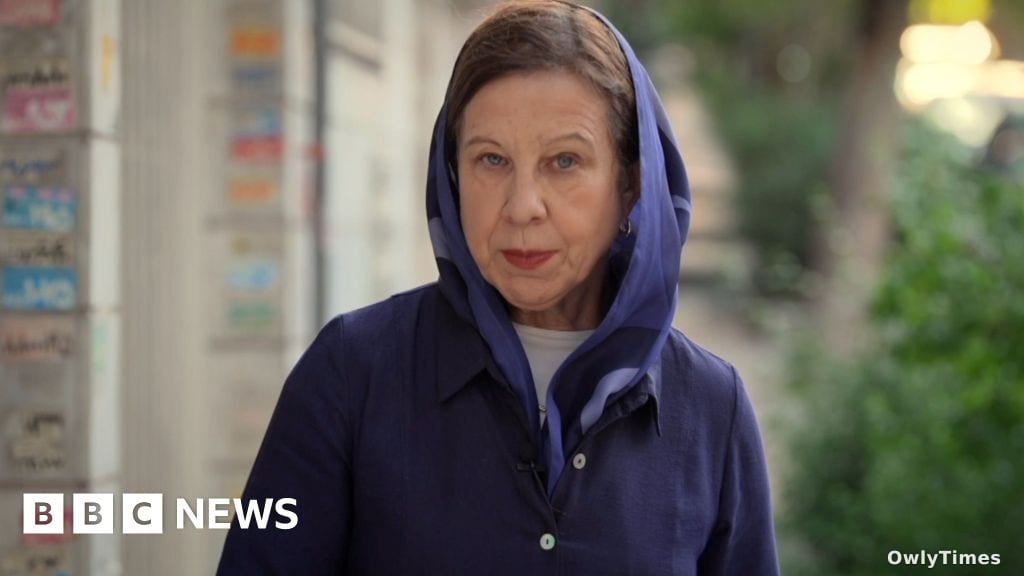
The difficulty of verifying these competing claims is compounded by the environment in which international journalists operate. Lyse Doucet, the Chief International Correspondent for the BBC, is currently reporting from Tehran under strict operational constraints. Her work, which provides the essential context for understanding the legal reality of these women, is subject to a specific condition: none of her material can be utilized by the BBC’s Persian Service.
This restriction is not unique to a single outlet; it is a standard hurdle for all international media organizations currently operating within Iranian borders. These limitations serve as a structural barrier to transparency, ensuring that the regime maintains a tight grip on how information—and by extension, the narrative of justice—is disseminated to the local population.
The Metric to Watch
The political chess move to watch next will be the ongoing legal status of the eight women identified in the president’s remarks. Because the Iranian judiciary’s own documentation serves as the only definitive record of whether these individuals were ever at risk of execution, any future public updates regarding their sentencing or release status will serve as the primary indicator of whether the president’s claim holds weight or if it represents a total detachment from the facts on the ground.





