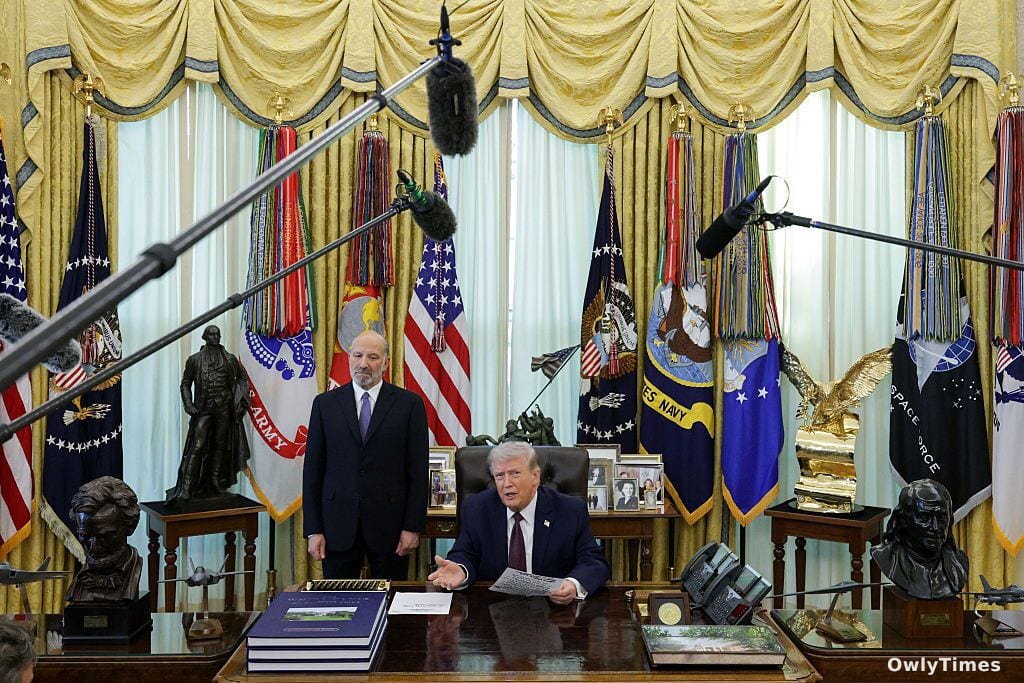

Is the escalating conflict in Iran truly about securing the Strait of Hormuz, or is it a convenient pretext for a long-simmering transatlantic fracture? While headlines scream about oil prices and potential ceasefires, the real story here isn't the war in Iran – it’s the war over NATO, and the unraveling of decades-old alliances under the weight of President Trump’s increasingly isolationist agenda. Day 33 of the conflict, as reported by NPR, is marked by strikes in Beirut, a kidnapped American journalist, and escalating tensions in the crucial shipping lane, but these are symptoms of a deeper malaise: a deliberate dismantling of the post-World War II security architecture.
Trump’s pronouncements – expecting the conflict to be over in “two to three weeks” and promising “tumbling” gas prices – feel less like strategic assessments and more like performance art, designed to project control while simultaneously signaling a willingness to abandon long-held commitments. The offer to consider a ceasefire request from Iran only if they reopen the Strait of Hormuz isn’t a diplomatic maneuver; it’s a transactional threat, reducing a complex geopolitical situation to a simple cost-benefit analysis. This isn’t about Iranian aggression; it’s about leveraging a crisis to force concessions. And the fact that Iran denies even making a request underscores the performative nature of the entire exchange.
The most alarming development, largely overshadowed by the immediate conflict, is Trump’s contemplation of withdrawing the U.S. from NATO. The fact that he was “angered” after NATO members criticized the U.S.-Israeli war in Iran and refused to police the Strait of Hormuz isn’t a surprise. What’s significant is that even Secretary of State Marco Rubio, a staunch conservative, conceded the need to “reexamine the value” of the alliance. This isn’t a momentary lapse in judgment; it’s a calculated erosion of trust in collective security, a signal that the U.S. is prepared to prioritize its own perceived interests – and those of its allies in the Middle East – over the decades-long commitment to European defense. For ordinary Americans, this means a future where the stability they’ve taken for granted is no longer guaranteed, and the potential for escalating conflicts across the globe increases exponentially.
The situation in Lebanon offers a chilling preview of this new reality. As Israel expands its operations against Hezbollah, with at least seven people killed in a recent Beirut airstrike, Europe is issuing increasingly desperate calls for de-escalation. But these pleas are falling on deaf ears. The Israeli military’s stated intention to create a “buffer zone” in southern Lebanon, effectively destroying villages in the process, demonstrates a disregard for international norms and a willingness to escalate the conflict even if the U.S. were to pull back. The displacement of over a million Lebanese citizens isn’t collateral damage; it’s a direct consequence of a strategy that prioritizes military objectives over civilian lives. And the fact that fighting might continue even if the U.S. stops bombing Iran highlights the danger of regional conflicts spiraling out of control, independent of American involvement.
Source material: NPR.
Beyond the immediate bloodshed, the economic fallout is already being felt globally. The World Food Programme warns that tens of thousands of tons of food aid are stuck in ports, exacerbating existing food insecurity and potentially pushing 45 million more people into acute hunger. This isn’t a distant problem; it’s a direct threat to global stability, and it will disproportionately impact the world’s most vulnerable populations. The threat to U.S. corporations operating in the region, with Iran’s Revolutionary Guard explicitly naming companies like Nvidia and Boeing as potential targets, adds another layer of complexity. This isn’t just about geopolitical maneuvering; it’s about the real-world consequences for American businesses and the jobs they support. The kidnapping of American journalist Shelly Kittleson in Baghdad, and the reported involvement of Iranian-backed militias, serves as a stark reminder of the dangers facing those attempting to report from the region.
The joint statement from Pakistan and China, calling for talks and a ceasefire, is a predictable attempt to position themselves as mediators, but it’s unlikely to yield significant results without genuine commitment from all parties involved – including a U.S. willing to engage in good-faith negotiations. Ebrahim Azizi’s defiant declaration that the “age of hospitality” in the Strait of Hormuz is over, and Iran’s approval of a bill to charge vessels for passage, signals a hardening of positions and a willingness to disrupt global trade. The fact that an estimated 20,000 seafarers are currently trapped in the active war zone, many on vessels running low on supplies, underscores the human cost of this escalating conflict.
Looking ahead, expect President Trump to double down on his rhetoric of American exceptionalism and his disdain for multilateral institutions. The next three weeks, as he predicts, won’t bring peace. They will bring a carefully orchestrated series of announcements designed to portray him as a strong leader while simultaneously laying the groundwork for a permanent shift in U.S. foreign policy. The question isn’t if the U.S. will distance itself from NATO, but how – and whether Europe will be able to forge a unified response before the transatlantic alliance is irrevocably broken. Watch closely for the first concrete steps towards a more fragmented, and far more dangerous, world order.





