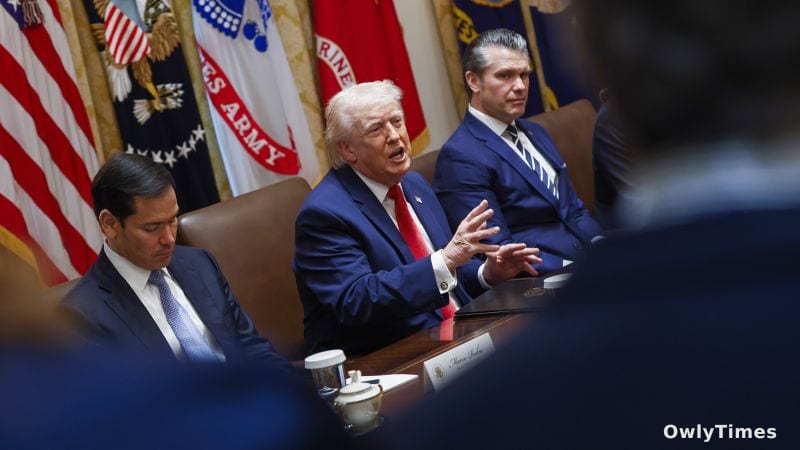

The escalating tensions with Iran weren’t about achieving a decisive victory, but about creating a pressure point – a calculated gamble by the Trump administration to renegotiate regional power dynamics without fully accounting for the inherent limitations of military force. The current trajectory suggests this “war” will likely conclude not with a bang, but with a protracted, unsatisfying series of talks, mirroring a pattern seen across decades of US foreign policy in the Middle East. This isn’t a failure of strategy, precisely, but a recognition – belatedly, perhaps – of the enduring constraints on American power in a region resistant to external imposition.
The Illusion of Swift Resolution
President Trump has fallen into a familiar trap for US leaders: the belief that a swift military operation can deliver lasting political change. History demonstrates this is rarely the case. The Korean War, Vietnam, and the Iraq War all began with similar assumptions of quick wins, ultimately devolving into prolonged stalemates. The current situation echoes this pattern. While the administration may degrade and delay Iran’s nuclear ambitions, a permanent dismantling of the program is unrealistic, particularly given its rapid reconstruction following previous setbacks, such as Israel’s 12-day war last year. Similarly, the notion of permanently altering Iran’s missile program through military means is demonstrably false.
Source material: CNN.
Shifting Goals and Diminishing Returns
The rhetoric surrounding the conflict has already undergone a subtle but significant shift. Prime Minister Netanyahu’s stated goal has moved from “disarming Hezbollah” – a decades-long, unrealized ambition – to “fundamentally changing” the situation in Lebanon. This recalibration reveals a tacit acknowledgement of the limits of Israeli, and by extension, American power. Disarming Hezbollah, a deeply embedded political and military force, remains an impossibility. The Lebanese government’s recent, albeit superficial, alignment with Israel’s goal of disarming the group highlights a shift in dynamics, but lacks the practical capacity for implementation. Declaring a policy is far easier than enacting it, especially when the group retains a “monopoly of force” within Lebanon. Who benefits and who loses here is clear: Israel concedes a long-held maximalist goal, while Hezbollah maintains its power base, albeit under increased scrutiny.
The Fog of War and the Power of Narrative
Trump’s diplomatic approach is characterized by chaos and a willingness to construct a reality divorced from the facts on the ground. This is facilitated by the leadership vacuum within Iran, which allows the US to attempt to speak for Iran, exploiting internal divisions and a lack of unified public messaging. The rejection of a reported 15-point US proposal by Iranian state media, later qualified by the White House as inaccurate, exemplifies this dynamic. The ambiguity surrounding US red lines and Iranian concessions allows Trump to manufacture a diplomatic “triumph” based on a narrative of his own making. This tactic, while effective in the short term, risks undermining long-term trust and stability.
A Pyrrhic Victory and Limited Options
Despite Iran’s aggressive response across the region – even targeting countries like Oman that attempted mediation – weeks of airstrikes haven’t fundamentally altered the regime’s position. The loss of a Supreme Leader and senior military officials is significant, but the regime remains intact. An end to hostilities, even with limited guarantees, is now in Iran’s interest, allowing it to consolidate its position and rebuild. The United States, too, faces diminishing returns. The Pentagon has expended significant resources, bombing 10,000 targets, but the initial, high-value targets have likely been neutralized, leaving only less impactful options. The deployment of a relatively small number of Marines and troops underscores the limitations of a large-scale military intervention, particularly options like seizing Kharg Island or attacking uranium enrichment facilities, both of which carry prohibitive risks.
The political chess move to watch next isn’t a military escalation, but the subtle signaling around sanctions relief. Will the administration offer targeted sanctions relief as a concession, and if so, to whom? The answer will reveal the true extent of Trump’s willingness to compromise, and the degree to which he prioritizes a public “win” over a substantive shift in Iran’s behavior. The coming weeks will demonstrate whether this conflict truly ends with a whimper, or merely pauses for breath before the next cycle of escalation.





