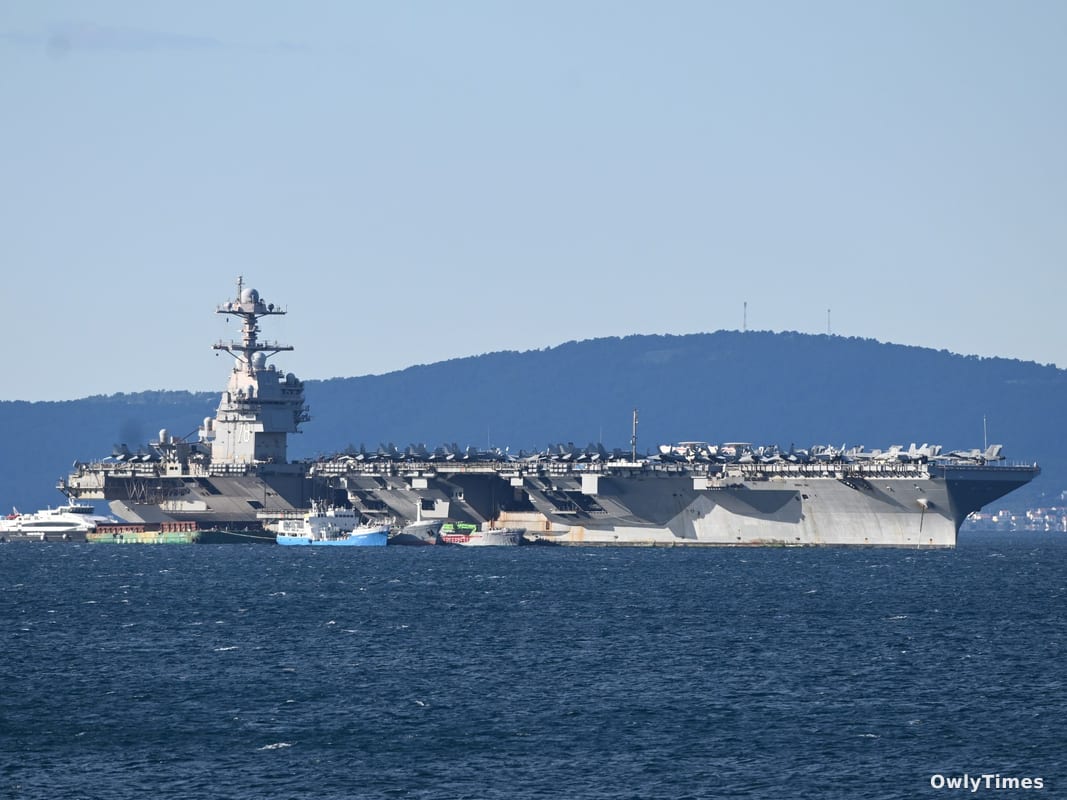

The strategic calculus behind Donald Trump’s recent extension of a ceasefire with Iran is less about securing a diplomatic breakthrough and more about managing a high-stakes countdown. By refusing to set a date for the resumption of talks while maintaining a near-one-week naval blockade, the President is attempting to force a capitulation from Tehran without tethering his administration to a firm timeline that would trigger a constitutional crisis at home. This move preserves the appearance of leverage while deferring the inevitable friction with a skeptical legislative branch.
The "who benefits and who loses" framework in this maneuver reveals a precarious balance. The administration benefits by maintaining the "strongman" optics of a blockade, keeping pressure on Iranian ports while avoiding the immediate political cost of an explicit legislative defeat. Conversely, the losers include those within the Republican party who are increasingly wary of a protracted, unpopular conflict—a concern underscored by the April 15 Senate vote where a bipartisan bid to curb the President's authority was defeated by a slim 52-47 margin. The public, which polls suggest remains largely opposed to the conflict, also loses as they are left in a state of suspended animation, waiting to see if a temporary ceasefire will devolve into a sustained campaign.
This current standoff mirrors the historical friction seen during the 1999 intervention in Yugoslavia under the Bill Clinton administration. In that instance, the President bypassed Congress for a 79-day campaign, prompting a lawsuit from former Representative Tom Campbell and 17 others who argued the action violated the 1973 War Powers Resolution. Just as Clinton relied on executive authority to act in the face of congressional silence, Trump is now positioning himself to navigate the May 1 deadline—the date by which he must either secure authorization or risk a direct challenge to his war-making powers.
The legal reality remains fraught with contradiction. While the War Powers Resolution mandates that the President must terminate deployments after 60 days unless authorized by Congress, Maryam Jamshidi, an associate professor of law at Colorado Law School, notes that there is no clear legal avenue for Congress to force compliance. History shows that past presidents have frequently dismissed the act's termination requirements as unconstitutional, setting a precedent that Trump may find convenient. Even if Congress demands a vote, the deep partisan divide that saved the President’s authority on April 15 suggests that a joint resolution to stop operations is far from guaranteed.
The political chess move to watch is the shift in stance among Senate Republicans. While they have largely shielded the President during the initial 60-day window, key figures like Senator John Curtis have explicitly signaled that their support is contingent upon obtaining congressional approval once that clock runs out. If prominent members of his own party follow through on their vow to block further military action, the President will face a binary choice: seek a legislative mandate he may not be able to win, or rely on the 2001 or 2002 Authorization for Use of Military Force (AUMF) to justify a continued, albeit legally controversial, engagement. The next reading of the congressional vote tally on any future AUMF-related resolution will indicate whether the President’s gamble on executive unilateralism remains politically viable.





