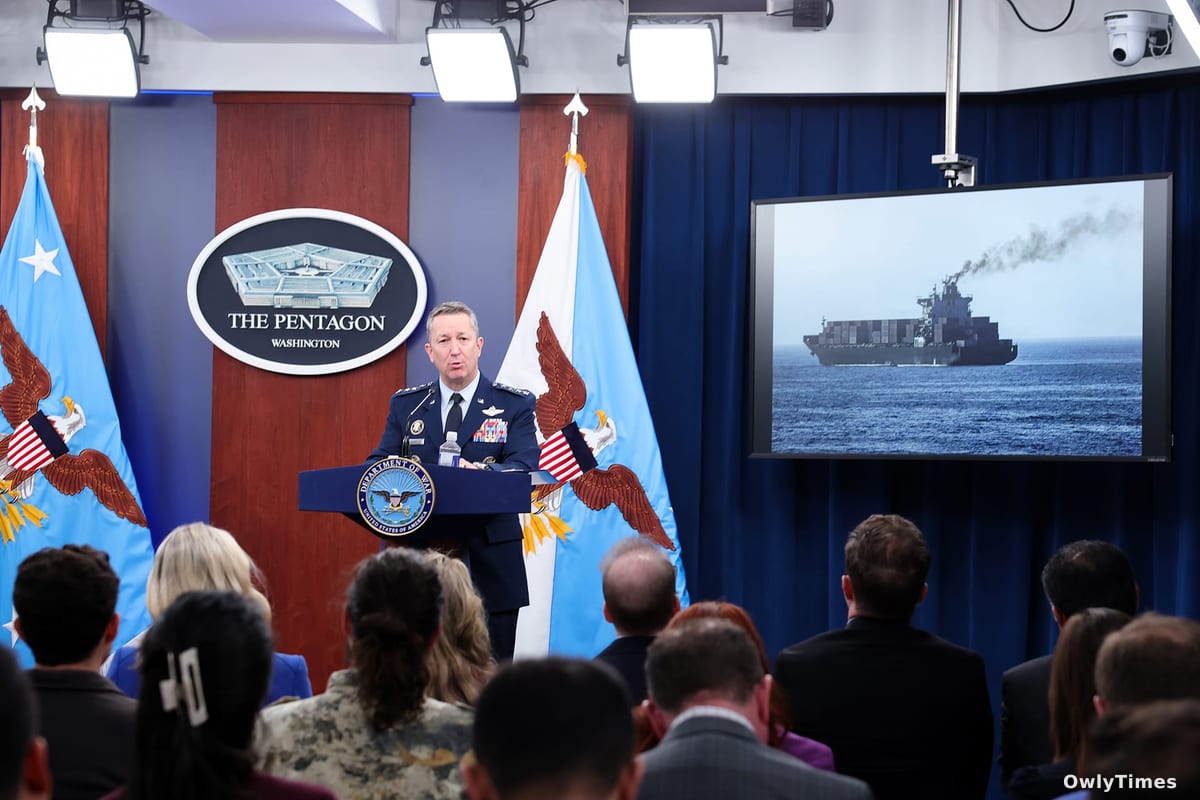

The indefinite extension of the United States’ ceasefire with Iran, announced by President Donald Trump on Tuesday, marks a pivot point where the cost of military containment is colliding with the reality of a stalled diplomatic endgame. By signaling a willingness to pause hostilities without a formal resolution, the administration has effectively confirmed that the current stalemate is a deliberate, albeit expensive, strategic choice. For investors and energy markets, the key data point remains the Strait of Hormuz: while the United States continues to enforce a naval blockade that has already forced more than thirty vessels to turn around, Iran has successfully seized two ships, transforming a critical global energy chokepoint into a functional toll booth.
The Economics of a Frozen Strait
Follow the money: Iran’s military infrastructure is demonstrably degraded, yet it remains dangerous enough to keep global markets on edge. According to New York Times estimates, the regime retains 40 percent of its pre-war drone arsenal and roughly 60 percent of its missile launcher capabilities. This is not merely a military statistic; it is a direct threat to the regional development models of Gulf nations. Steven Cook, Eni Enrico Mattei senior fellow for Middle East and Africa studies at the Council on Foreign Relations, notes that the vulnerability exposed by these remaining assets is forcing a recalibration of capital. Leaders in Riyadh, Abu Dhabi, and Doha are increasingly expected to divert funds away from commercial development and toward more robust, and costly, defense infrastructure.
Stalemate as a Strategic Choice
The current paralysis is defined by a deep asymmetry in objectives. While the United States demands conditions for lifting the blockade that the Iranian regime has shown no inclination to accept, both sides are operating under the delusion of an advantage. Ray Takeyh, Hasib J. Sabbagh senior fellow for Middle East studies, emphasizes that the lack of a singular, decisive leadership within Iran makes a negotiated breakthrough improbable. With the regime governed by an unstable coalition, the Islamic Revolutionary Guard Corps (IRGC) holds an outsized influence on security deliberations, effectively insulating the country’s leadership from the economic pressure the U.S. hopes will drive them to the table.
The Durability of the U.S. Presence
The United States faces a significant resource tension. Maintaining a blockade of Iranian ports requires a level of naval commitment that is increasingly difficult to reconcile with broader geopolitical pivots. For the first time in decades, the U.S. has three aircraft carrier strike groups stationed in the Middle East. While this presence is designed to pressure Iran, it creates a long-term fiscal and strategic strain at a time when the administration has identified the Indo-Pacific and the Western Hemisphere as higher-priority theaters. If the U.S. cannot sustain this surge capacity, the leverage shifts back toward Tehran.
Investor Takeaway: What This Means for Your Wallet
The resolution of this conflict hinges on a race against physical infrastructure decay. The longer the current stalemate persists, the closer Iran moves toward a systemic failure of its oil storage capabilities. Should Iran be forced to shut down production, the reactivation of older wells could take months—or, given the age of their infrastructure, result in a permanent loss of capacity. Investors should track the next readings of Iran’s oil export volumes and tanker traffic levels; a sustained decline in these metrics will be the primary indicator that the U.S.-led blockade is successfully eroding the regime's long-term economic floor, regardless of the current diplomatic deadlock.




