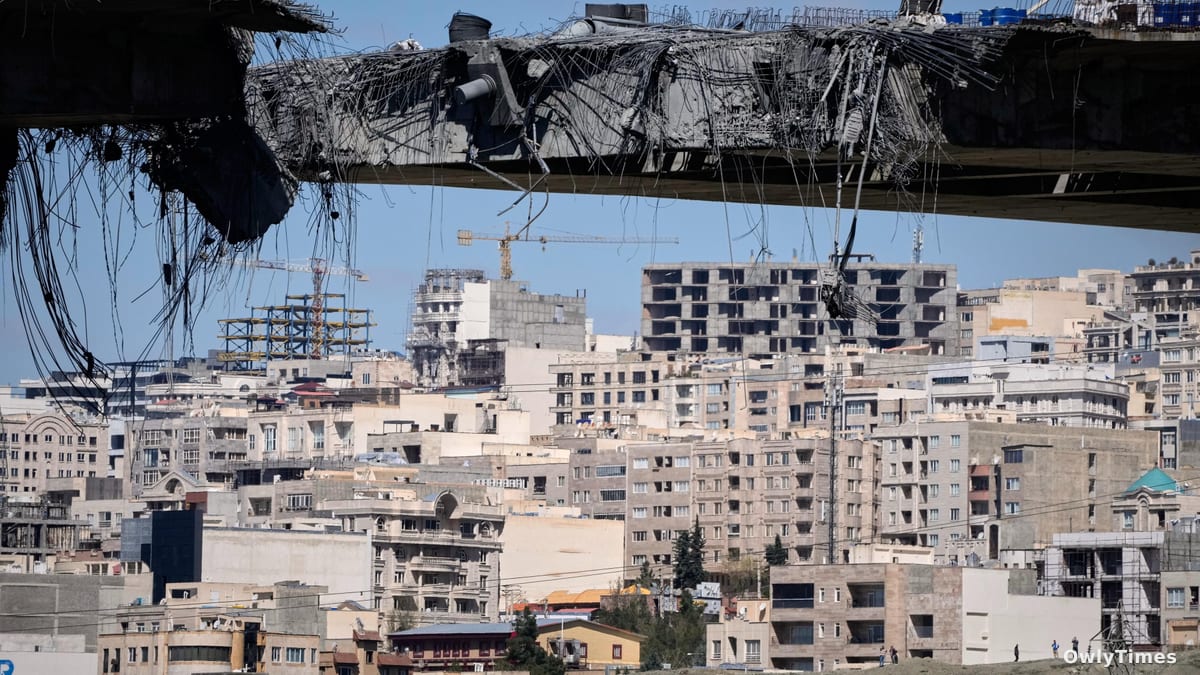

The escalating rhetoric surrounding the Strait of Hormuz isn’t simply a diplomatic standoff; it’s a stark illustration of how quickly localized conflict can unravel global economic stability. While headlines focus on Donald Trump’s explicit threats – and they are explicit, including a now-deleted post containing expletives promising “Power Plant Day” and “Bridge Day” in Iran – the more pressing concern is the pre-existing disruption to energy markets and the potential for a cascading series of retaliatory strikes. This isn’t about a future war; a low-intensity energy conflict is demonstrably underway, and the question is whether it will remain contained.
The immediate trigger, as reported on Sunday, was Trump’s ultimatum demanding Iran reopen the Strait of Hormuz by Tuesday at 8 p.m. Eastern time, threatening attacks on civilian infrastructure if the demand wasn’t met. He simultaneously claimed to be engaged in negotiations with Iranian leaders, suggesting a “good chance” of a deal. This duality – threat coupled with negotiation – is a pattern, with previous deadlines similarly extended after claims of progress. However, the significance isn’t the likelihood of Trump following through on any single threat, but the normalization of such language and the escalation of risk. The claim of negotiating while simultaneously threatening the destruction of essential civilian infrastructure is, at best, a contradictory tactic and, at worst, a deliberate attempt to destabilize the region.
The situation began to dramatically shift on February 28th, following a joint U.S.-Israeli attack within Iran that resulted in the death of Supreme Leader Ali Khamenei. Iran’s response has been a calculated disruption of shipping through the Strait of Hormuz, a vital chokepoint for global oil supplies. This closure, coupled with attacks on U.S. bases and strategic Gulf infrastructure, has already sent gas prices in the U.S. skyrocketing and created a global energy shortage. It’s crucial to understand this isn’t merely about Iranian aggression; it’s a response to perceived provocation, and the cycle of escalation is now self-sustaining. Mohammad Baqer Qalibaf, Iran’s Parliament Speaker, has already warned of retaliatory strikes targeting Gulf and U.S.-linked energy facilities should further attacks occur, a threat echoed by Iran’s joint military command.
Drawn from time.com.
The potential for wider conflict extends beyond the Persian Gulf. Mojtaba Khamenei, a key advisor to Iran’s new Supreme Leader, threatened closure of the Bab al-Mandab Strait, a critical waterway connecting the Red Sea to the Gulf of Aden. This echoes the actions of Yemen’s Houthi movement, allies of Iran, who disrupted Red Sea shipping between November 2023 and January 2025 in solidarity with Palestinians. As Thomas Juneau of the University of Ottawa’s Graduate School of Public and International Affairs points out, renewed Houthi attacks on Red Sea shipping could have a “much more important impact” on the global economy, amplifying existing pressures on oil and natural gas prices. Approximately 22% of global seaborne container trade passes through the Suez Canal, which would be directly impacted by disruptions to the Bab al-Mandab Strait.
What’s often lost in the political posturing is the immediate humanitarian impact. Agnes Callamard, Secretary General of Amnesty International, rightly described Trump’s threats as “revolting,” emphasizing the devastating consequences for Iranian civilians should power plants and bridges be destroyed. Loss of electricity, water, and essential services would create a humanitarian crisis, violating international humanitarian law which prohibits attacks on objects “indispensable to the survival of the civilian population.” The recent Israeli strike on a petrochemical plant in Mahshahr, Iran, further illustrates this point, impacting electricity supply to 500,000 people in Khuzestan Province. Iran’s retaliatory strikes on Kuwait – targeting power plants, a petrochemical plant, and a water desalination plant – demonstrate a willingness to reciprocate in kind.
However, it’s important to acknowledge the limitations of interpreting these events solely through the lens of official statements. The true extent of negotiations, the internal dynamics within both the U.S. and Iranian governments, and the influence of external actors remain largely opaque. Furthermore, attributing causality is complex. While the U.S.-Israeli attack on Khamenei is a clear inflection point, underlying tensions and regional power struggles predate this event. The current situation is a culmination of decades of geopolitical maneuvering, not a sudden eruption.
The next critical step in understanding this evolving crisis isn’t waiting for a definitive “deal” or “attack,” but monitoring shipping patterns in both the Strait of Hormuz and the Red Sea. Are we seeing a sustained increase in insurance rates for vessels traversing these waterways? Are major shipping companies diverting routes, even at increased cost? These logistical indicators will provide a more accurate assessment of the actual risk than any political pronouncements. The question isn’t if the energy war will escalate, but when and how – and whether the world is prepared for the economic consequences.




