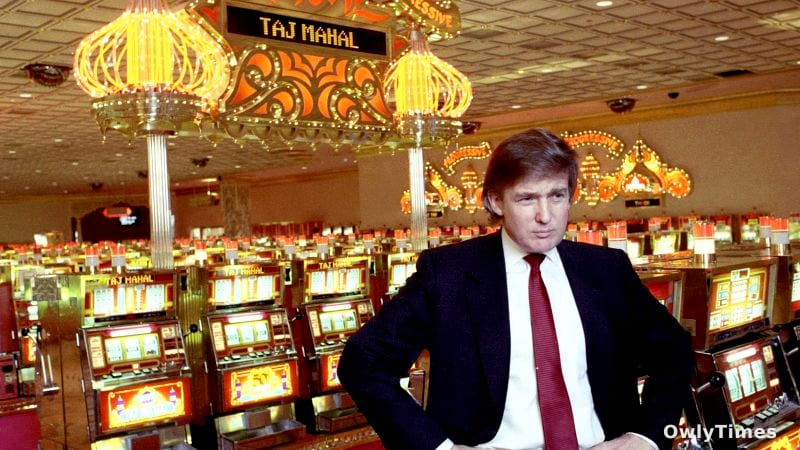

The flashing lights of Atlantic City casinos, once symbols of Donald Trump’s ambition, now feel like a distant prologue to a far stranger gamble. Back in the 1990s, with his empire teetering, Trump aggressively pushed for legalized sports betting in New Jersey, envisioning a lifeline for his struggling properties. Defeated in 1993, he famously declared to the New York Times, “Some people give up real easily. But I have never been one of those people.” Three decades later, that tenacity has manifested in a new, and arguably more audacious, play: prediction markets. This isn’t about reviving casinos; it’s about reshaping the rules of the game itself, and the Trump family is positioning itself to win big. The story isn’t simply about a former casino magnate finding a new revenue stream; it’s a stark illustration of how power, personal finance, and regulatory capture are colliding in the burgeoning world of predictive wagering, and it’s raising uncomfortable questions about whose interests are really being served.
Trump Media and Technology Group, now the largest source of the former president’s wealth since its 2024 IPO, is launching “Truth Predict,” a cryptocurrency-based prediction platform. Simultaneously, Donald Trump Jr. serves as an advisor to and investor in the two largest players in the space, Kalshi and Polymarket. This isn’t a case of a former politician passively benefiting from an industry; it’s active, direct involvement, and it’s unfolding under an administration actively working to shield these markets from state regulations. The shift is breathtaking. Trump once needed the cooperation of lawmakers and regulators to unlock the potential of sports betting. Now, his own appointees at the Commodity Futures Trading Commission (CFTC) are writing the rules, effectively creating a parallel system to traditional sports gambling, and one that conveniently benefits his family’s business ventures.
Reporting from CNN informs this analysis.
The core of the conflict lies in how these markets are legally structured. The CFTC, under its Trump-appointed commissioner, is arguing that prediction markets operate as “event contracts” – a type of derivative – and therefore fall under federal jurisdiction, preempting state laws that regulate or ban sports betting. This isn’t a subtle distinction; it’s a deliberate attempt to create a regulatory haven. The potential for conflict is glaring, and ethics watchdogs are already raising alarms. But the implications extend far beyond legal technicalities. This maneuver directly pits the Trump administration against the very casino industry that helped launch Trump’s public persona and has historically been a generous source of political funding – over $200 million in contributions over the past decade, according to campaign finance reports.
“He advocated for sports gambling at a time when there was no sports betting,” observes former New Jersey Governor Chris Christie, now a lobbyist for the gaming industry. “What he’s doing (now) is messing up something that has operated extraordinarily well.” Christie’s frustration is echoed throughout the casino world, where operators see prediction markets as unlicensed online sportsbooks siphoning off revenue and circumventing state taxes. The Super Bowl in February served as a stark example, with Kalshi reporting over $1 billion in trading activity while Nevada casinos saw in-person bets hit a 10-year low. The stakes are high, and the industry feels increasingly powerless to influence the narrative. As one source close to the gaming industry, speaking anonymously for fear of retribution, put it, “It’s the elephant in the room.”
The legal battles are escalating. States like Nevada and New Jersey, with established and heavily regulated gambling industries, are suing to enforce their laws. Arizona’s attorney general recently filed criminal charges against Kalshi, accusing it of illegal gambling. Kalshi, in turn, is suing states to block their regulations, arguing that only the federal government has jurisdiction. This legal tug-of-war has fueled a surge in lobbying activity, with companies operating prediction markets spending $14 million in 2025, though some, like Coinbase, have broader lobbying interests. But the real question isn’t just about legal precedent; it’s about political will. Will Congress, particularly a Republican-controlled Congress, challenge an administration actively promoting an industry in which the former president’s family has significant financial ties?
The White House, predictably, dismisses concerns about conflicts of interest. Spokesperson Davis Ingle insists that “the only special interest guiding the Trump Administration’s decision-making is the best interest of the American people.” But the optics are damning, and the industry’s anxieties are palpable. The CFTC, under Chairman Michael Selig, appears to be actively fostering the growth of prediction markets, issuing guidance that favors self-regulation and echoing talking points used by the industry itself. Selig maintains he hasn’t discussed these matters with Donald Trump Jr., but the perception of a tilted playing field is undeniable. The situation highlights a broader trend: the erosion of traditional regulatory boundaries and the increasing influence of private interests in shaping public policy.
This isn’t simply a story about gambling; it’s a story about the evolving relationship between power, money, and regulation in the digital age. Prediction markets, while still relatively small – with users spending over $5 billion weekly, according to Artemis Analytics – are rapidly expanding, offering wagers on everything from election outcomes to geopolitical events, even controversial topics like the fate of individuals. The rise of these markets raises fundamental questions about transparency, market manipulation, and the potential for insider trading, particularly in sensitive areas like political and military affairs. The CFTC’s attempt to shield these markets from state regulation, while ostensibly promoting innovation, could ultimately undermine consumer protection and create a Wild West environment ripe for abuse.
The question now isn’t whether prediction markets will continue to grow – they almost certainly will. The crucial question is how they will be regulated, and who will benefit from that regulation. Will the Trump administration continue to prioritize the interests of its family and allies, or will it respond to the growing chorus of concerns from states, regulators, and ethics watchdogs? The answer will not only shape the future of predictive wagering but will also reveal a great deal about the integrity of the regulatory process itself. And as more states and the federal government grapple with the implications of these markets, will the casino industry, historically a powerful force in American politics, find a way to regain its footing – or will it be left watching from the sidelines as a new generation of gamblers, and a new breed of power brokers, rewrite the rules of the game?





