
The strategic calculus behind Donald Trump’s recent denial regarding his stance on Iranian diplomacy is less about policy consistency and more about the maintenance of an authoritative, shifting narrative. By publicly insisting he never suggested the U.S. might be better off without a deal, the President is prioritizing the preservation of his image as a master negotiator over the factual record of his own speech. This tactic transforms the negotiation process into a performance, where the goal is to keep adversaries and the domestic electorate guessing, ensuring that no single statement can be used as a binding constraint.
The Cost of the Diplomatic Denial
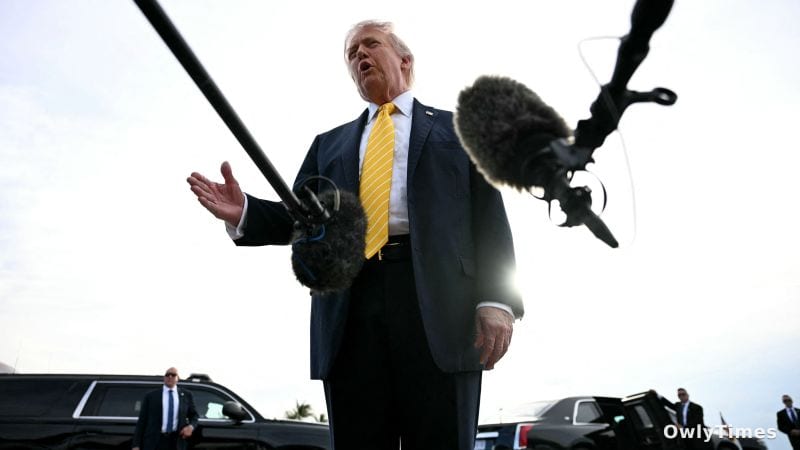
The stakes of this maneuver involve balancing the optics of a "strong" foreign policy against the practical reality of international engagement. When Trump told reporters on Saturday that he was “looking at” a new Iranian peace proposal, he attempted to pivot away from his Friday remarks at the Forum Club of the Palm Beaches in South Florida. During that speech, he explicitly stated, “frankly, maybe we’re better off not making a deal at all.”
Who benefits from this dissonance? The administration’s core base gains the perception of a leader who is not beholden to prior statements, allowing for maximum tactical flexibility. Who loses? The clarity of the U.S. position on Iran becomes obscured, potentially alienating allies who require predictable signals to coordinate sanction regimes or regional security efforts. This mirrors the pattern seen in his 2024 campaign, where he frequently moved the goalposts on policy promises—such as his vow to end the war in Ukraine—later reframing serious commitments as mere exaggerations or jests.
Historical Precedent for the Unreliable Narrator
The President’s approach to his own public record is not an anomaly but a consistent feature of his political identity. Whether it was his December 2025 denial regarding the release of military strike footage in the Caribbean or his 2024 campaign-trail rejection of his own “lock her up” rhetoric, the strategy remains constant. By asserting that he never said what is recorded on camera, Trump forces the media and his opponents to fight on his terms: arguing about the past rather than debating the future of the Iranian nuclear program or the stability of the Middle East.
This creates a recurring contradiction where the official narrative is detached from the observable evidence. During the COVID-19 pandemic in 2020, this same friction appeared when he denied making statements that were broadcast only days prior. By repeatedly challenging the objective record, he effectively inoculates his base against external fact-checking, framing the correction of his own words as an adversarial act by the press.
Watching the Iranian Proposal
The ultimate objective of this strategic ambiguity is to force Iran into a position of desperation, as Trump noted on Friday: “if we left right now, it would take them 20 years, 25 years, to rebuild the place.” This framing serves as both a threat to the Iranian regime and a signal to his supporters that he is keeping all options—including a total withdrawal from diplomatic efforts—on the table.
The next shift in this standoff will be dictated by the specific terms, if any, presented in the new Iranian peace proposal he claims to be reviewing. The true signal to watch is not the President’s next public comment, but whether his administration moves to formalize a diplomatic track or continues the rhetoric of abandonment. As he noted during his Florida speech, he is intent on managing the process so that “nobody has to go back in two years or five years,” setting a timeline for his own success that remains entirely dependent on his own ability to define what constitutes a "good deal."