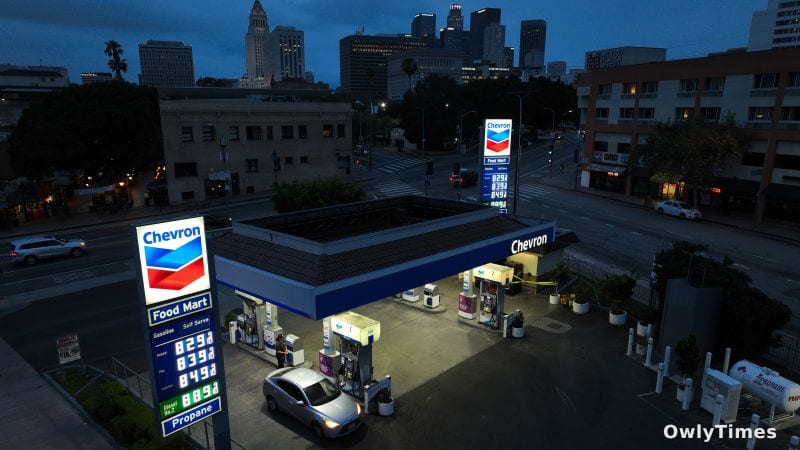

With national gas prices averaging $4 per gallon, Treasury Secretary Scott Bessent attempted to shift the narrative during a Senate Appropriations Committee hearing on Wednesday, leaning on a complex financial theory to predict economic relief. By invoking the concept of "backwardation"—a market condition where future delivery prices for a commodity are lower than current spot prices—the former hedge fund manager argued that the current crude market suggests the economic shock of the Iran war is nearing its end. However, relying on the technical mechanics of futures contracts to address a kitchen-table issue like fuel costs highlights a widening disconnect between the administration’s economic messaging and the reality facing voters ahead of the midterms.
The Logic of Backwardation vs. Reality
In the energy sector, backwardation typically occurs when traders, fearing immediate supply shortages, aggressively bid up the price of oil for near-term delivery while discounting future contracts. While Bessent frames this as a signal that prices will naturally retreat, the theory relies on a critical assumption: that the conflict causing the supply anxiety will resolve. Democratic Sen. Jack Reed, who challenged Bessent during the hearing, brought a sobering counterpoint to the Treasury Secretary’s optimism. Drawing on his experience with the Armed Service Committee, Reed noted that from a security perspective, the conflict is "not likely to end soon." If the Strait of Hormuz remains closed, the market’s current state may reflect a deepening crisis rather than a temporary fluctuation.
A Pattern of Mixed Messaging
The administration’s struggle to present a unified front on energy costs has only fueled public uncertainty. On Sunday, Energy Secretary Chris Wright stated that gas prices might not drop below $3 a gallon until later this year or perhaps next year. This candor drew a sharp rebuke from President Trump, who dismissed his own cabinet official as "totally wrong." This internal friction is compounded by the President’s own inconsistent forecasts; after suggesting on April 12 that prices might not fall before the midterms, he reversed course days later to claim they would be "much lower" by the election. Even Bessent’s own timeline remains fluid, as he qualified his April 15 optimism regarding "$3 gas" by clarifying that he defines that target as any price between $3.00 and $3.99.
Political Costs of the Affordability Gap
The persistence of these economic anxieties is reflected in the polling data. According to CNN/SSRS poll data released on April 1, Trump’s approval rating on the economy has hit a career low of 31%. Perhaps more concerning for the administration is the shift in public perception: roughly two-thirds of Americans now believe Trump’s policies have worsened economic conditions, a 10-point increase since January. This dissatisfaction persists despite the broader economy showing resilience, including an annual inflation rate of 3.3% in March and steady job growth. The friction suggests that voters are weighing years of cumulative cost increases in housing, food, and healthcare against the administration’s periodic, often conflicting, assurances.
What This Means for Your Wallet
The administration’s reliance on financial jargon to explain energy costs suggests that voters should prepare for a period of continued volatility at the pump. When officials prioritize market theories over the lived experience of inflation, it typically signals that no immediate policy intervention is planned to lower costs. For households, the most reliable indicator to watch in the coming weeks will be the physical market’s reaction to the conflict in the Strait of Hormuz. If the gap between current prices and future delivery contracts remains wide, the "backwardation" Bessent cites will likely function as a measurement of ongoing risk rather than a guarantee of a price reversal.